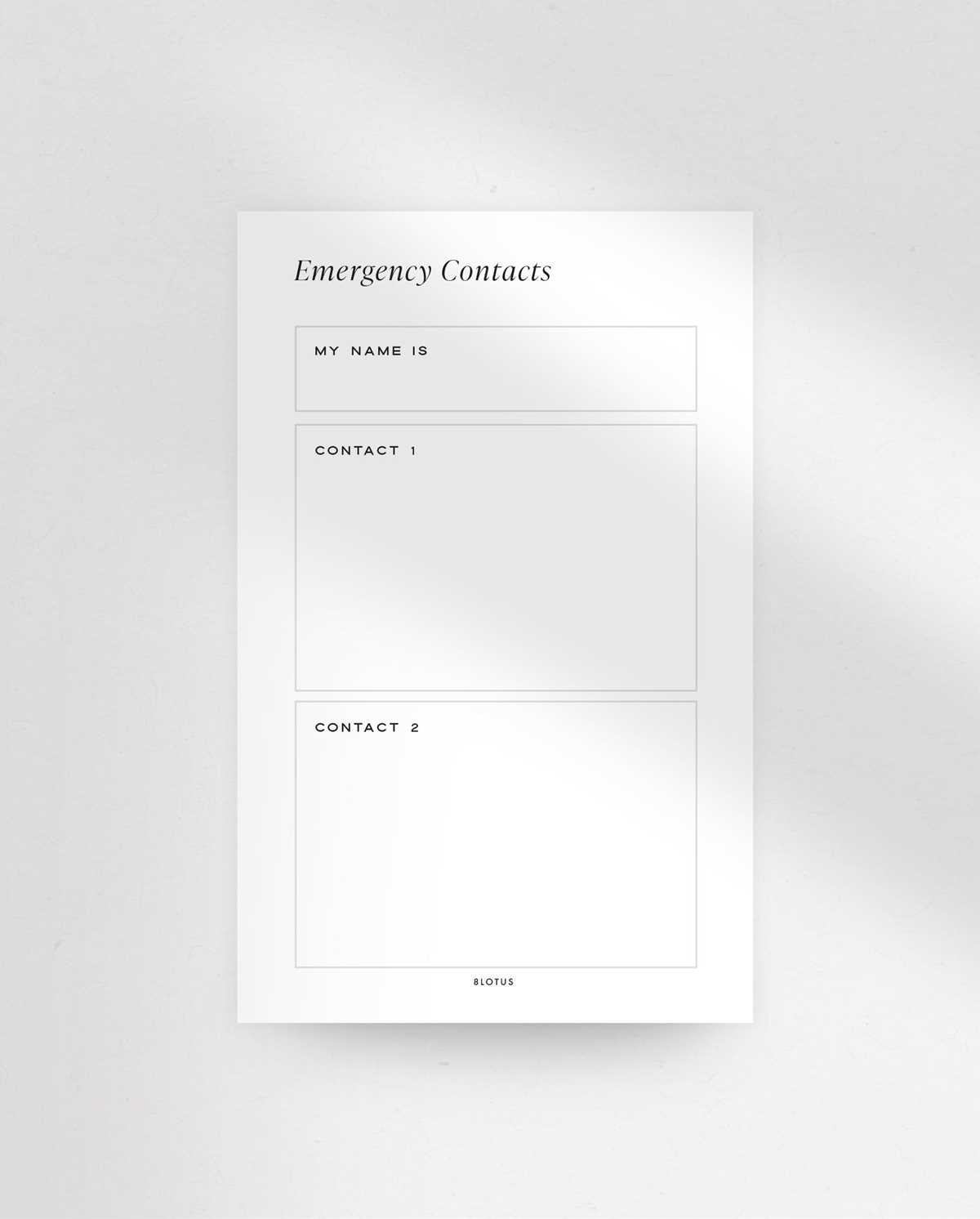
For quick access during unexpected situations, it’s crucial to have important contacts and medical details readily available. A personal information sheet can be easily created to include key emergency details such as phone numbers, medical conditions, and allergies.
Ensure that the document includes emergency numbers such as those of close family members, doctors, and local emergency services. It’s a good idea to list a primary and secondary contact for backup, along with details on any medical history that could be helpful in case of an urgent situation.
Once you have gathered the necessary information, format it in a clear, readable layout. Many online resources offer free templates to help you design a professional-looking sheet. Make sure the details are easy to locate and check for any specific formatting needs to ensure all critical data is presented in an accessible manner.
How to Create an Emergency Information Sheet
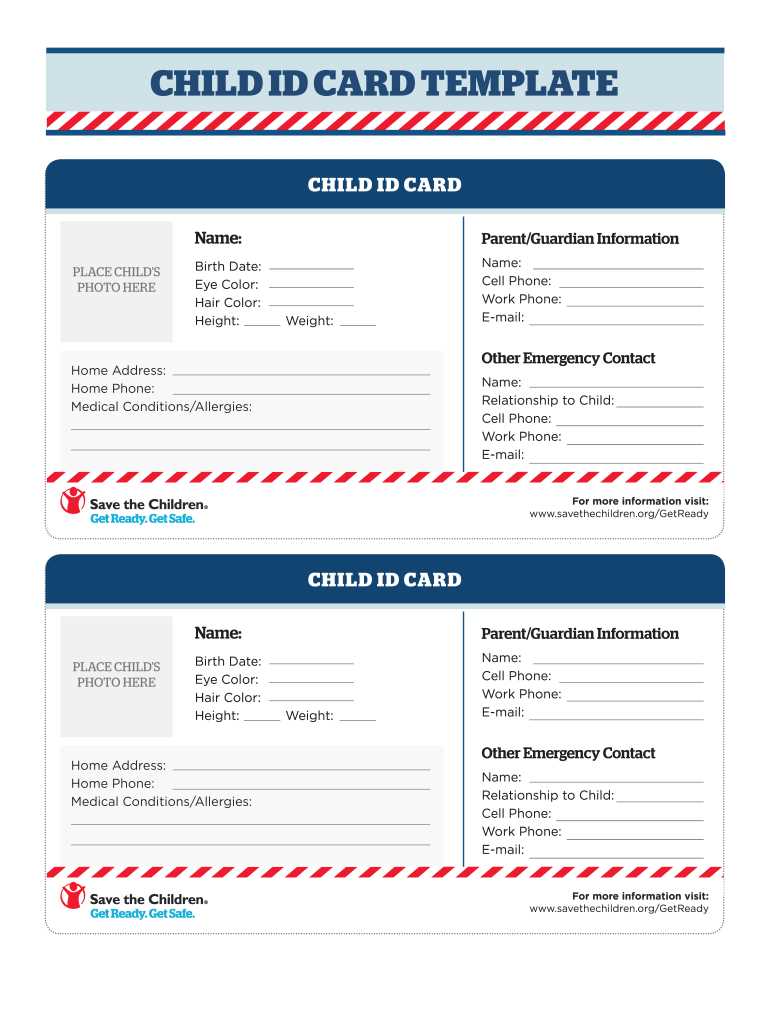
To ensure that your important information is easily accessible in urgent situations, create a compact document that contains all necessary details. Start by gathering the names and phone numbers of key individuals who may need to be reached, such as family members, close friends, or medical professionals.
List important medical information, such as allergies, chronic conditions, and current medications. This is especially useful if you have a health condition that requires immediate attention or specific treatment. Make sure to also note any relevant health insurance information.
In addition to personal details, include any emergency services phone numbers that may be necessary. For example, include the number of the nearest hospital, poison control center, and local emergency response teams. You may also want to add numbers for national helplines for crises such as domestic violence or mental health emergencies.
Design the document so that it is clear and easy to read. Use bold or larger fonts for headings and separate sections with line breaks. Consider creating a template where you can simply fill in the blanks with the relevant details for each section.
Once you’ve completed the design, print out multiple copies and store them in easily accessible locations. Place one copy in your wallet or purse, one in your car, and share another with a trusted friend or relative. Make sure that those around you know where it’s located and how to access it quickly if needed.
It’s also wise to keep a digital version of this document. Store it securely on your phone or cloud storage service so that it’s easily accessible even if you don’t have physical copies. Many people rely on apps for storing medical information, which can be shared with health professionals in case of an emergency.
Review and update your emergency information sheet regularly. Life changes quickly, and your contact details or medical information may need to be revised. Set a reminder to check and update the document once every few months, or after major life events such as a move, new job, or medical change.
Having an accessible record with up-to-date and relevant information can make all the difference during critical times. Whether you’re at home, traveling, or out with friends, keeping this document with you can provide peace of mind that the right help can be reached quickly if something goes wrong.
How to Design a Simple and Functional Emergency Information Sheet
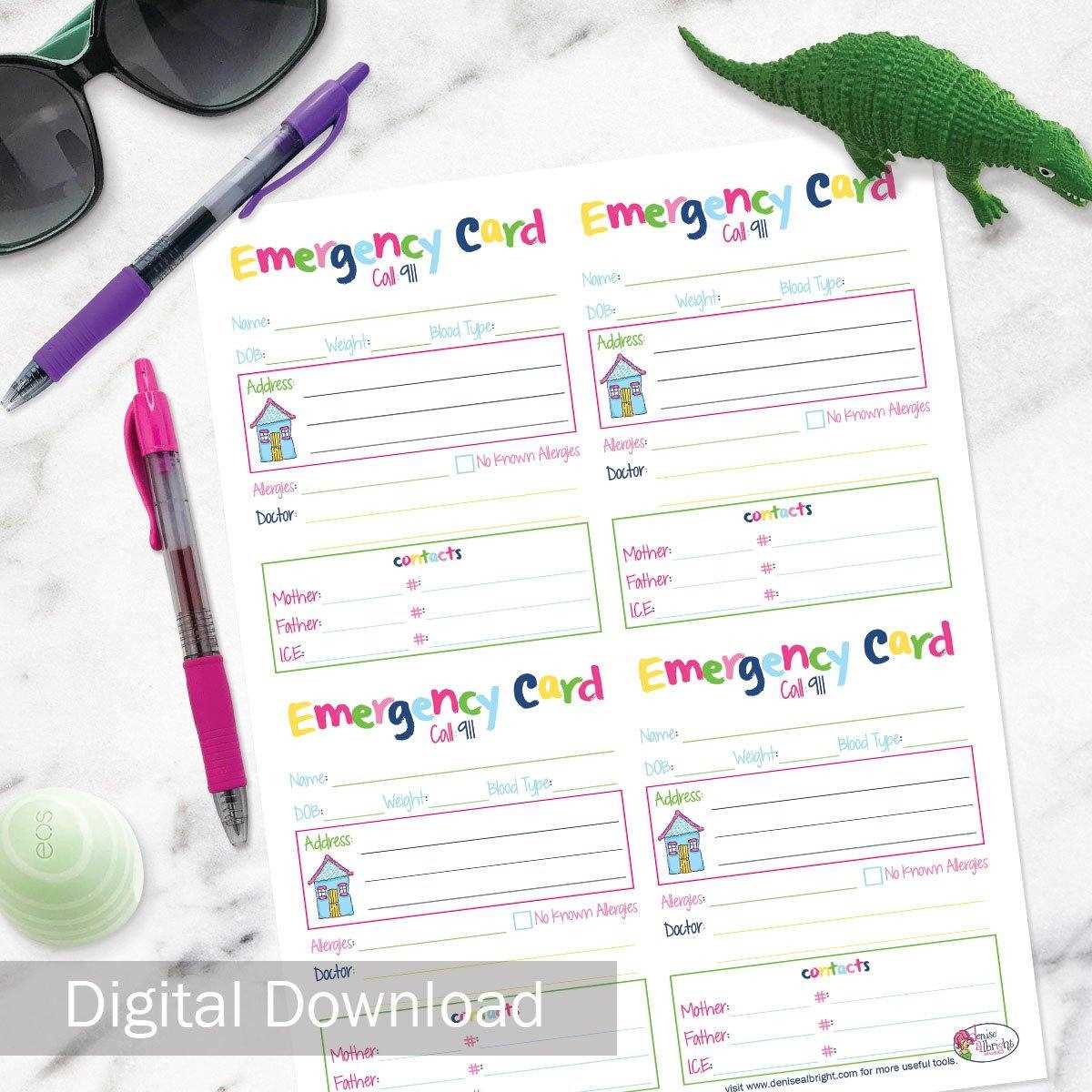
Start by choosing a compact size for your document that fits easily into a wallet or bag. The dimensions of a standard business card (3.5 x 2 inches) are perfect for portability. Design the layout to prioritize readability–use large, clear fonts for essential details like names, phone numbers, and medical conditions.
Next, organize the information into sections. Label each section clearly, such as “Primary Contacts”, “Medical Info”, and “Insurance Details”. Keep the most critical information, like emergency numbers, at the top, making it quick to find when under pressure. Use bullet points for a clean, easy-to-read format.
Finally, include a spot for updating information as needed. For instance, leave space for adding new phone numbers, changes in health conditions, or insurance details. Consider adding a note indicating when the document was last updated, so you remember to review it regularly. Once designed, print several copies and store them in convenient locations like your wallet, car, and home. Keep a digital version as a backup for easy access during travel or emergencies.