Start by introducing children to words that begin with the sound “k.” Use various visual aids and hands-on activities to reinforce their recognition of this sound in different contexts. Activities like tracing, matching, and identifying words with the “k” sound will build their phonetic awareness. Encourage children to repeat words aloud while associating them with corresponding images, such as “kangaroo,” “key,” and “king.” This approach helps make learning engaging and fun.
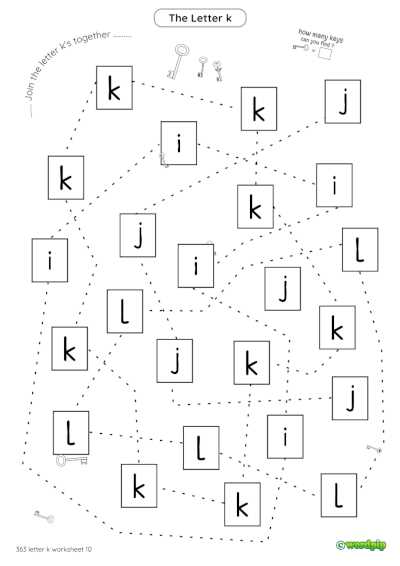
Incorporating activities that reinforce the shape of the letter “K” in both uppercase and lowercase forms will further develop fine motor skills. Provide exercises where children can trace the shape of the letter, cut out shapes, or complete simple mazes that form the letter “K.” This practical approach will help children with both letter recognition and writing skills while solidifying their understanding of how to form the letter properly.
For a more interactive learning experience, create themed exercises that relate directly to the words that start with “K.” For instance, after teaching the word “king,” you can include a crown-building craft or have a small class “royal ceremony” where each child is crowned a king or queen. This helps to engage them emotionally with the lesson, making the sound more memorable. Such hands-on methods allow children to connect the lesson to their real-life experiences and creativity.
Letter K Worksheets for Kids Learning
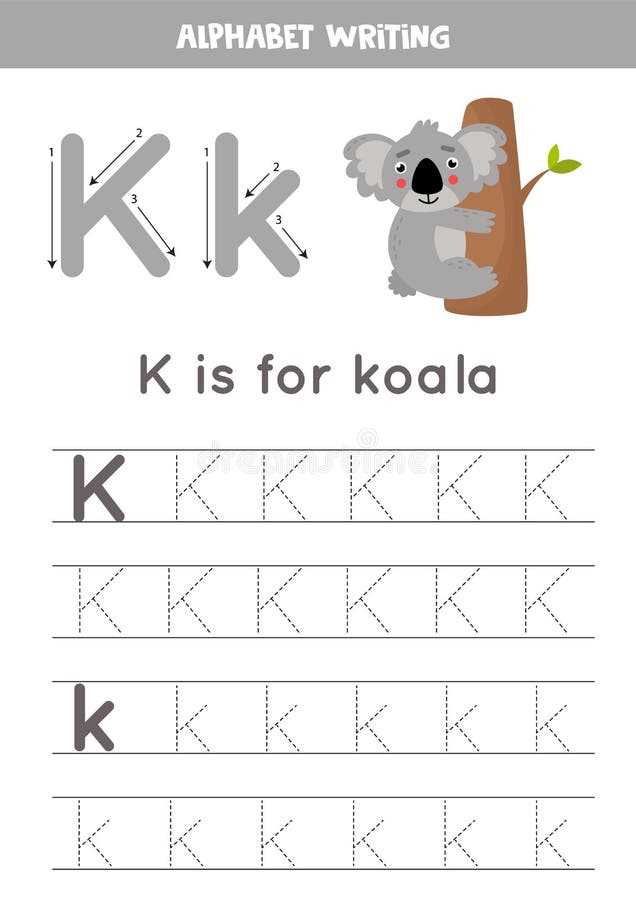
To begin with, help children recognize the shape and sound of “K” through various activities. Start with tracing exercises that help them practice writing both the uppercase and lowercase forms. You can provide dotted lines of the letter for them to follow, or use fun objects to mark the start and end points of each stroke. This repetitive action strengthens motor skills and letter familiarity.
Include a mix of matching games where children can connect images with words that begin with the sound “k.” For example, pair a picture of a kangaroo with the word “kangaroo” and a picture of a key with the word “key.” Such activities not only reinforce phonetic awareness but also help kids associate the “K” sound with tangible objects they encounter in daily life.
Another great exercise is to create simple puzzles where kids complete the word by filling in the missing letters. For instance, provide the word “_ing” and let children fill in the “K” to form “king.” This practice encourages them to engage with both sound and spelling patterns, helping them understand how the letter fits into different words.
Use interactive games that involve identifying the letter “K” in different contexts. Provide worksheets with blocks of text or word searches where kids can circle every instance of “K.” These activities not only help children identify the letter in real-time reading but also engage them in learning through play.
Incorporating arts and crafts into the lesson plan can make it even more memorable. For instance, after practicing writing “K,” allow children to create their own crowns or kangaroo cut-outs. They can decorate the items as they learn more about the letter, reinforcing the connection between the letter and the objects they are creating.
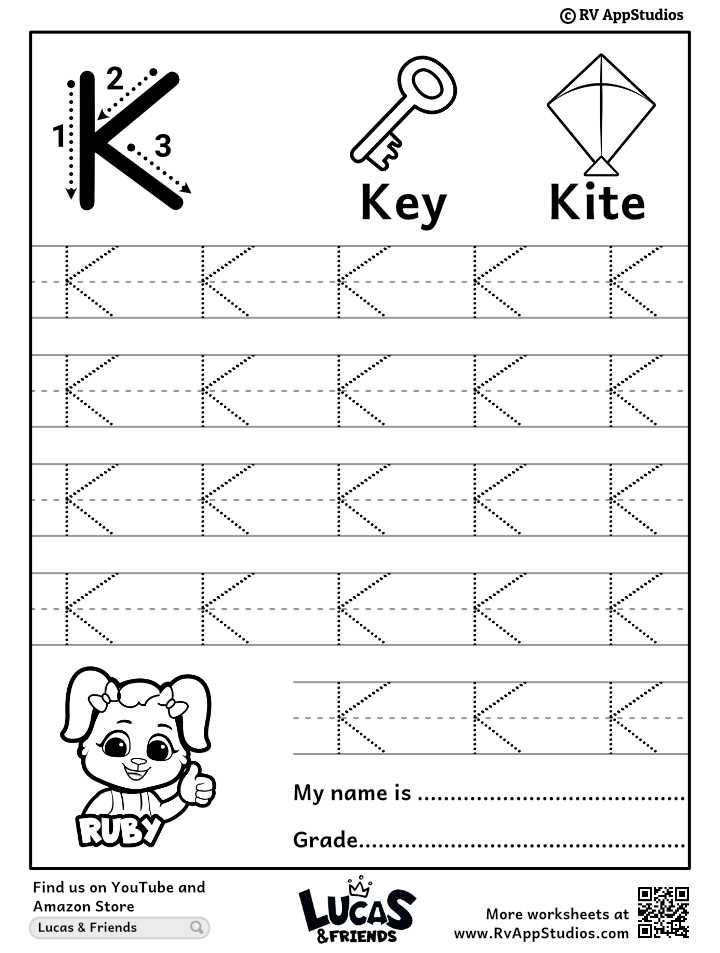
Another valuable activity is to encourage children to come up with their own “K” words. You can prompt them with a picture of a kite or a king, then challenge them to think of and draw other items that begin with “K.” This helps to expand their vocabulary and provides them with a deeper understanding of how letters fit into language.
Also, incorporate reading activities that focus on “K” words. Short stories or poems featuring words like “koala,” “key,” or “kangaroo” can be read aloud together. Ask kids to point out the “K” words as you read, reinforcing their recognition of the letter in context.
Finally, include a fun section where kids can practice the letter in multiple ways. Have them engage in activities like dot-to-dot puzzles, where the dots form the letter “K,” or coloring pages that feature “K”-based characters and scenes. These exercises engage creativity while reinforcing letter recognition in a fun and interactive manner.
Fun and Interactive Activities to Teach the Letter K
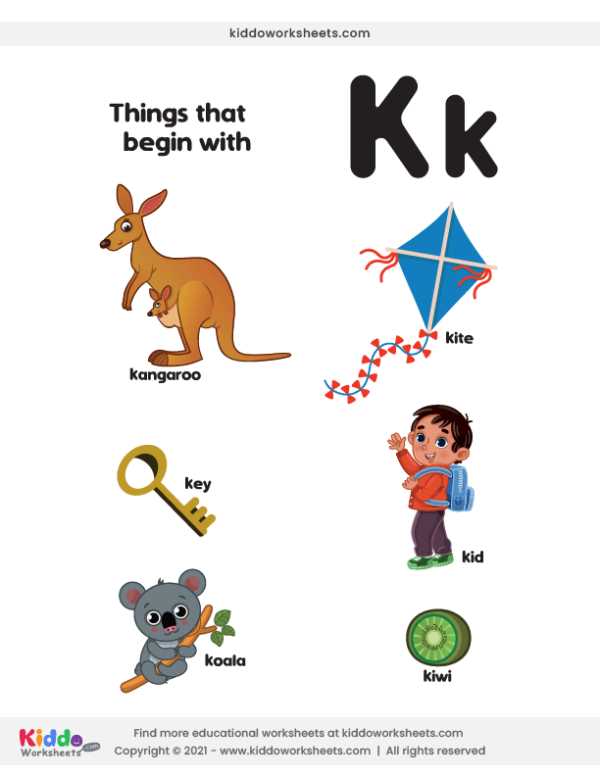
Start by organizing a “K” scavenger hunt around the house or classroom. Prepare cards with pictures of objects starting with “K” like kangaroos, kites, and keys. Hide these cards in different places, and ask the kids to find them. As they discover each card, they can practice saying the word and identifying the letter it starts with.
Incorporate creative art projects like drawing or crafting. Have children make a “K” collage by cutting out pictures of objects that begin with the letter “K” from magazines or printouts. This activity allows children to visualize the letter in different contexts while engaging their creativity and fine motor skills.
Engage children in a sensory activity with a tactile experience. Fill a large bowl with items starting with “K” (like small plastic kangaroos, keys, or kitchen utensils) and have children close their eyes and feel the objects. Once they’ve touched an item, they can guess what it is and then learn how to spell and say its name aloud.
Interactive games work well for reinforcing letter recognition. For example, create a “K” matching game where children match pictures with words starting with “K.” Spread the cards face down, and have kids take turns flipping them over to find matching pairs. This activity promotes both memory skills and phonetic awareness.
Use songs and rhymes to help children internalize the sound of the letter “K.” Create a short, catchy song that includes words like “kite,” “king,” and “kangaroo.” The rhythm and melody will help children associate the letter with its corresponding sound, making it easier to remember.
Incorporate physical movement by playing a “K” charades game. One child can act out a “K” word, such as jumping like a kangaroo or pretending to hold a key, while others guess the word. This active engagement will keep kids excited about learning and help them remember the words better.
Try a letter-building activity where children use playdough or modeling clay to form the letter “K.” This hands-on activity strengthens fine motor skills while providing a visual and tactile connection to the letter. Encourage them to shape both the uppercase and lowercase forms for added practice.
Lastly, encourage independent exploration by providing a “K” word search. You can create a simple word search with words that start with “K” hidden within the grid. This not only helps children identify the letter but also builds their problem-solving and observation skills as they search for the hidden words.