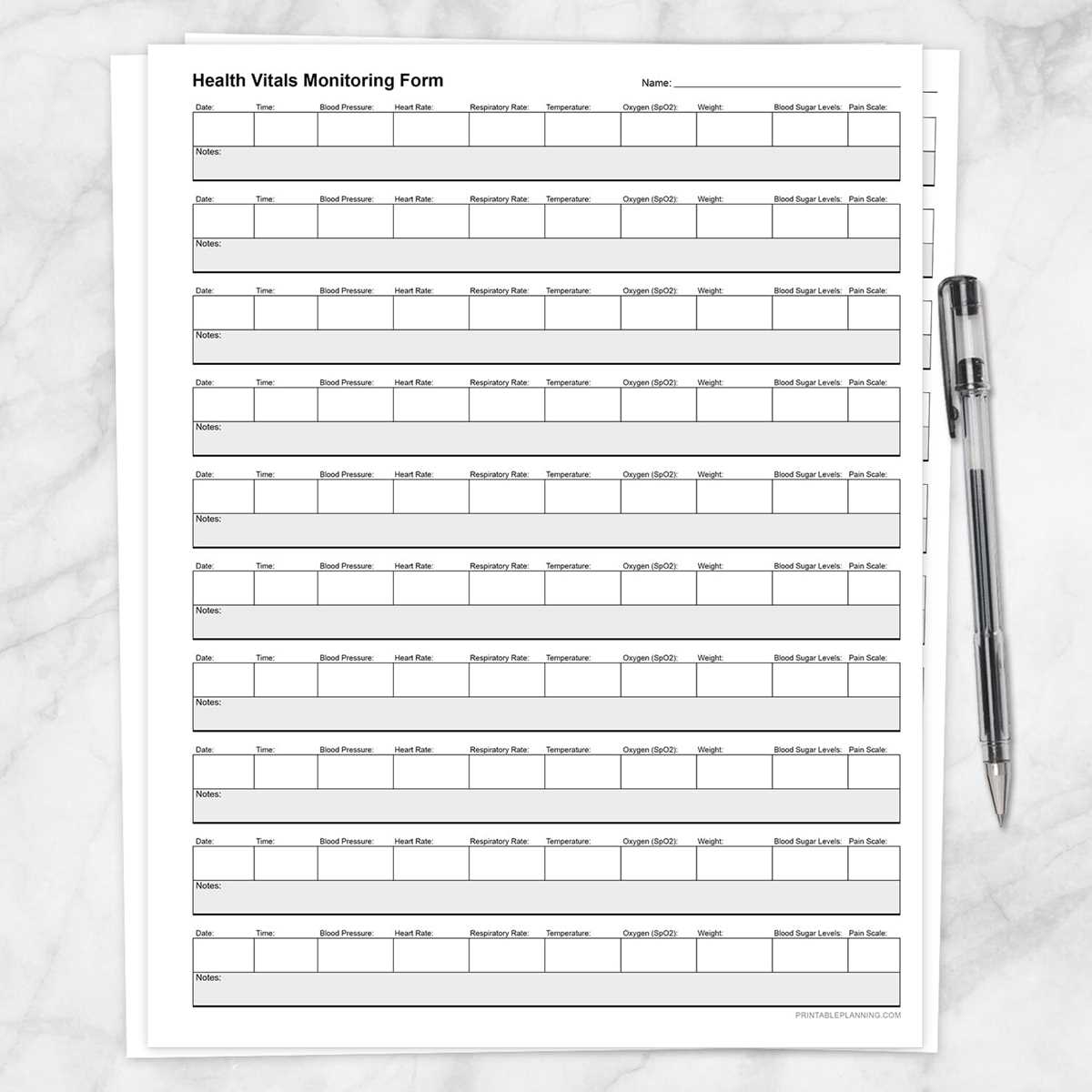
For accurate tracking of health metrics, it is crucial to maintain a document where you can record all essential health data. This allows for quick reference during medical visits, or to observe any changes over time. One of the best practices is to structure the document in an organized manner, ensuring that key metrics are easy to update and access.
Start by including basic information such as the individual’s name, date of birth, and contact details for emergencies. It’s important to document key measurements such as blood pressure, heart rate, temperature, weight, and respiratory rate. These should be recorded consistently to identify any trends or sudden shifts in health.
When designing your health log, keep it simple and user-friendly. This will help you stay on top of health details without feeling overwhelmed. Make sure there is ample space to record daily or weekly readings, as well as any symptoms or observations. A dedicated section for doctor’s visits and medication changes can also be valuable.
How to Create and Use a Health Tracking Log
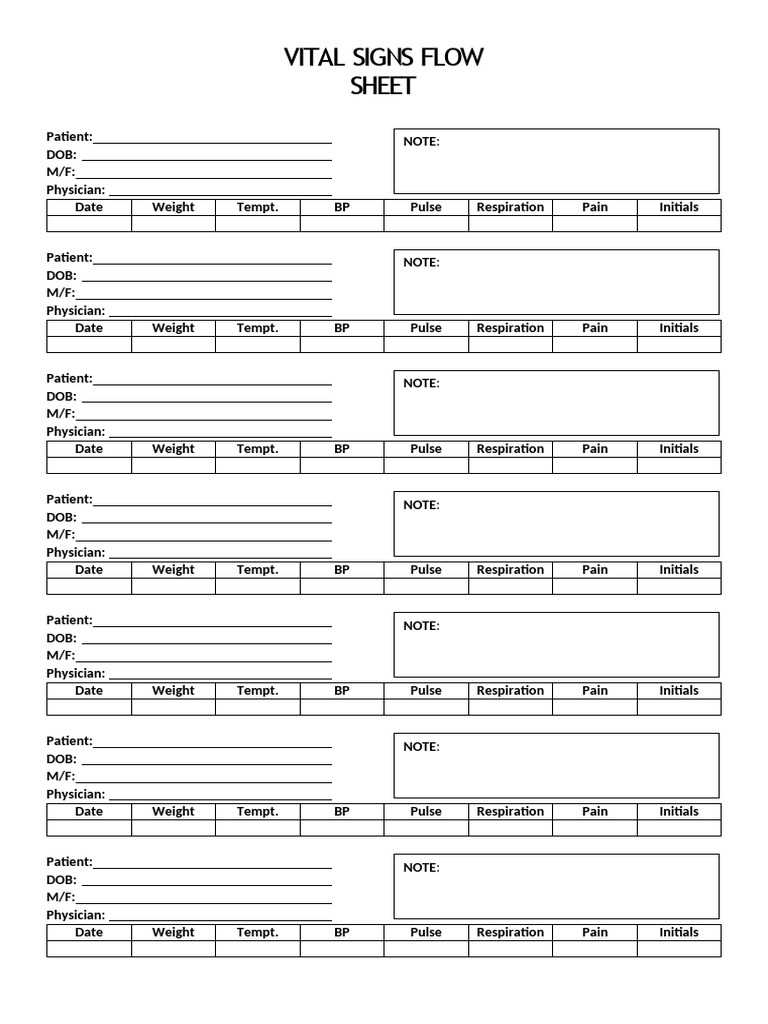
Start by organizing the document to include personal details such as the name, age, and emergency contacts. Having this information readily available ensures that anyone reviewing the log can quickly access necessary details. It’s useful for caregivers, family members, or healthcare providers to have this section filled out accurately.
Next, focus on the key health metrics. These should be measurable factors that offer insight into an individual’s physical condition. Common metrics include blood pressure, heart rate, weight, and temperature. Make sure to create sections for each of these categories with enough room to record daily or weekly entries, depending on the need.
Incorporate a space to track any medication changes or treatments. A section that logs the type of medication, dosage, frequency, and any side effects can be very helpful. This ensures that both the patient and healthcare providers are on the same page, and any irregularities can be addressed promptly.
Include additional sections for symptoms or health events. For instance, if there are any unusual symptoms such as fatigue or dizziness, or significant changes in physical condition, it’s important to document them. By noting patterns over time, you can easily spot concerns that may need attention.
Consider adding a section for doctor’s visits. Record the date of the visit, the reason for the visit, the doctor’s name, and their recommendations. This helps create a clear medical history and can be helpful during future visits when recalling previous diagnoses or treatments.
Finally, review and update the log regularly. Make it a habit to enter data at a set time each day or week. This consistency will improve the accuracy of the records and make it easier to identify trends or issues in the future. Ensure that anyone involved in the care of the individual has access to the log and knows how to use it effectively.
How to Organize Key Health Information on a Vitals Sheet
Start by clearly labeling each section for easy navigation. Use distinct headers for different categories such as “Personal Information,” “Medications,” “Measurements,” and “Doctor Visits.” This structure ensures that anyone using the document can quickly locate relevant details without confusion.
Record key health indicators like heart rate, blood pressure, and temperature in separate columns. Each column should have space for multiple entries over time, allowing you to track trends or irregularities. This helps both the individual and their caregivers to monitor health progress and identify any significant changes.
Include a section for medications. Write down the name of each medication, dosage, frequency, and the start date. Be sure to also leave space to note any changes in treatment or reactions to medications. This section is crucial for keeping track of ongoing treatments and ensuring proper management.
Add a dedicated space for tracking symptoms and health events. If there are changes in how a person feels, such as new pain, fatigue, or dizziness, note these immediately. A clear, organized log of symptoms can help healthcare providers identify potential causes and adjust treatments accordingly.
Document doctor visits and their recommendations in a separate area. Include the date of the visit, the doctor’s name, and any advice or follow-up actions. This section will act as a medical history reference, which is especially useful during future consultations or emergencies.
Ensure there is a section to record emergency contacts and insurance information. This section should be easily accessible in case of urgent situations. Include phone numbers, email addresses, and policy numbers to ensure prompt communication with necessary parties.
Review and update the document regularly. Health information can change frequently, so make it a habit to add new data after each doctor’s visit or whenever there are updates in medication or symptoms. Consistent updates will ensure that the document remains accurate and helpful in managing health over time.