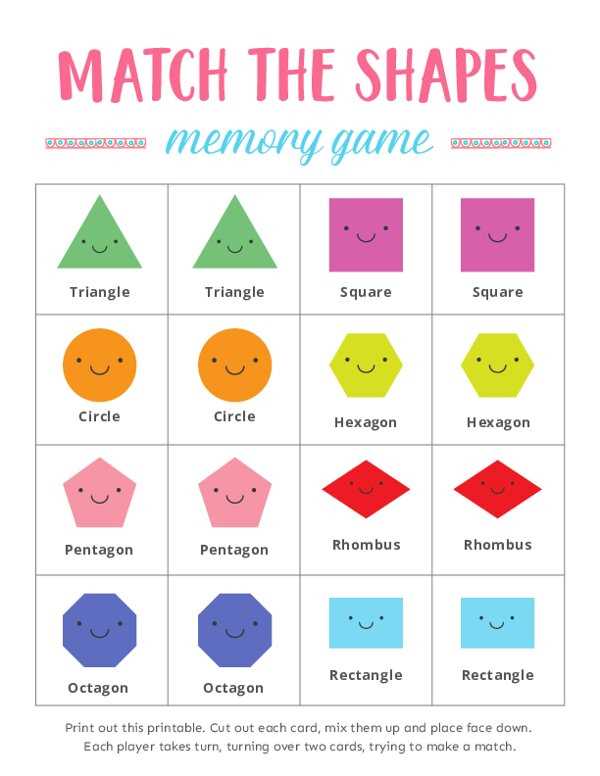
To boost cognitive function, start incorporating short, fun, and simple paper-based challenges into your daily routine. These hands-on tasks can significantly improve attention and concentration skills. Using cards with visual or written prompts can be a practical way to test recognition and recall. The act of physically handling these materials also engages motor skills, which adds another layer to the exercise.
For a fast-paced mental workout, try designing memory matching games with everyday objects or images. This type of exercise is especially useful for enhancing short-term retention and pattern recognition. Whether you’re organizing a group activity or solo practice, variations such as timed challenges or increasing complexity will provide varying levels of difficulty, keeping the brain sharp.
Another useful technique involves creating sequences or lists that require one to memorize and recall items in a set order. This simple strategy is often used by memory champions to hone their ability to retain large amounts of information quickly. You can easily adapt it to your preferences by adjusting the number of items or adding thematic elements to make it more enjoyable.
Engaging Exercises for Enhancing Cognitive Skills
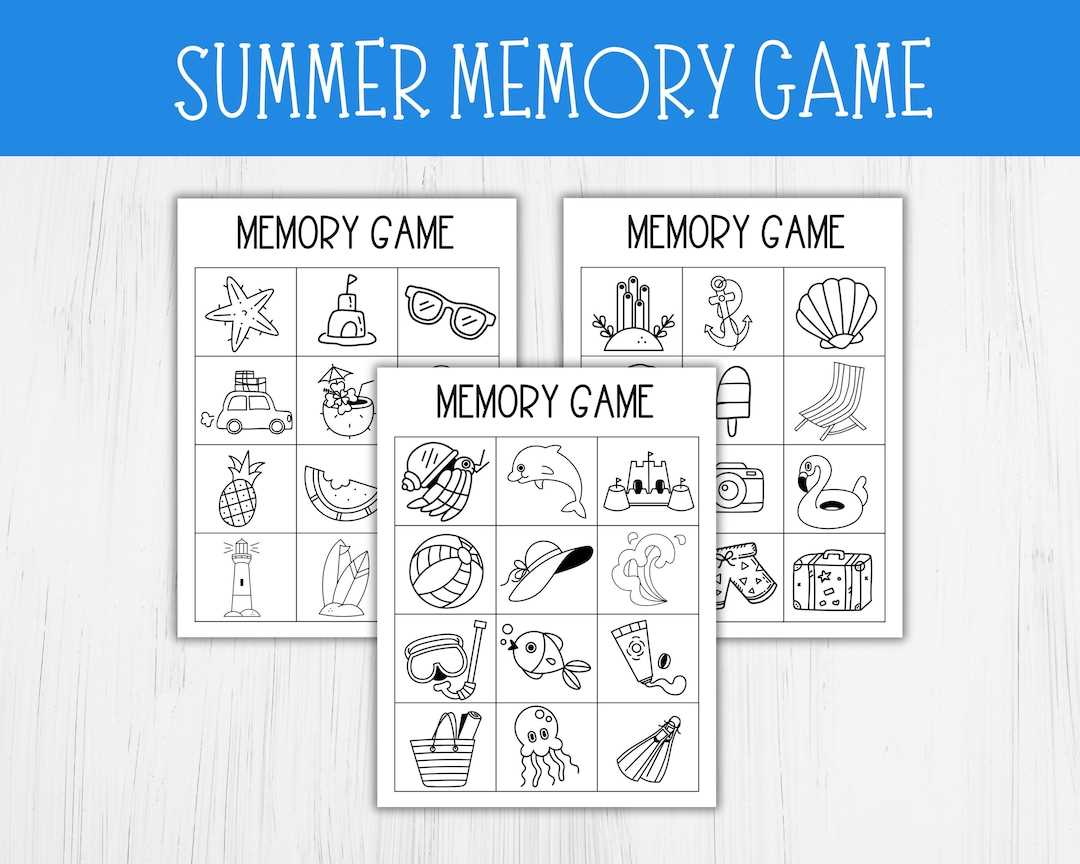
One approach to improving cognitive retention is through visual recall exercises. Create flashcards that feature pairs of images or words that need to be matched. This exercise can be tailored to any age or subject matter, and it sharpens the ability to recall details under time constraints.
Another useful task involves list-based challenges. Write down several items or concepts and ask individuals to memorize the list in a set amount of time. Afterward, challenge them to write or speak as many items as they can remember. This type of exercise boosts concentration and focus.
Memory games with sequences are particularly beneficial for strengthening cognitive connections. For example, present a series of objects or numbers and ask the participant to repeat them back in reverse order. This test encourages working memory and helps improve the ability to handle complex information.
Matching puzzles are a great way to engage multiple senses and stimulate recall. Choose a set of objects and distribute cards with the names of the items. Have participants match the correct names with the objects, either through tactile interaction or by simply visualizing them. The more senses involved, the more effective the process.
A challenge that targets long-term recall involves creating a short story using key words. After providing a set of terms or images, ask the participant to craft a story that connects them. This boosts the ability to create associations, which improves recall accuracy in real-world situations.
For a tactile element, try a “hidden objects” challenge. Place objects around a room, give the participants a brief look at them, and then cover them. Ask the participants to list or describe as many as they can remember. The difficulty can be adjusted by changing the number of objects or the time spent viewing them.
Memory tasks can also be turned into competitive games. Set up timed rounds where participants try to recall details from previous rounds. Each round should present new items, ensuring that the cognitive load continues to build. This not only strengthens memory but also increases the ability to stay focused under pressure.
Incorporating movement into recall exercises has shown benefits in memory enhancement. For instance, placing memory cards at various locations and requiring the participant to run or walk to retrieve the correct match adds a physical element that improves mental clarity. Physical activity helps improve blood flow to the brain, contributing to better cognitive function.
HTML
Choosing the Right Printable Games for Different Age Groups
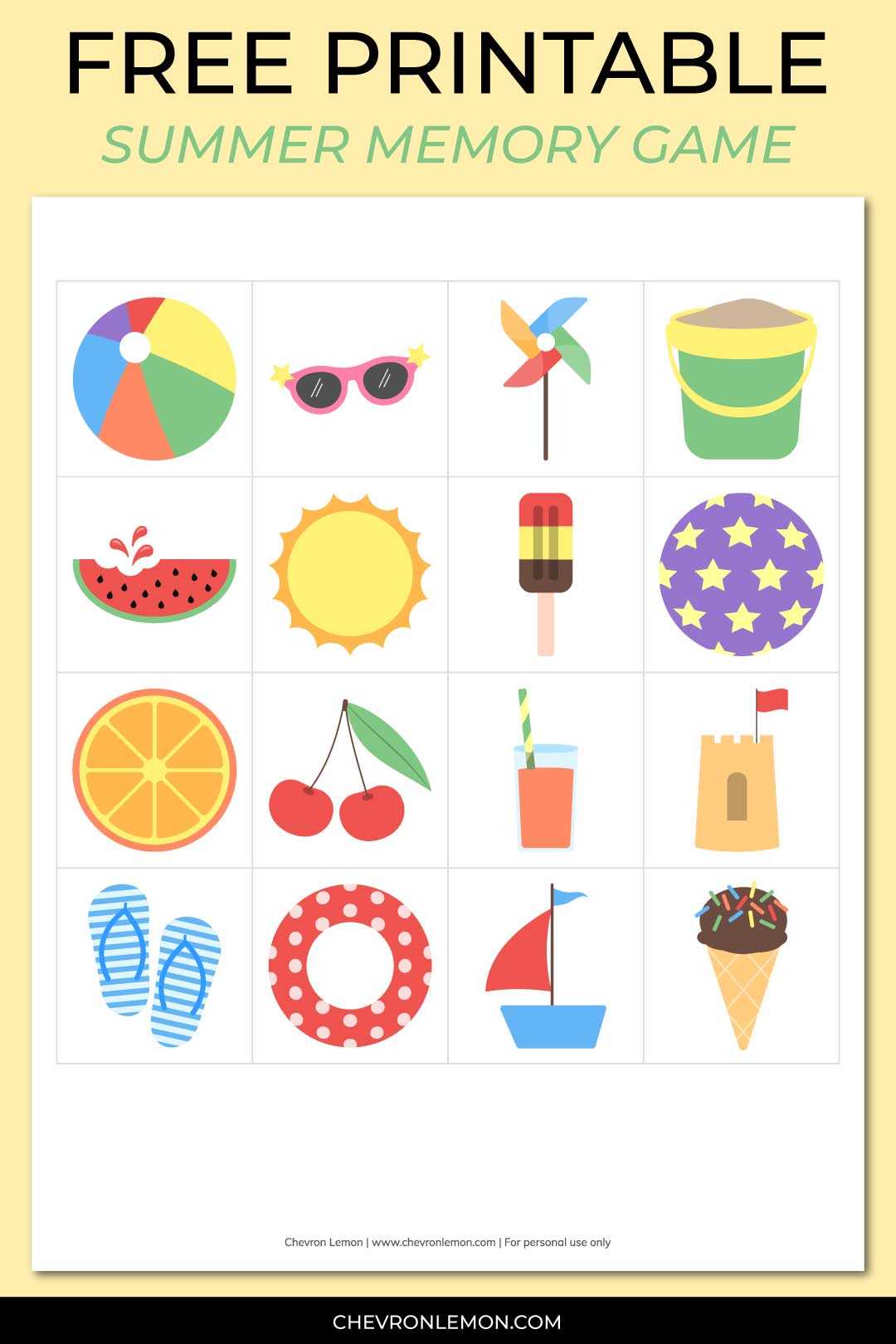
For young children, opt for simple visual matching tasks, such as pairing images or identifying objects. These games should have large, clear pictures and minimal text. At this stage, focus on exercises that improve recognition skills and basic recall. Use bright colors and themes that captivate their attention, like animals or shapes, to maintain interest. Games with interactive elements, like puzzles or ‘spot the difference’ formats, are ideal for toddlers and preschoolers.
As children grow older, the complexity can increase. Games for school-age kids can involve word associations, sequences, and challenges that require more detailed memory work. Choose games that include a mix of images and text for this group, allowing them to practice both visual and verbal memory. Make sure the difficulty level aligns with their cognitive abilities, with puzzles or memory card games that require them to match pairs of related concepts or words.
For teenagers and adults, puzzles that involve logic, reasoning, and strategy become more appropriate. These individuals are ready for games that challenge both short-term and long-term recall. Look for games with more abstract thinking tasks, such as brain teasers or activities requiring spatial awareness. Include a variety of themes, like history or trivia, to engage their broader interests and enhance the learning experience.