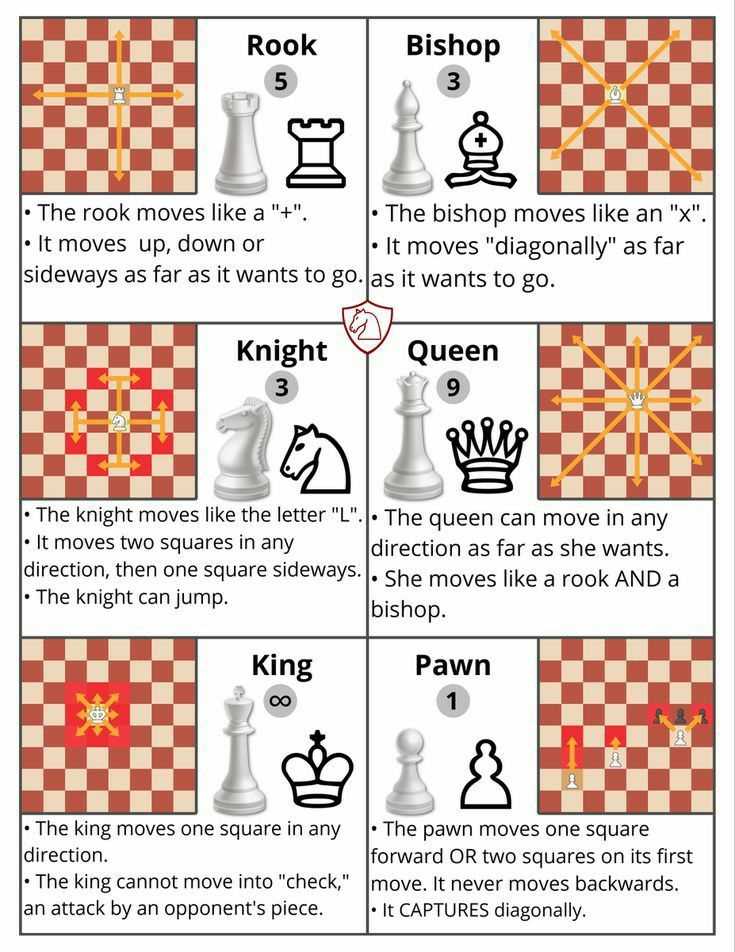
If you’re just starting out or need a quick reference while playing, having a sheet of fundamental instructions can be a game-changer. You can easily find guides that outline the moves of each piece, how to checkmate, and general strategies to follow. Print these materials so that you can review them whenever you’re practicing or playing with friends.
For beginners, it’s helpful to focus on understanding how each piece moves and interacts with the board. These guides will show exactly where each piece can travel and provide visual examples. Start with simple rules like castling, en passant, and the basic movement of pawns, rooks, and knights. These are the building blocks that will help you grasp the more advanced concepts later on.
Once you’ve familiarized yourself with the basic moves, having a handy reference for more complex strategies like opening tactics, the importance of controlling the center, and how to create threats can significantly improve your game. Printable resources can provide these insights in a concise and easy-to-read format, which will speed up your learning process.
How to Use a Reference Sheet for Learning Piece Movements
To quickly grasp the basics, begin by reviewing the movements of each game piece. A reference sheet is ideal for this, as it will visually demonstrate how each piece travels across the board. This is especially helpful for newcomers who may struggle to remember each piece’s range of motion. Print out a sheet that includes detailed images or diagrams for visual learners to track the path of pawns, knights, bishops, rooks, and the queen.
For instance, pawns move forward one square at a time but capture diagonally. Knowing these distinctions is key. The knight’s unique movement (an L-shape) can be confusing initially, so referring to a printed diagram will clarify how the knight jumps over other pieces. For more complex movements like castling, a diagram can help break down the exact steps involved in this maneuver.
Advanced Tactics and Strategies
Once you’re familiar with the basic moves, you can start focusing on strategies like controlling the center or developing your pieces effectively. A reference sheet should provide an overview of these strategic concepts, helping you understand why early piece development and maintaining control over central squares is crucial. Consider printing a strategy guide that shows common opening tactics, such as the “King’s Pawn Opening” or “Queen’s Gambit,” to prepare you for more advanced play.
Another useful feature of a printed guide is the inclusion of tactical themes like forks, pins, and skewers. These concepts might be difficult to grasp without seeing practical examples. Use a reference sheet to see how these tactics are executed and how they can be incorporated into your game for gaining material or forcing a checkmate.
Check and Checkmate Reference
Understanding how to achieve checkmate is crucial to finishing the game. A helpful reference guide should explain different checkmate patterns. For example, the “back rank checkmate” or “smothered mate” is often used by advanced players to trap the opposing king. You can benefit greatly by printing diagrams of various checkmate positions and practicing those patterns. Knowing these can improve your ability to recognize checkmate opportunities during a match.
Additionally, your guide should cover the concept of “check” and the rules that follow. Knowing how to escape check or how to avoid putting your own king in check can prevent unnecessary blunders. Make sure your printed guide includes these key moments and strategies to enhance your game awareness.
How to Print Beginner-Friendly Game Guidelines
To begin with, create a simple and clear version of the basic game instructions. For beginners, it’s crucial to avoid overwhelming them with excessive details. Focus on the most fundamental points, like the number of pieces, how each piece moves, and the primary goal of the game. A basic guide could list these facts in bullet points for easy reading. You can also include simple diagrams showing each piece’s movement on the board.
Use large, readable fonts so the text is easy to follow, and ensure the layout is clean. Avoid clutter and consider leaving enough space between sections to make it user-friendly. Organize the guide logically, starting with an overview of the board and progressing to how the pieces interact. Print the document on a standard sheet of paper so it’s convenient for players to reference during practice sessions.
Include Key Beginner Strategies
Once the basic movements are covered, include a section with common strategies that beginners can use. For example, advise players to control the center squares early in the game, which gives greater mobility. You can print a few beginner-level opening tactics, such as the “King’s Pawn Opening” or “Queen’s Gambit,” as part of the guide. This will help beginners build a foundation for further learning.
Another important concept to include is the idea of piece development–moving pieces out from the back ranks so they can control more squares. A printed reference with step-by-step guides to these moves can speed up the learning process. Make sure each section is concise and focused on teaching one concept at a time.
Provide Examples of Simple Checkmates
To further enhance the learning experience, include a few examples of basic checkmates. The “back rank checkmate” or “two-rook checkmate” are simple but effective ways to finish the game. Provide step-by-step diagrams showing how to execute these, so beginners can recognize these patterns during matches.
In addition, consider printing a section on the importance of avoiding “stalemate” positions, where no moves are available but the game is not over. Clarifying these concepts helps players understand not only how to win but also how to avoid drawing the game unnecessarily.
Tips for Practicing with Printed Guides
Once you’ve printed the guide, it’s time to integrate it into practice. Use the guide while playing to reinforce the concepts. Keep the document nearby during games and refer to it when unsure about a move or strategy. This will encourage active learning and improve overall game comprehension.
Finally, consider printing multiple copies to share with friends or to use in different settings, such as tournaments or clubs. Keeping printed versions accessible makes it easier to reference and review the material whenever needed. The more often beginners interact with the guide, the quicker they’ll internalize the concepts and develop confidence in their abilities.