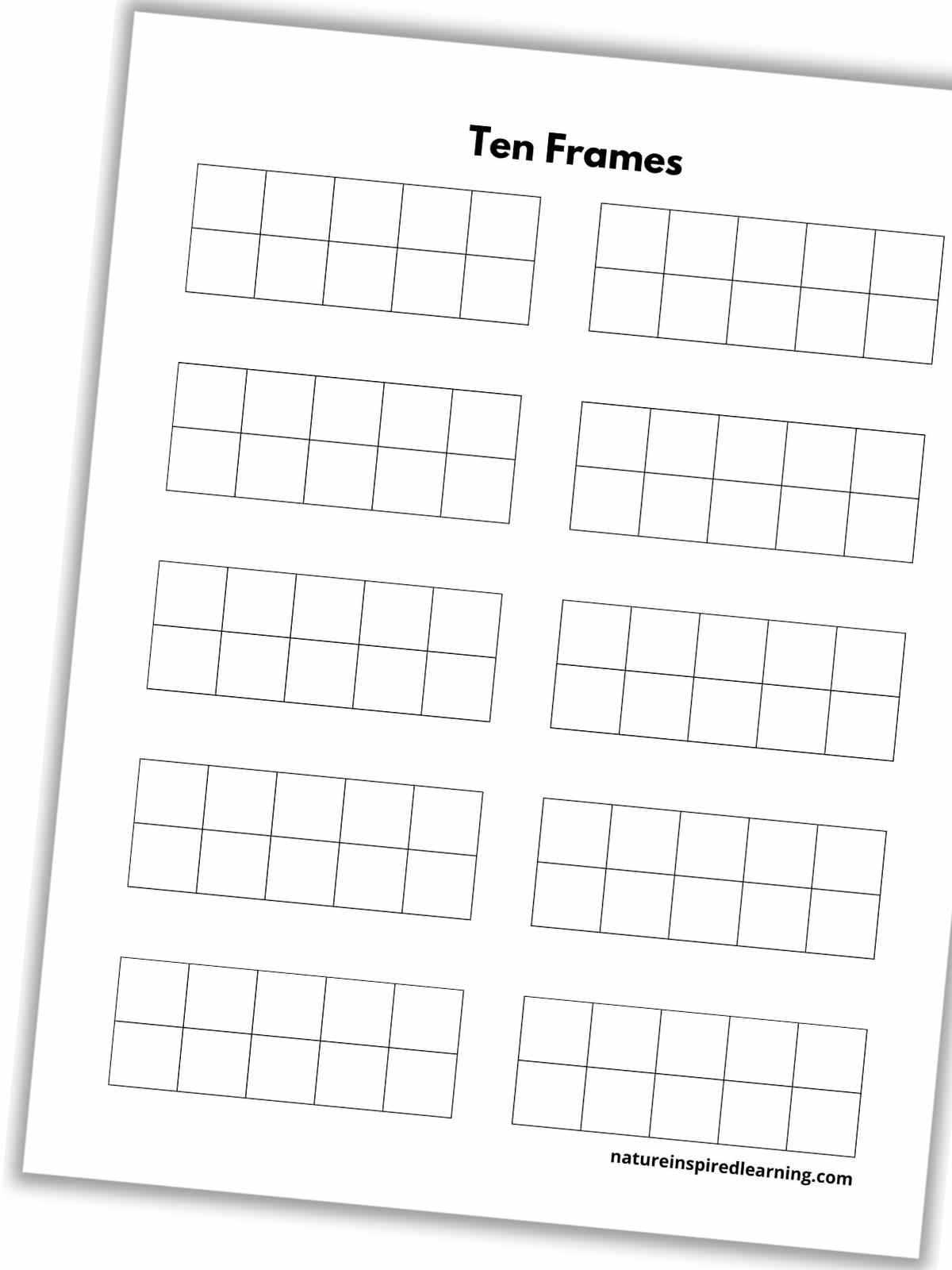
Start by introducing a visual tool that simplifies the learning process of counting and number recognition. Using grids with ten boxes, children can quickly grasp the concept of number grouping and understand numerical relationships. These tools help in reinforcing the idea of “ten,” which is fundamental in early math skills.
When selecting such grids, opt for clear, well-defined charts that offer easy navigation. Choose templates with a balance between simplicity and clarity. Some designs include extra features like color-coded boxes, which make it easier for young learners to track their progress and engage with the activity. A straightforward layout will support focus and understanding without distractions.
Once you have the appropriate grid, make sure to incorporate fun activities like matching numbers to items, counting in groups, and solving basic addition and subtraction problems. You can also use manipulatives, like counters or blocks, to enhance hands-on learning. This combination of visual and tactile methods supports a deeper understanding of numbers and helps students visualize math concepts in a practical way.
How to Use Ten-Box Charts for Early Math Skills
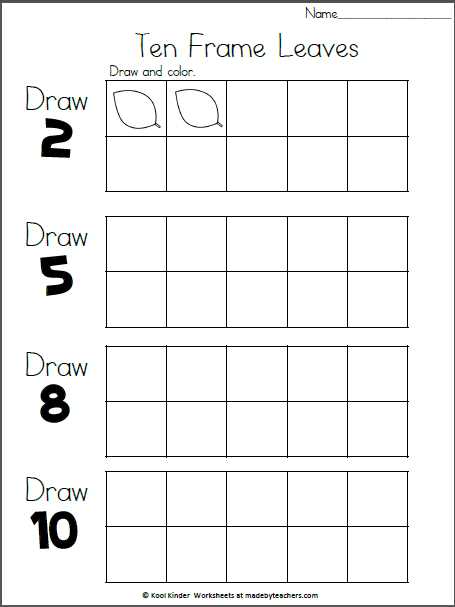
Begin by introducing ten-box charts as a tool for teaching early number concepts. They help children visualize groups of ten, making it easier to understand basic addition and subtraction. These grids simplify counting and can be used in a variety of activities to reinforce math learning.
For effective use, start by guiding children to fill in the boxes with counters or markers. This hands-on approach allows students to physically engage with the concept of numbers and enhances retention. You can also ask children to represent different quantities in the boxes to show numbers above ten, such as using two sets of ten to represent the number 20.
Another effective exercise is using the chart for subtraction. Start with a full set of ten and ask the student to remove counters as you subtract numbers. This process visually represents how subtraction works and helps with understanding how numbers decrease.
Choose clear, simple designs when selecting or creating these charts. The boxes should be evenly spaced with visible boundaries. This simplicity helps students stay focused on the task without distractions from overly complex designs. Using larger fonts and bold colors can also help make the chart easier to follow for younger learners.
Consider incorporating colored counters or items into the chart to make the activity more engaging. Using different colors for each group of ten can reinforce the visual aspect of grouping numbers and can help in the early stages of multiplication as well.
For further practice, extend the learning by using these charts for skip counting. Begin with counting by twos, fives, or tens, and mark the corresponding boxes as students go along. This not only strengthens their understanding of numbers but also introduces them to patterns in mathematics.
These charts can also be adapted for other subjects, like teaching time, by creating similar grids for hours and minutes. The flexibility of this tool allows it to be used across a range of early learning activities, helping students build foundational math skills in an interactive way.
How to Use 10 Frames for Early Math Learning
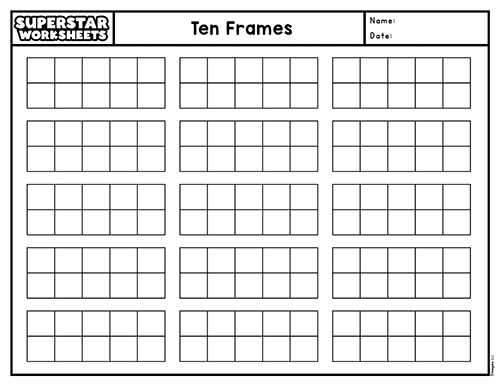
Start with the basics: use these grids to help young learners count from 1 to 10. Fill in the boxes with objects like coins, buttons, or colored circles to represent numbers. This method allows children to visually connect quantities to their numerical counterparts, reinforcing their understanding of counting.
Next, use the grid for teaching addition. Begin by asking the child to fill in a set of boxes with a certain number of counters, and then add more to show how the total increases. For example, start with 3 counters and add 2 more, showing how 3 + 2 equals 5. This hands-on approach makes abstract concepts like addition tangible and easy to grasp.
Another exercise is subtraction. Start with a full set of boxes and ask the child to remove a certain number of counters. This visual method helps demonstrate how numbers are reduced and reinforces the concept of “taking away.” It can be a fun activity to see how the number decreases as counters are taken out.
Incorporate skip counting into your lessons. Have children fill in the boxes with specific intervals, like counting by twos, fives, or tens. This activity introduces early multiplication concepts in a simple, straightforward way. Marking the boxes in a rhythmic pattern helps children understand that numbers follow specific sequences.
Use these grids to show number patterns. For example, color in every other box to demonstrate even numbers or fill every fifth box to illustrate multiples of 5. Visual patterns like these help children identify relationships between numbers and start thinking about them in terms of groups.
For a more challenging activity, encourage children to represent numbers larger than 10 by filling in two grids. This teaches them how to work with numbers beyond ten and gives them a visual understanding of how quantities grow. It’s a great way to introduce the concept of place value and number sense.
Finally, make it interactive by creating simple math games. Ask the child to “race” against a timer to fill in the boxes as quickly as possible or play a matching game where they match a number with the correct grid. This turns learning into a fun and engaging activity, helping reinforce the math concepts in an enjoyable way.