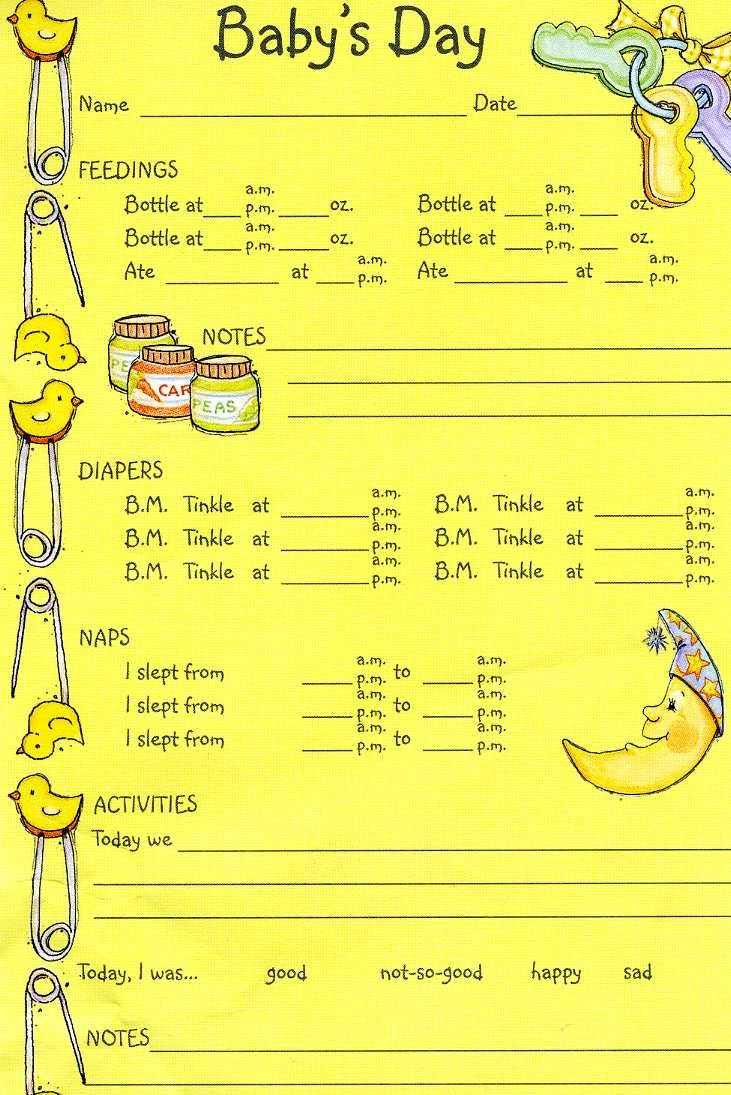
Use a simple template to monitor your baby’s feeding schedule, sleep patterns, and diaper changes. This allows you to spot trends and stay on top of your little one’s needs. By recording these details consistently, you’ll be able to keep a clear track of your child’s daily routine.
Start by setting up a sheet with dedicated sections for each task, such as eating, sleeping, and changing. Each entry should include the time and any notes that could help, such as the baby’s mood or specific care preferences. This will allow caregivers to quickly understand the baby’s needs and make adjustments as necessary.
Make sure to include a section for tracking health-related items, such as temperature or any signs of illness. This is useful not only for your own reference but also when communicating with doctors or caregivers about the baby’s well-being. A well-organized chart can help you address concerns quickly and efficiently.
Consider using online tools or apps to store this information digitally. Many tools offer pre-designed templates that allow you to enter and analyze the data for patterns. However, a simple printed version can also be a reliable and effective solution, giving you a quick glance at your child’s schedule without needing to open an app.
How to Organize Baby’s Care Schedule
Create a simple tracking sheet that includes key information: feeding times, diaper changes, and sleep duration. This method ensures that both parents and caregivers are aligned on the baby’s needs, making care more efficient and less stressful. Use columns to separate different activities, making it easy to fill in details at a glance.
Include space for notes such as feeding preferences or sleep patterns. For example, you can note whether your baby prefers shorter or longer naps or if they are particularly fussy after a certain type of food. This helps you identify any trends over time that could inform decisions about your baby’s routine.
For an even more effective approach, track the baby’s mood and behavior after feedings or naps. Some babies may become more irritable after certain activities, so noting these changes can be valuable for fine-tuning the care process. Record this information daily for an accurate picture of your child’s development.
Consider using both a physical sheet and a digital tracker. Some parents find it easier to carry a printed version while others prefer to use an app or online tool to store and analyze the data. Find the option that works best for your family’s lifestyle and needs.
If you’re tracking medical information, such as temperature or any symptoms, make sure the chart includes a section for health notes. Recording this information will make it easier to spot any potential health issues and communicate effectively with pediatricians or other healthcare professionals.
Finally, regularly review your tracking sheet to assess if your baby’s routine needs adjustment. Over time, you may find that certain activities need more or less focus, and having a clear record will help you make those decisions with confidence.
How to Create a Custom Infant Care Template
Start by defining the key areas you need to track, such as feeding times, diaper changes, naps, and any medications or special instructions. Create a simple table with columns for each activity and rows for timestamps. This structure will help you quickly fill in relevant details and keep everything organized for easy reference.
Next, decide if you want to include additional sections, like mood tracking or health notes. You can also create space for observations, such as how the baby reacted to a new food or any signs of discomfort. Once your template is set up, consider saving it digitally so you can print or edit it whenever needed.