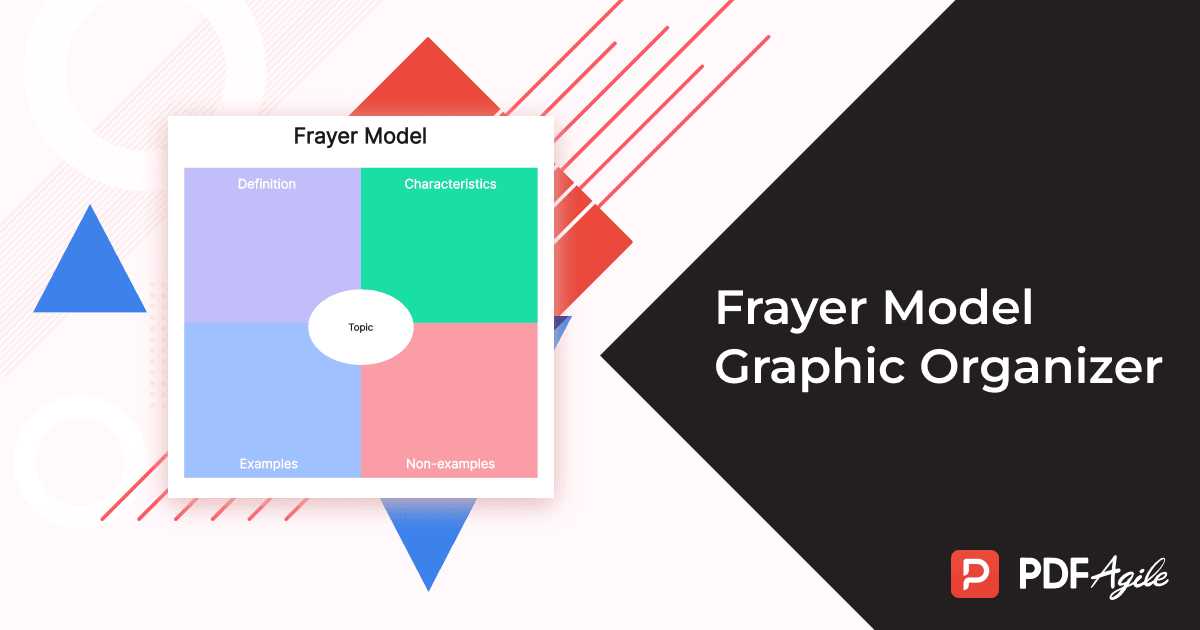
To effectively learn new terms or concepts, use a simple grid format that divides information into key sections. This approach helps in breaking down complex ideas by categorizing them into specific attributes. Start by writing down the word or concept at the center, and then define its characteristics, examples, and non-examples in the surrounding sections. This visual representation clarifies the meaning and encourages better retention.
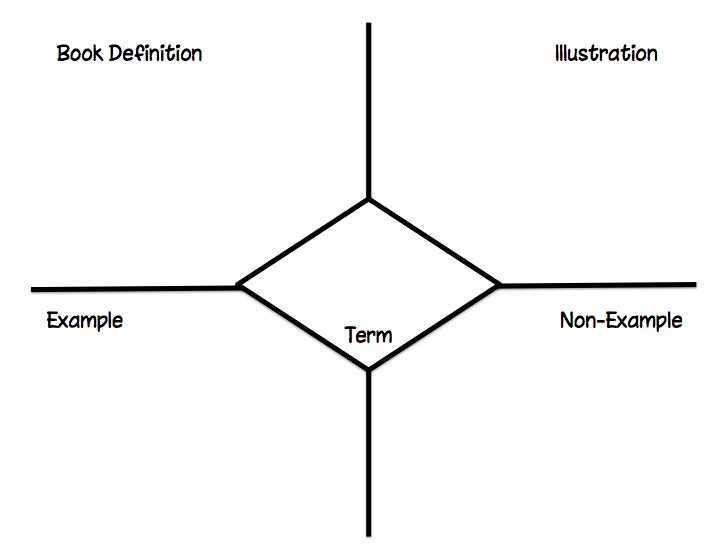
These grids are especially useful for subjects like vocabulary building or understanding new theories. They allow students to see connections between definitions, real-life examples, and contrasting ideas. By creating these diagrams, learners actively engage with the material, improving their understanding and recall. You can easily find free downloads online or create custom grids suited to your specific needs.
Whether you’re preparing for a test, designing lesson plans, or trying to understand a new topic, using this method can streamline your study process. The flexibility of this approach makes it suitable for a wide range of subjects, and it’s particularly effective for visual learners who benefit from seeing information in a structured format.
How to Use a Concept Grid for Learning and Study
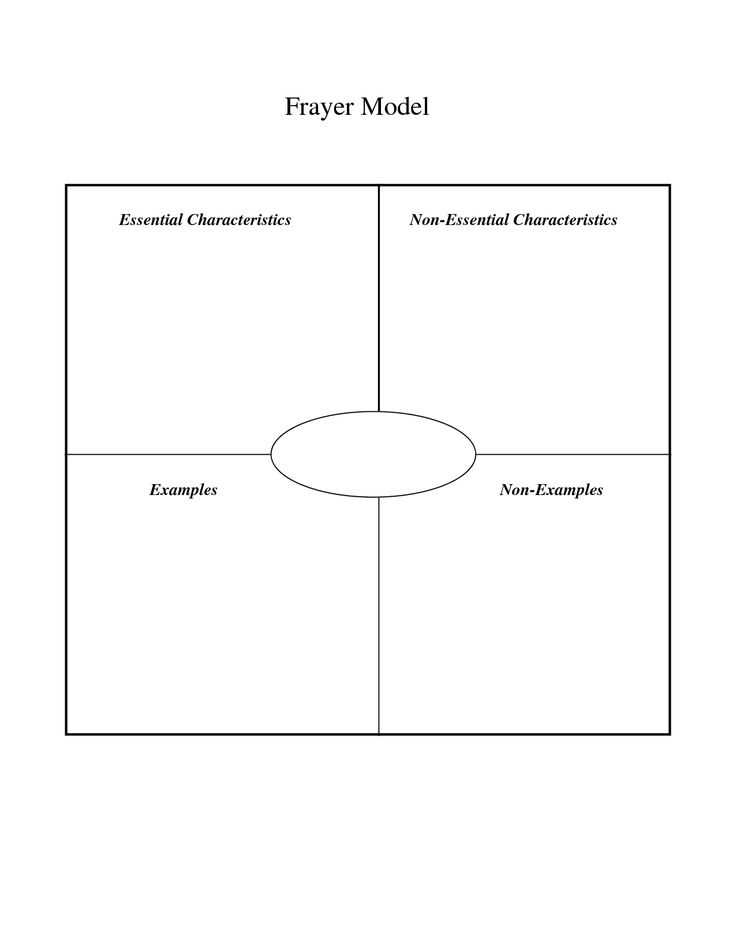
Begin by choosing a key term or concept that you wish to explore in-depth. Write the concept in the center space of your grid. This allows for a focused and organized approach, giving clarity to the rest of the exercise. Around this central concept, create four sections labeled: definition, characteristics, examples, and non-examples.
For the definition section, provide a concise and clear description of the concept. The characteristics section should list its main features, attributes, or qualities that distinguish it from other ideas. Next, in the examples section, include real-world or academic situations where the concept is used or observed. The non-examples section is equally important as it highlights situations where the concept does not apply, helping to clarify boundaries.
This method is valuable because it encourages deeper understanding by forcing you to think critically about the relationships between the concept and its surroundings. It is a great tool for breaking down complex or abstract ideas into manageable pieces of information, helping learners connect theory to practice.
You can easily create this grid by hand or use a digital tool to generate it. Many online resources offer free downloads of blank grids, which can be printed for classroom or individual study. Whether you’re preparing for a test, teaching a class, or working on a project, this method enhances retention and comprehension of new material.
How to Use a Concept Grid for Vocabulary Learning
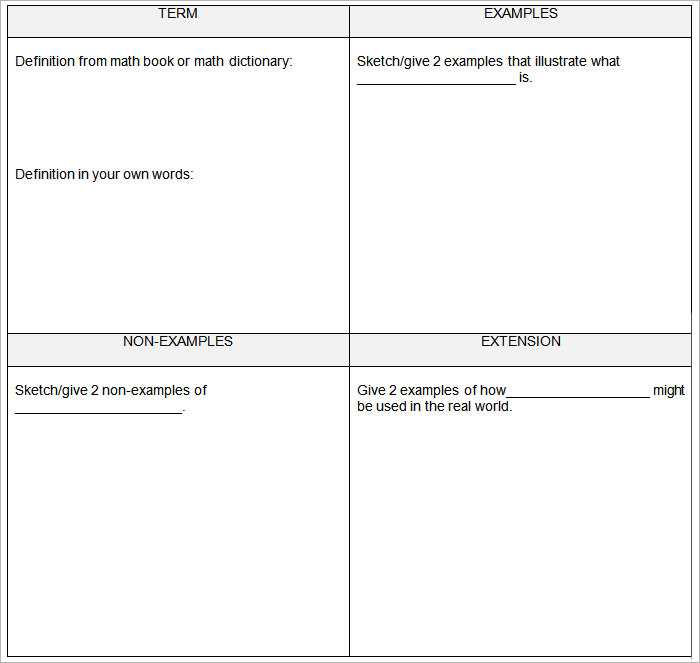
Start by writing the target word in the center of the grid. This serves as the focal point for learning. In the surrounding sections, define the word clearly, listing its key traits or functions. Next, provide concrete examples where the word is used in context, making sure to highlight its application. Finally, include non-examples that show situations or objects that do not fit the definition of the word, clarifying its boundaries and helping to deepen understanding.
This method encourages active engagement with new vocabulary by prompting learners to explore not only the word’s meaning but also its nuances and usage. By distinguishing between examples and non-examples, learners gain a more comprehensive grasp of the term. Whether studying independently or in a group, this approach strengthens retention and improves the ability to use new vocabulary accurately in different contexts.