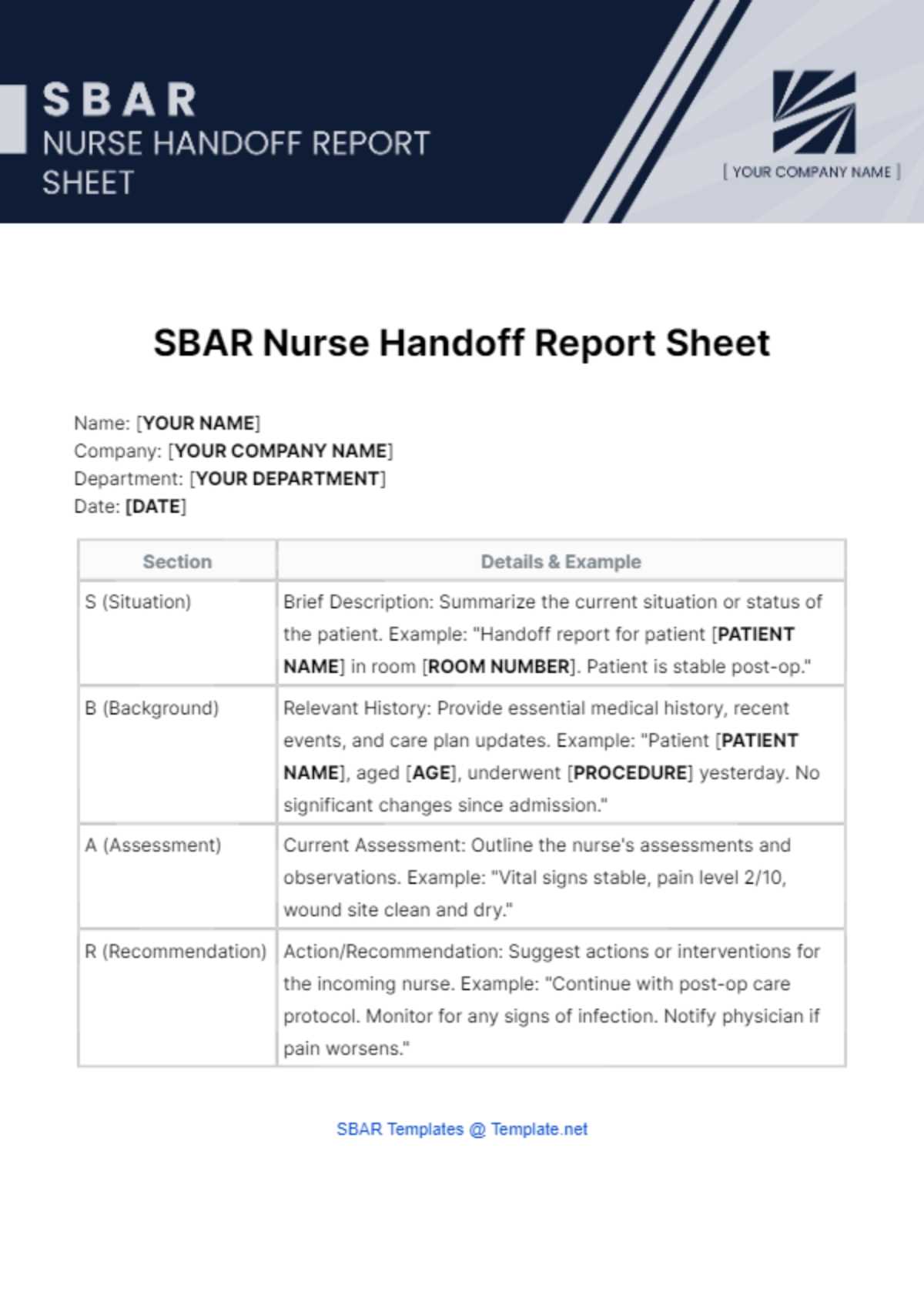
Using standardized templates for communication can significantly enhance clarity and efficiency in healthcare settings. By organizing information in a structured format, it becomes easier for team members to understand patient concerns and make informed decisions quickly. One highly useful approach is a structured communication framework that encourages concise and direct information exchange, helping to streamline discussions, especially during critical situations.
When developing a communication structure, focus on organizing key details such as patient condition, the required actions, and immediate needs. Ensure that the template is simple to follow and covers all necessary aspects without overwhelming the communicator. A well-designed tool allows healthcare workers to quickly convey complex information in a way that is easy for the receiver to interpret and act upon.
Integrating these communication strategies into daily routines will lead to fewer misunderstandings, quicker responses, and improved patient outcomes. It is particularly important in high-pressure environments where the speed of information exchange can make all the difference. Using a clear, easy-to-understand format ensures that every team member is on the same page and can contribute effectively to patient care.
SBAR Templates for Effective Healthcare Communication
To improve the clarity and efficiency of communication, a structured format for exchanging patient information can be incredibly valuable. One such framework includes sections for presenting the situation, background, assessment, and recommendations in a standardized manner. This type of approach ensures that all essential details are included without overwhelming the listener with unnecessary information.
A well-designed template begins with a section that outlines the current condition or situation of the patient. This should be concise and focus on the most pressing issues. For example, instead of simply stating “patient in pain,” a more specific description such as “patient experiencing moderate chest pain, rating it 6/10” provides actionable context for the healthcare provider receiving the information.
The next section of the template should address the background of the patient’s condition. This is where the history and context are provided. Including relevant medical conditions, medications, and any recent treatments will give the recipient a clear understanding of the patient’s situation. For instance, “patient has a history of hypertension and diabetes, currently on antihypertensive therapy” would fit well in this section.
Assessment comes next, providing an evaluation of the situation. This is where clinical judgments and observations are made. For example, “patient’s blood pressure is elevated at 180/100, and they have difficulty breathing.” Clear, objective language is key in this section to ensure that clinical staff can quickly assess the urgency of the situation.
Finally, the recommendation section allows the communicator to propose specific actions or next steps. It should be direct and action-oriented. For example, “administer 5 mg of IV labetalol and reassess blood pressure in 15 minutes” provides a clear directive for the next steps in patient care.
Templates should be customized to fit the unique needs of each healthcare facility. While there are standardized frameworks available, adapting these templates for specific departments or types of care ensures that the format is as relevant as possible. Customization may include adding additional fields for particular specialties or creating visual cues that highlight critical information.
Training staff on how to effectively use these templates is crucial. Even the best templates are of limited use if healthcare professionals are not well-versed in their application. Regular practice in using the structured format can improve the quality of communication and reduce errors, especially in fast-paced environments like emergency rooms or intensive care units.
In summary, implementing a standardized communication template can significantly enhance the clarity of information exchanges in healthcare settings. By focusing on the most important aspects of the patient’s condition and suggested interventions, these tools help facilitate quicker decision-making and better patient outcomes.
How to Structure an SBAR Template for Clear Communication
To create an effective template for patient information exchange, begin by dividing the communication into four sections: Situation, Background, Assessment, and Recommendation. This structured approach provides clarity and minimizes confusion during urgent situations.
The first section, “Situation,” should provide a brief but accurate description of the current issue. This includes the main reason for the communication, such as a sudden change in the patient’s condition. For example: “Patient’s heart rate is 130 beats per minute, and they are showing signs of distress.” Be concise but specific about the condition or event that needs attention.
Next, “Background” provides relevant details to help the recipient understand the context. Include important medical history, medications, and any recent events that contribute to the current situation. For example: “Patient has a history of atrial fibrillation, currently on anticoagulants, and underwent recent surgery for a hip fracture.” This information helps the healthcare provider form a quick understanding of the patient’s risk factors and previous treatments.
The “Assessment” section includes an evaluation based on current observations and clinical data. This part should focus on measurable data, such as vital signs or lab results, as well as clinical judgment. For example: “Blood pressure is 90/60, temperature is 99.1°F, and the patient is showing signs of hypoxia with oxygen saturation at 88%.” This helps communicate the urgency of the situation.
In the “Recommendation” section, specify the actions needed to address the issue. Be direct and clear about the next steps. For example: “Administer 500 mL IV fluids, reassess blood pressure after 10 minutes, and consider starting a vasopressor if BP remains low.” Recommendations should be clear enough to guide immediate intervention.
Ensure that your template includes clear fields for each section, which can be filled in quickly and accurately. Use bullet points or numbered lists where appropriate to make the template easy to follow under stress.
Additionally, customize the template based on the type of care or department. For example, a critical care template might include additional sections such as “Current Medications” or “Immediate Concerns.” Customization ensures the template is relevant and practical for different healthcare settings.
Finally, practice using the template regularly. Make sure all team members are familiar with the format so they can use it efficiently in high-pressure situations. Regular training ensures that communication remains effective and accurate during emergencies.