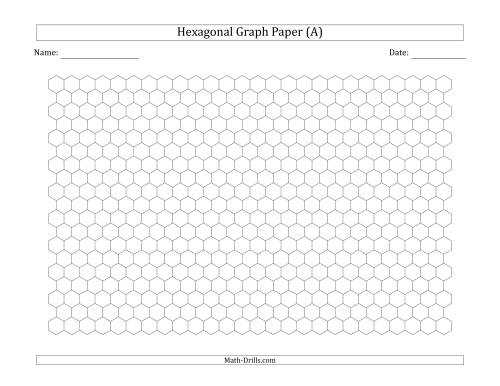
To start designing with a six-sided layout, focus on understanding how these shapes can help structure your project. They are ideal for creating patterns that need consistent angles and spacing. Start by downloading a template with the necessary measurements to avoid confusion during your work. Many resources provide easy-to-use templates for specific purposes like game development or visual design.
If you’re using a design tool, ensure it has the option to create custom layouts. This is helpful when you need precise control over how the shapes align. Some tools even allow you to adjust the size of each cell, making it adaptable to your project’s scale. For more complex designs, consider using vector software where you can manipulate the geometry of your layout for perfect alignment.
These patterns are popular in map-making due to their ability to offer more directionality options compared to square grids. If your project involves mapping, this type of arrangement can help you cover large areas while still maintaining clarity and ease of use. Be sure to explore various printable designs, which can cater to different needs, from educational exercises to complex graphic design tasks.
Printable Hex Grid Usage Guide
To effectively use a six-sided layout template, start by selecting the right scale for your project. If you’re mapping a large area, consider larger cells to make the design easier to interpret. For smaller projects, opt for smaller cells to maintain detail and precision. Templates are available in various sizes, so make sure to choose one that suits the level of detail you need.
For game design, this structure works particularly well for tactical board games or strategy-based play. It allows for more movement options than traditional square-based systems, enhancing the gaming experience. Use the grid to represent terrain, movement patterns, or a variety of other elements that require precise positioning. Customizing the grid based on the game rules will help create more engaging scenarios.
Artists and designers also find these grids useful when working with geometric patterns or creating complex visual compositions. The uniformity of the layout ensures that each section aligns perfectly, which is crucial for creating symmetrical designs. You can easily integrate this pattern into graphic design projects, where precision is key, by adjusting the grid size in your design software to match the project’s requirements.
How to Create and Customize a Hexagonal Grid for Your Projects
To create a six-sided layout for your project, start by selecting the right software. Tools like Adobe Illustrator or Inkscape allow you to generate customizable patterns. Simply select a polygon tool, set the number of sides to six, and adjust the size of each cell to match your needs. This approach provides flexibility in design, allowing you to manipulate the spacing between each cell and fine-tune the layout for any project.
Once you’ve created the basic structure, consider adjusting the angles between the cells for more complex designs. Changing the angle of the cells can create new perspectives, allowing you to achieve a more dynamic or organic pattern. If you’re using the grid for a game or a mapping project, it’s important to make sure the spacing between cells is consistent to maintain alignment and uniformity across the design.
To customize the design, explore color, texture, and line styles for added depth and style. For a more functional layout, using alternating colors or shading different areas of the grid can help distinguish specific zones. In graphic design, adding gradients or textured fills within individual cells can create visual interest and make the layout more appealing.
If you are working with a physical medium, print out the customized layout and use it for board games, art projects, or educational purposes. Adjust the dimensions of the cells based on the final print size to ensure clarity when the design is scaled. Additionally, it’s helpful to create a version with numbered rows or columns for easier navigation, especially in game designs where cell references are needed for gameplay.