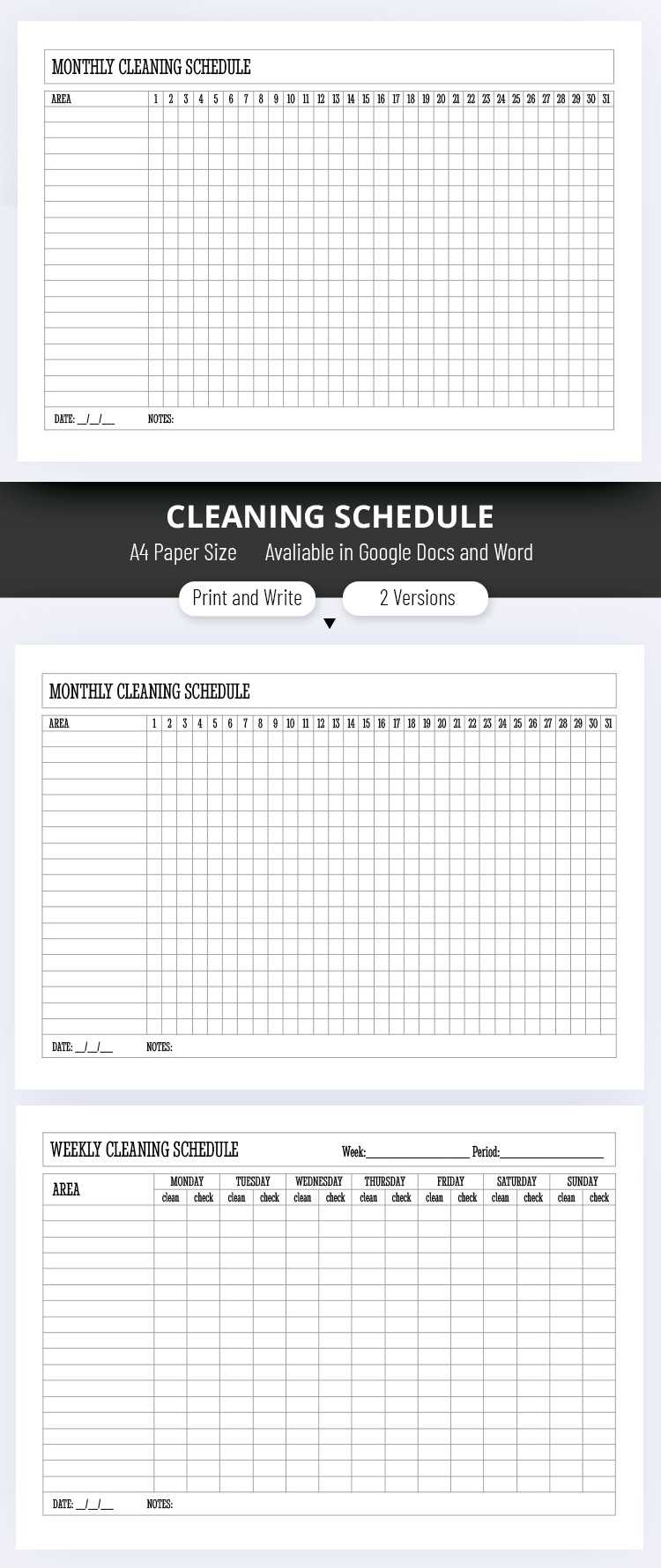
Begin by identifying the most important tasks that need to be completed each day, week, and month. Write them down in a simple list, categorizing them by frequency. Prioritize daily duties like wiping down counters or taking out the trash, and separate them from more occasional jobs such as deep-cleaning windows or organizing the garage. Once you have a clear picture of your tasks, it’s time to map them out.
Using a ready-made layout or designing your own can significantly simplify this process. Divide the list into manageable blocks that align with your routine. For instance, allocate specific tasks for mornings, afternoons, or weekends based on your availability. This will prevent the overwhelming feeling of too much at once and allow you to track progress.
Finally, keep yourself accountable by checking off completed jobs. This simple action can offer a visual representation of your success and motivate you to stay on track. If you slip up, don’t stress. Just adjust the timing and stay committed to getting back on schedule. Regularly revisiting your plan will help keep the home in shape without unnecessary stress.
How to Organize Your Household Tasks for Consistency
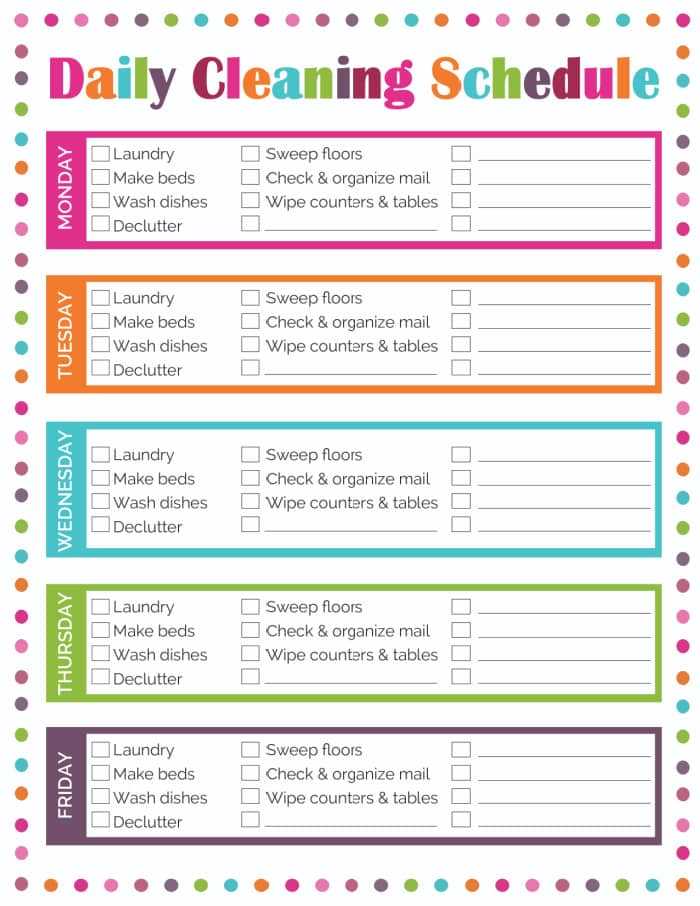
To make your housework manageable, break tasks into daily, weekly, and monthly activities. This method ensures that you can tackle small chores every day without feeling overwhelmed. For instance, focus on tasks like dusting and wiping surfaces each day, and reserve larger duties, such as vacuuming or organizing, for the weekends. By spacing tasks out, you avoid having a single overwhelming cleaning day.
For long-term organization, create a simple chart that you can refer to throughout the week. Choose a format that works best for your lifestyle, such as a digital calendar, spreadsheet, or hand-written list. This will help you visually track what’s been completed and what still needs attention. You can even create a color-coded system to make it easier to recognize which tasks need immediate attention.
Once you’ve set up your plan, stick to it by making it part of your routine. Dedicate time each morning or evening to complete the tasks on your list. This will reduce clutter in your home and prevent the buildup of larger messes. If your schedule becomes too tight, don’t hesitate to adjust it–whether by adding or removing specific chores based on priority. Flexibility helps maintain consistency in the long run.
How to Create a Personalized Cleaning Schedule for Your Home
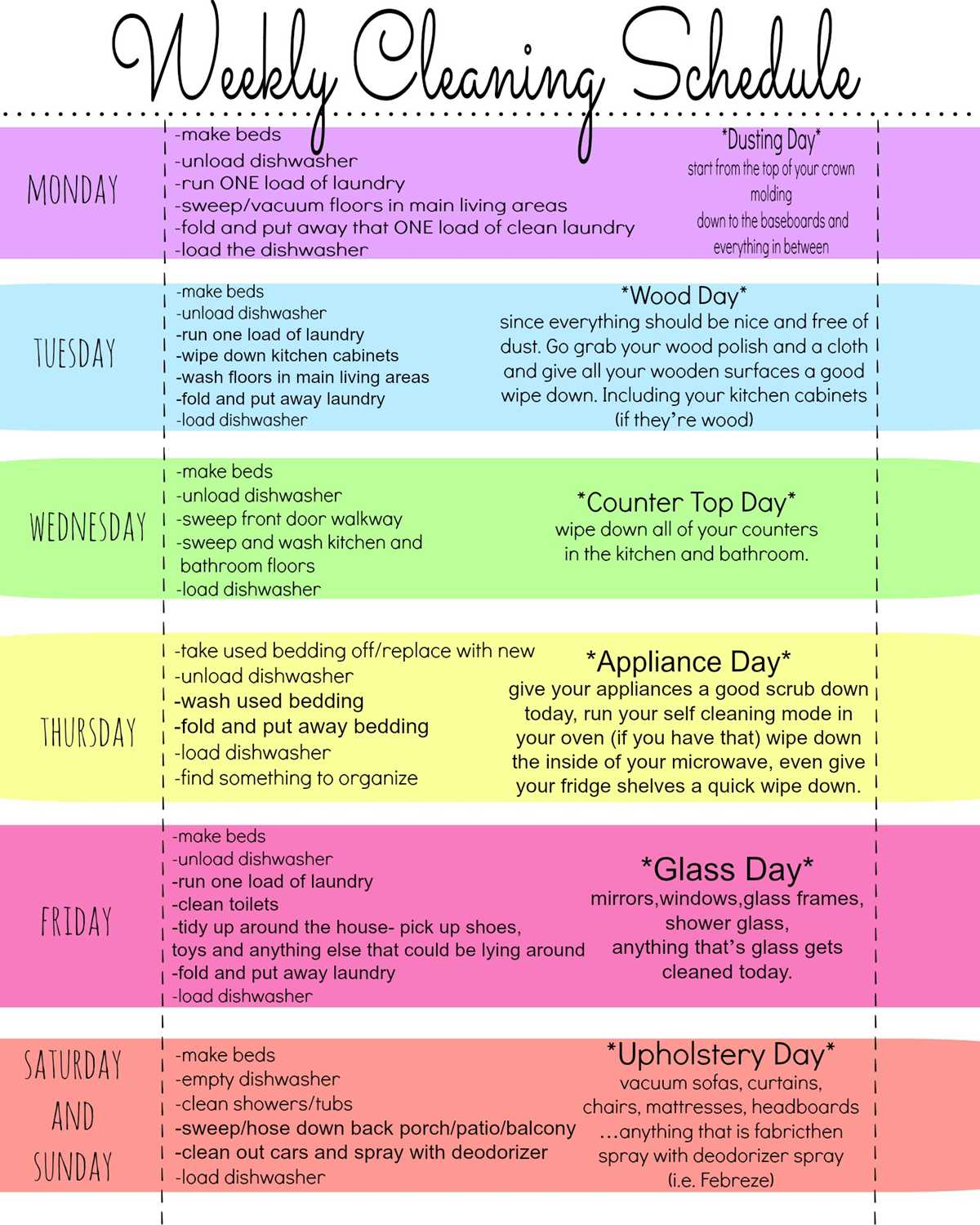
Begin by listing all the tasks you want to tackle in your home. Break them into categories such as daily, weekly, and monthly jobs. Daily chores could include things like washing dishes, making the bed, or wiping counters. Weekly tasks might be vacuuming or changing bed linens, while monthly chores could be cleaning windows or organizing cabinets. The goal is to have a clear overview of everything that needs to be done.
Next, consider the amount of time you have available each day. If you only have 20 minutes in the morning, focus on short tasks like tidying up or wiping down surfaces. If your evenings are more flexible, schedule time for larger activities like mopping floors or deep cleaning bathrooms. Tailor the tasks to fit within the time you can realistically commit each day.
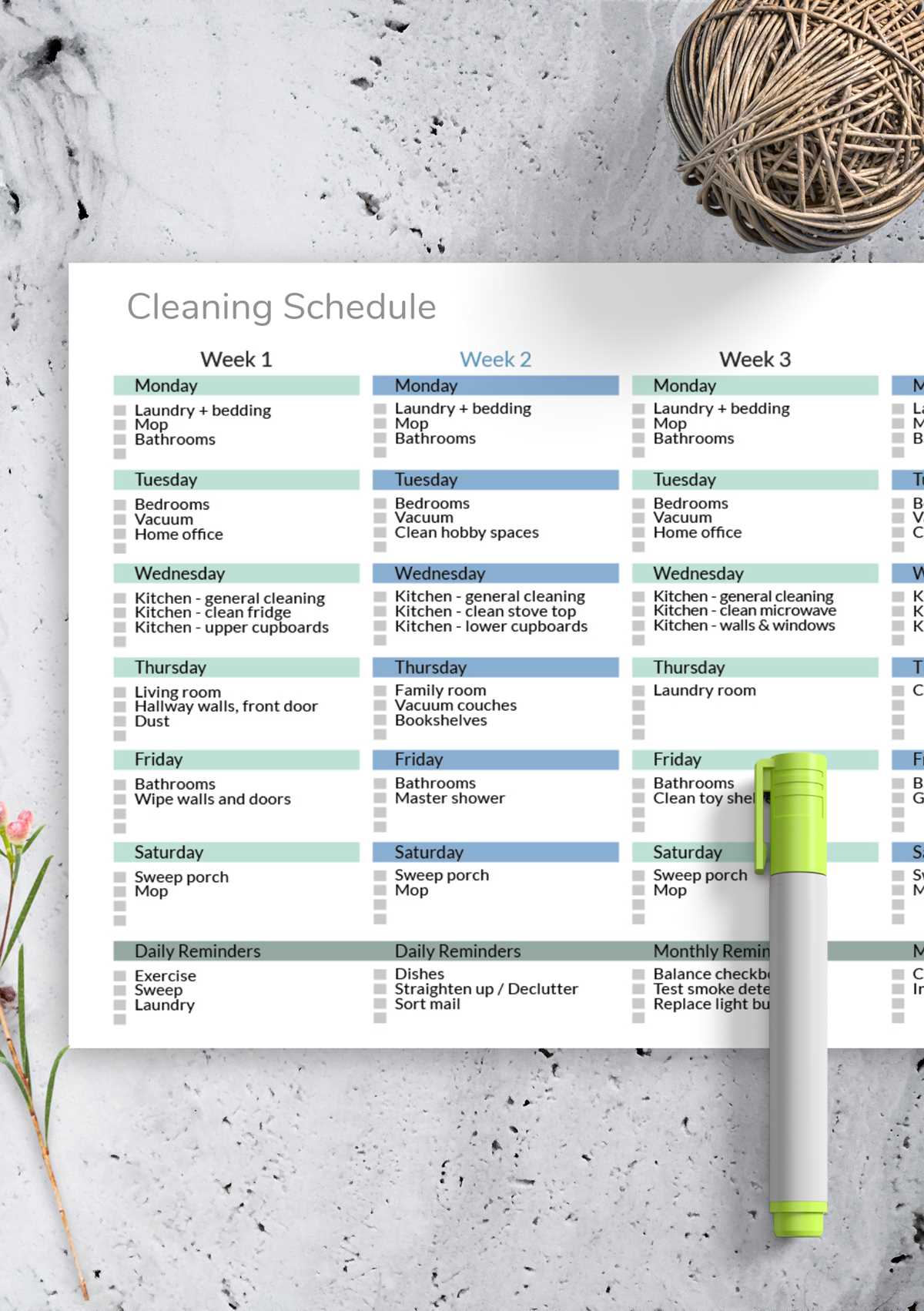
Use a visual tool that works best for you–whether it’s a calendar, a checklist, or a digital app. This tool will act as a reminder and help you stay on track. A calendar allows you to block out specific days for larger jobs, while a checklist offers flexibility for completing smaller tasks as time permits. Make sure the system you use is easy to access and update as needed.
Don’t forget to review your plan periodically. Life changes, and so will your available time or priorities. Adjust your task list if necessary, or even rotate some chores. For instance, if deep cleaning the fridge is overwhelming, break it into smaller steps, like wiping down shelves one day and clearing out expired food another day.
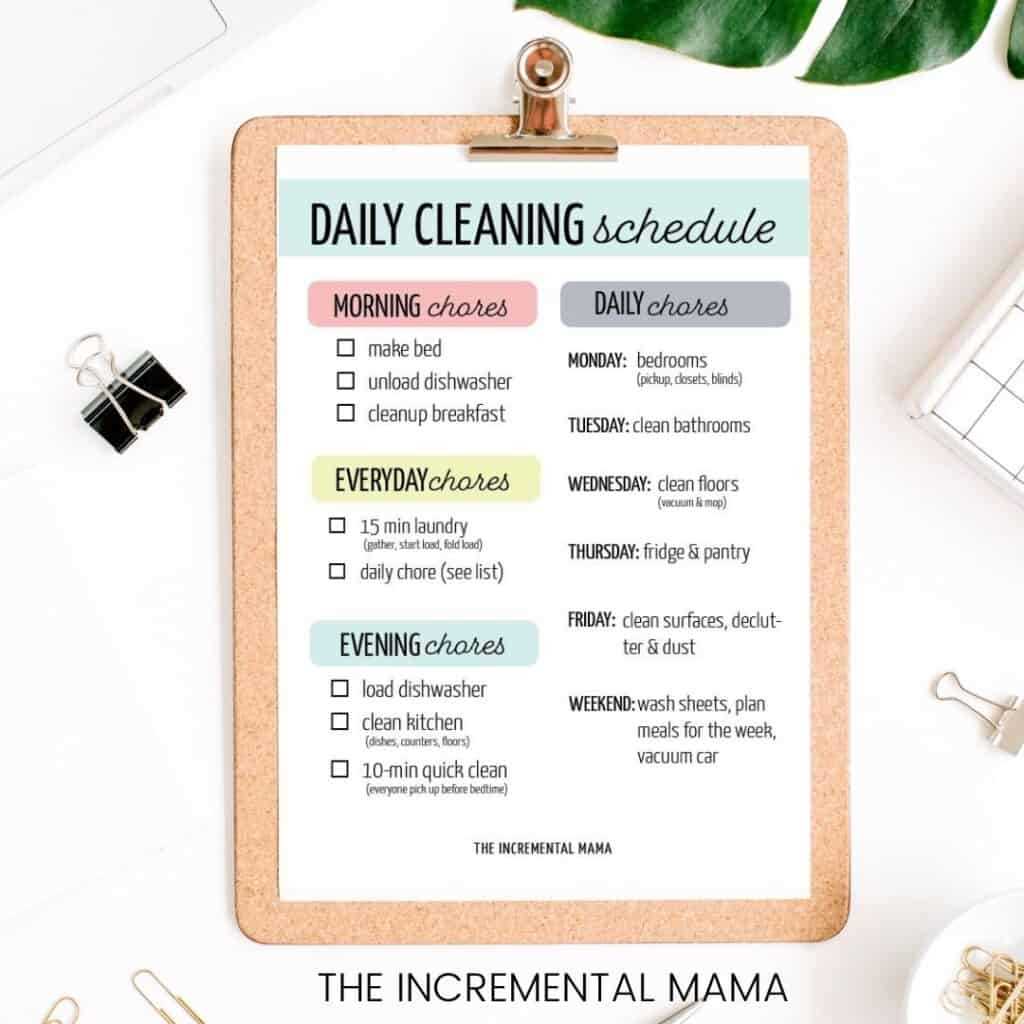
Finally, reward yourself for sticking to the plan. Completing a task, even something as simple as dusting, deserves recognition. This will keep you motivated and create a sense of accomplishment. Consider setting weekly or monthly goals to stay engaged and prevent burnout from repetitive work.