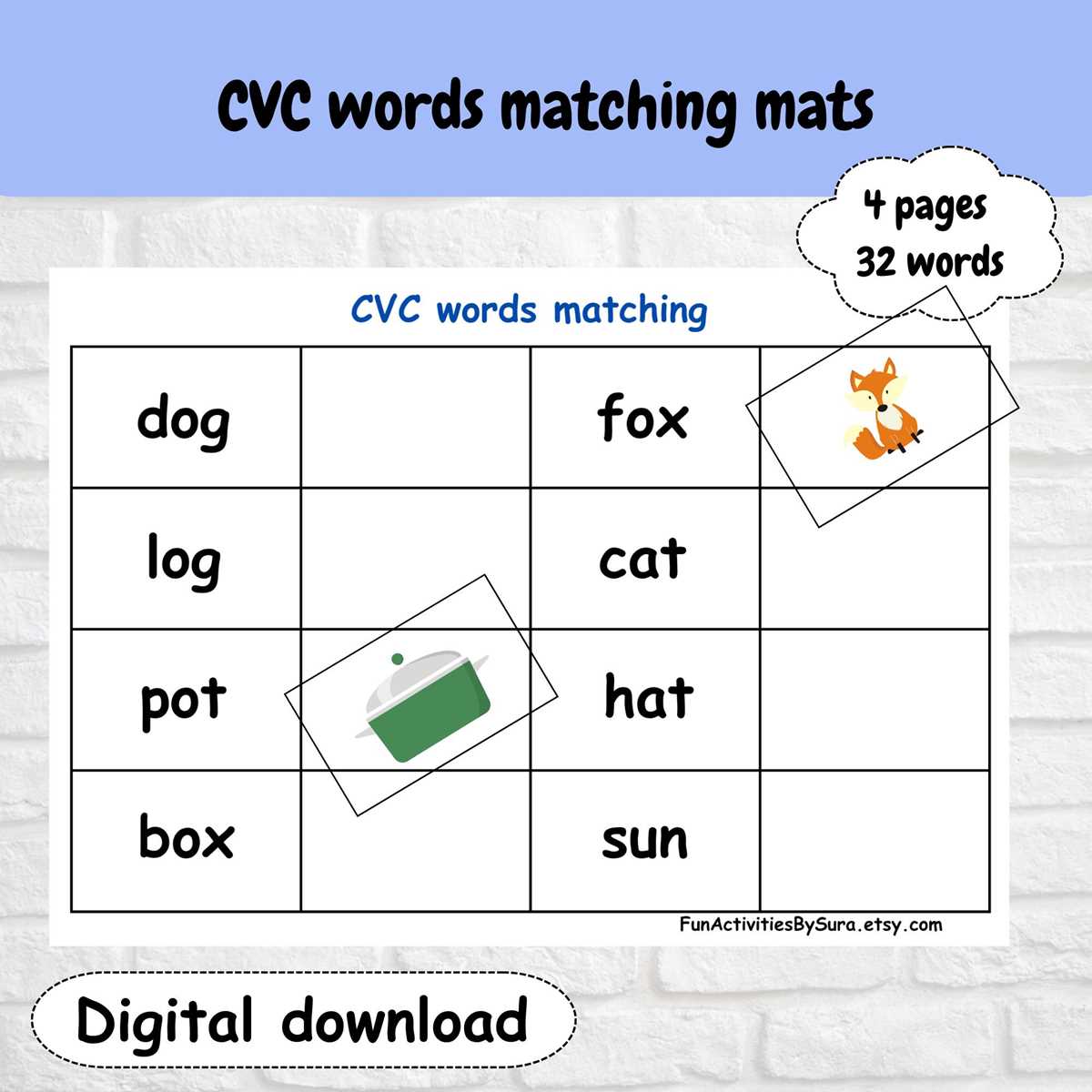
One of the best ways to help children learn to read is by using word-to-image association exercises. These activities allow kids to connect letters and sounds with pictures, making the learning process both engaging and effective. Simply print out word sheets featuring short, three-letter words paired with corresponding images, then encourage children to match the words with the pictures.
To set up this activity, start by selecting appropriate words that are easy for young learners to recognize and pronounce. Choose simple, familiar objects like “cat,” “dog,” or “bat” to ensure the activity is accessible. By presenting a mix of images and words, kids will practice their reading skills while associating the written word with a visual reference, which is especially helpful for early literacy development.
These materials are easy to access and print directly from online resources. Once printed, you can cut them into cards or simply use them as they are, depending on the space available. Consider laminating the sheets if you plan to reuse them to make them more durable. You can also adapt the activity to suit different learning levels by gradually introducing more complex words as the child becomes more confident.
As you guide the child through the activity, focus on reinforcing the sounds and letters that make up each word. This will help solidify their understanding of how letters form words, a crucial skill for reading fluency. To make it more engaging, consider turning the exercise into a fun competition or offer small rewards for successful matches.
Incorporating these word-picture association activities into daily routines will not only improve reading skills but also build confidence. By repeating the exercises regularly, children can internalize these basic concepts, making them more prepared for more advanced reading challenges in the future.
CVC Matching Activity for Young Learners
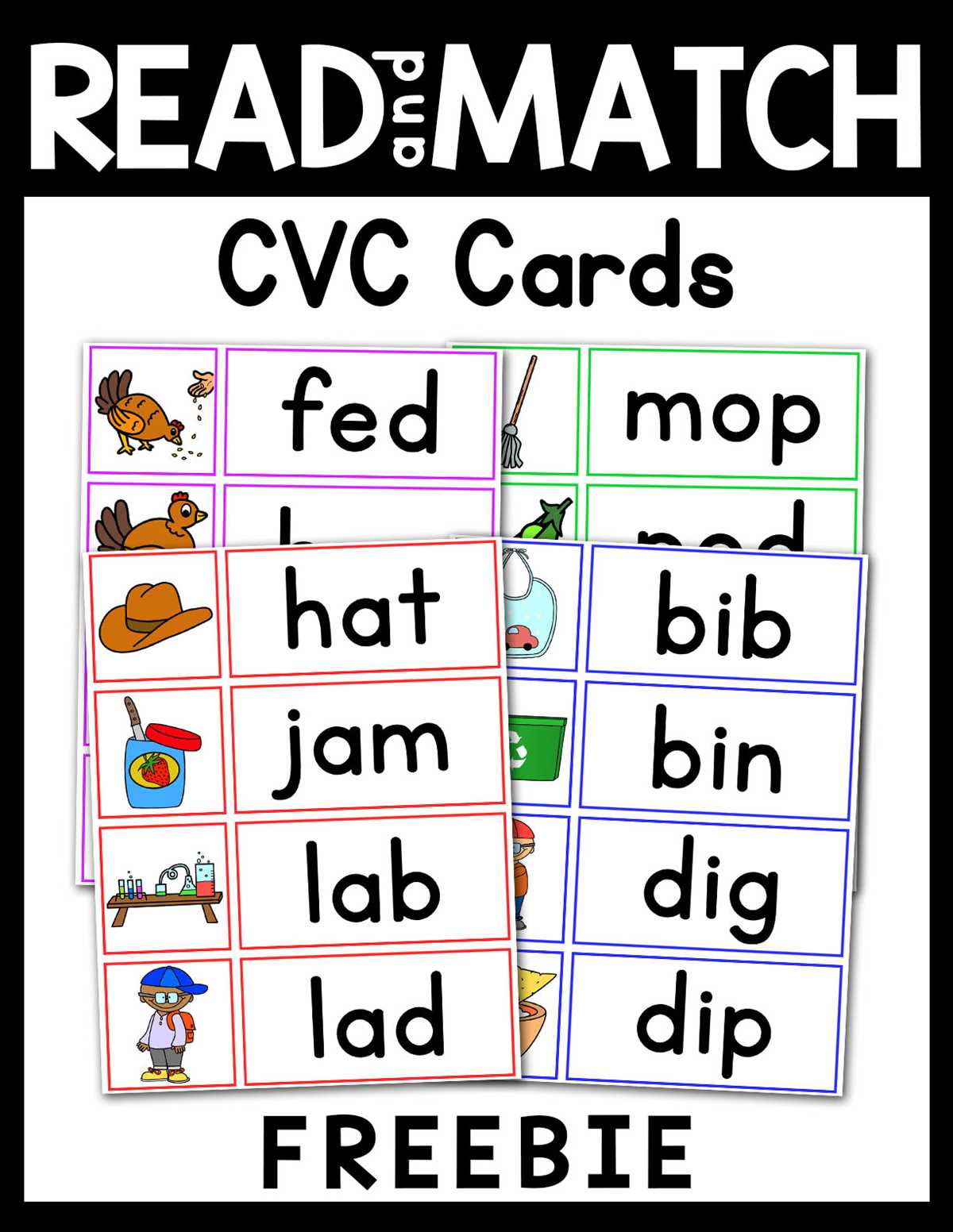
To begin, make sure to choose simple, recognizable words that follow the consonant-vowel-consonant structure. Words like “cat,” “dog,” and “pig” are perfect for beginners. Pair each word with a picture that clearly represents the object. This helps children connect the written word to its meaning, reinforcing their learning experience.
Once you’ve selected the words and images, print them out and cut the sheets into cards. The cards can either be mixed up or organized by difficulty. For younger children, start with fewer words and pictures, gradually increasing the number as they become more comfortable with the activity.
For a hands-on approach, place the word cards on one side of the table and the picture cards on the other. Ask the child to pick a word and then search for the corresponding picture. This helps reinforce word recognition and pronunciation. Keep the activity light-hearted and fun to avoid making it feel like a chore.
To further enhance learning, encourage the child to say each word out loud as they find the correct match. This will help with phonetic awareness and pronunciation. For a more advanced challenge, introduce words with different vowel sounds or longer consonant combinations as the child progresses.
If the child is ready, turn the activity into a memory game. Lay all the word and picture cards face down and take turns flipping them over. When a match is found, the player keeps the cards. This variation adds an element of excitement and tests memory skills while reinforcing word-picture associations.
To ensure the activity lasts longer and stays fresh, you can create multiple sets with different themes. For example, use animals for one set, household items for another, and food-related words for yet another. This variation keeps children engaged and encourages them to learn new words in different contexts.
Make the activity interactive by offering small rewards for correct matches or successful completion. Positive reinforcement can motivate children to engage more deeply and take pride in their progress. Additionally, this can help them feel more confident as they advance through different levels of difficulty.
Finally, store the printed cards in a safe place so they can be reused. Laminating the cards ensures they remain durable over time, especially if you plan to use them regularly. This simple learning tool can become an ongoing resource, supporting your child’s literacy development in a fun and engaging way.
How to Print and Set Up a Word and Picture Matching Activity for Kids
Start by selecting a collection of words that follow the simple consonant-vowel-consonant pattern, such as “cat,” “dog,” and “pen.” Pair each word with a corresponding picture that clearly represents the object. You can find free resources online that provide both the words and images, or you can create your own using basic clip art.
Once you’ve chosen the words and pictures, print them on standard letter-size paper (8.5 x 11 inches). If you’re looking to create a more durable set, consider using cardstock, as it’s thicker and can withstand repeated handling by children.
After printing, cut the sheets into individual cards. Each card should feature one word and one picture. You can use scissors for a clean cut, or for a more uniform look, use a paper cutter if available. Cutting the cards neatly will ensure that the activity is organized and visually appealing for the child.
To keep the activity engaging, you can mix up the order of the cards before giving them to the child. Spread the word cards on one side of the table and the picture cards on the other. Encourage the child to pick a word card and then find the corresponding picture, helping them connect the written word with its visual representation.
If you want to add variety, create multiple sets of cards with different themes, such as animals, household items, or food. This will not only keep the child interested but also introduce them to new vocabulary. Each time you introduce a new set, you can revisit previous ones to reinforce earlier learning.
For a more interactive experience, consider laminating the cards after cutting them. This will help preserve the cards for long-term use. Laminated cards are also more resilient to wear and tear, making them ideal for repeated use in educational activities.
Finally, store the cards in a box or pouch to keep them organized and prevent damage. This will also make it easier to grab them for quick learning sessions. Keep the activity accessible and regularly incorporate it into your child’s daily routine to help improve their reading and recognition skills.