
Tracking performance during a match can be challenging without the right tools. To effectively monitor key player metrics, having a structured layout is vital. You can easily document critical information such as points scored, assists, digs, and serves using a simple layout. This data is invaluable for coaches and players who want to understand the dynamics of the game and assess areas for improvement.
When designing or choosing a form to record these details, focus on capturing metrics that matter most to your team’s strategy. For example, tracking the number of successful serves versus errors can help determine if adjustments are needed. Similarly, tracking digs, blocks, and attack percentages will give deeper insights into the overall performance of your players.
By consistently documenting these figures during games, you not only gain real-time insights but also create a valuable resource for future practices. This data-driven approach will allow you to evaluate strategies and make informed decisions on how to refine team play.
Using Effective Forms to Track Player Performance
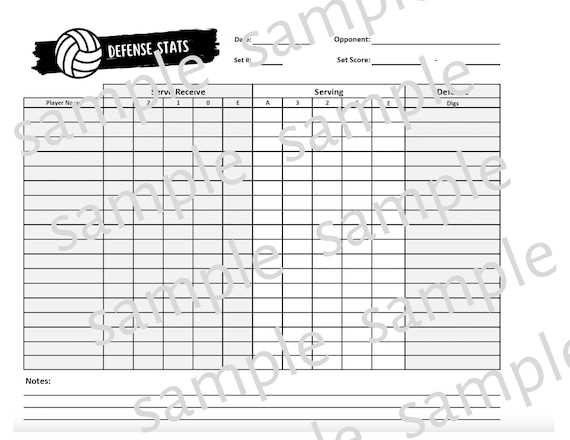
To monitor individual player progress, focus on organizing data that highlights key performance metrics such as kills, digs, assists, and service aces. Create a table that includes space for each player’s name, position, and these performance indicators. This will allow coaches to quickly assess the contribution of each team member throughout a match.
Use distinct sections for different types of actions. For example, include columns to track defensive actions like blocks or digs, offensive actions such as attacks, and serve statistics. This will provide a comprehensive overview of how well the team is performing in each aspect of the game.
In addition to tracking statistics during matches, also keep a record of historical data. This allows you to compare individual performances over time and identify trends or patterns that may require adjustment in training. It’s important to highlight weaknesses in the data, such as a player’s difficulty with serves or struggles during defensive plays, so targeted improvements can be made.
After the match, analyze the recorded data to determine areas for team improvement. If certain statistics are lacking–such as a low number of successful passes or too many service errors–address these weaknesses in upcoming practices. Incorporating player performance tracking will directly influence how you approach strategy and development as a team.
How to Customize Your Volleyball Stat Sheets for Different Matches
Start by analyzing the strengths and weaknesses of your team and the opponent. If facing a team with a strong offensive lineup, prioritize tracking defensive metrics like digs, blocks, and passing accuracy. For teams with a solid defense, adjust your form to focus more on attacking stats, including kills, attacks, and assist numbers.
Break down your tracking into set-specific sections if the match format involves multiple rounds. By segmenting data per set, you can identify patterns, such as changes in performance from one set to another. This allows for more accurate in-game adjustments and highlights key moments where your team either excels or falls short.
For matches in varying conditions, such as indoor versus outdoor, modify the data accordingly. Indoor games may call for a closer look at ball control, serve reception, and court coverage, while outdoor matches, especially on sand, require attention to stamina, positioning, and environmental factors like wind. Customize columns to make space for these different considerations.
In high-stakes or playoff games, adjust your tracking sheets to monitor both physical and psychological factors. Add columns for tracking mental resilience, such as how players perform under pressure or when trailing in a set. This additional layer of data will provide insights into your team’s mental readiness for key moments.
Use color coding or symbols for quick reference during the match. Highlight critical areas such as service errors or successful attacks in bold or bright colors to allow easy identification. This strategy helps coaches and team members quickly assess performance in real-time and adjust strategies during the match.
Lastly, if your team changes tactics or styles from one match to another, be sure to adjust the tracking system accordingly. For example, if you’re focusing more on aggressive serves or strategic defensive plays, adjust the sheet to emphasize those areas. Flexibility in tracking ensures the data is always relevant to the current game plan.