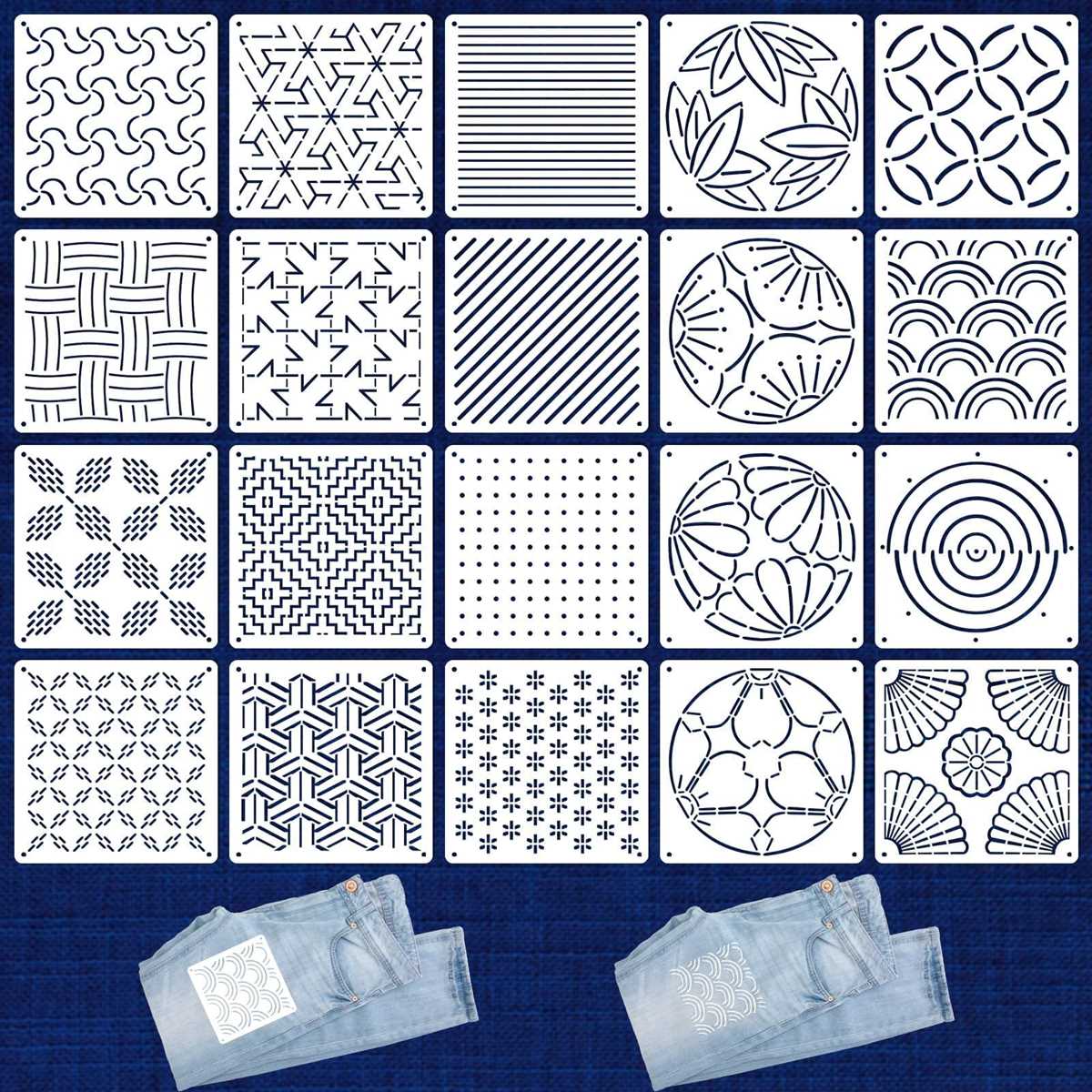
If you’re looking to add timeless elegance to your embroidery work, focus on geometric stitch designs that reflect traditional Japanese craftsmanship. These designs are perfect for any level of experience and can be adapted to different projects, from clothing to home décor. Begin by choosing a grid format that suits your vision and ensures the final piece has a balanced and harmonious feel. A simple square or hexagonal grid can serve as the foundation for a wide variety of designs, ranging from floral motifs to abstract shapes.
When working on these decorative stitching arrangements, pay attention to the spacing between each motif. Keeping the intervals consistent is key to maintaining a clean and visually appealing layout. Use a fabric with a firm weave, such as linen or cotton, which will help the stitches stand out without distortion. Start by outlining the design with a lighter thread color before filling in with the main thread to create depth and dimension. This technique ensures that each segment of your design is clearly defined and brings focus to the most intricate elements.
Don’t hesitate to experiment with thread thicknesses and colors. Using contrasting tones can make the motifs pop, but using subtle shades can give the piece a more subdued, elegant appearance. Consider mixing metallic or variegated threads for added texture and interest. It’s important to keep the stitches even in size and tension, as irregularities can disrupt the overall aesthetic of the piece. Whether you’re crafting small embellishments or large-scale designs, these stitching layouts provide endless opportunities to showcase your creativity and skill.
How to Use Traditional Stitch Designs for Modern Projects
Start by choosing a basic grid layout that fits your project. A simple 10×10 or 12×12 grid is ideal for beginners and ensures your motifs are easy to replicate. Use a ruler or a stencil to lightly mark the grid on your fabric, then begin stitching from one corner. For best results, maintain a consistent stitch size and tension. This will allow the design to retain its geometric integrity and give your work a polished, uniform look.
For a more intricate piece, consider adding subtle variations in spacing or stitch placement. Experiment with diagonals, concentric shapes, or intersecting lines to create movement and depth in your design. Choosing contrasting threads can help highlight different sections, making certain details pop. Pay attention to the fabric’s weave, as a finer weave will support more delicate designs while a coarser fabric might lend itself to bolder, more visible stitches.
If you’re looking to save time, try creating multiple motifs on a larger piece of fabric rather than working on smaller, individual sections. This method will allow you to quickly replicate designs and experiment with scaling the motifs up or down. Test out different color combinations, adjusting your thread shades according to the overall aesthetic you want to achieve. Once you’re comfortable with basic techniques, you can adapt the format to suit more complex, custom-made pieces.
How to Download and Print Stitch Designs for Embroidery
To begin, choose a reliable website offering downloadable stitching templates. Many websites provide free or paid designs in different formats such as PDF or JPEG. After selecting your desired design, click the download button, and save the file to your device. Ensure you have the necessary software to open the file type–most of these formats are accessible with standard programs like Adobe Acrobat or any image viewer.
Once downloaded, open the file and check the print settings. It’s important to set the scale to 100% to avoid resizing, which could distort the design. For best results, print on high-quality paper to avoid any ink smudging or paper tearing when you transfer the design to fabric. Use a printer that can handle photo-quality paper if you are working with intricate details that require precision.
If you need to adjust the size of the design, you can do so in your printer settings or within the PDF viewer before printing. If the design is too large for your paper, consider printing it across multiple pages and then assembling the pieces. For fabric transfer, you can use tracing paper or a fabric pencil to outline the design, ensuring the pattern stays intact as you stitch.