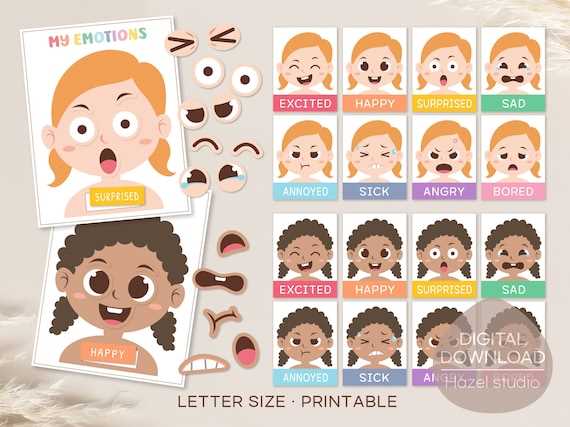
To create an interactive and engaging tool for recognizing feelings, print out a set of cards featuring different facial expressions and corresponding emotional labels. This activity can help individuals, especially children, improve their emotional intelligence by matching visual cues with emotions. These cards are simple to design and can be tailored to different age groups or specific emotional concepts you want to focus on.
For a more personalized experience, consider incorporating different facial expressions, body language, and colors that correspond to various moods. This can deepen the connection between the visual cues and the emotions they represent. It’s also useful to add scenarios or short phrases that describe situations where these emotions may arise, making the learning experience more practical and relatable.
Once you have the cards prepared, it’s easy to use them for a variety of activities. Whether it’s a solo exercise or a group game, matching these cards can encourage conversation about feelings and help in developing empathy. You can even take it a step further by involving storytelling or role-playing to bring the emotional connections to life.
Emotion Matching Activity for Skill Building
Start by preparing a set of cards with facial expressions representing different feelings. Each card should feature a clear visual cue, such as a smile for happiness or a frown for sadness. The images should be simple enough to avoid confusion but detailed enough to capture the essence of the feeling. These can be printed on thick paper or cardstock for durability during multiple uses.
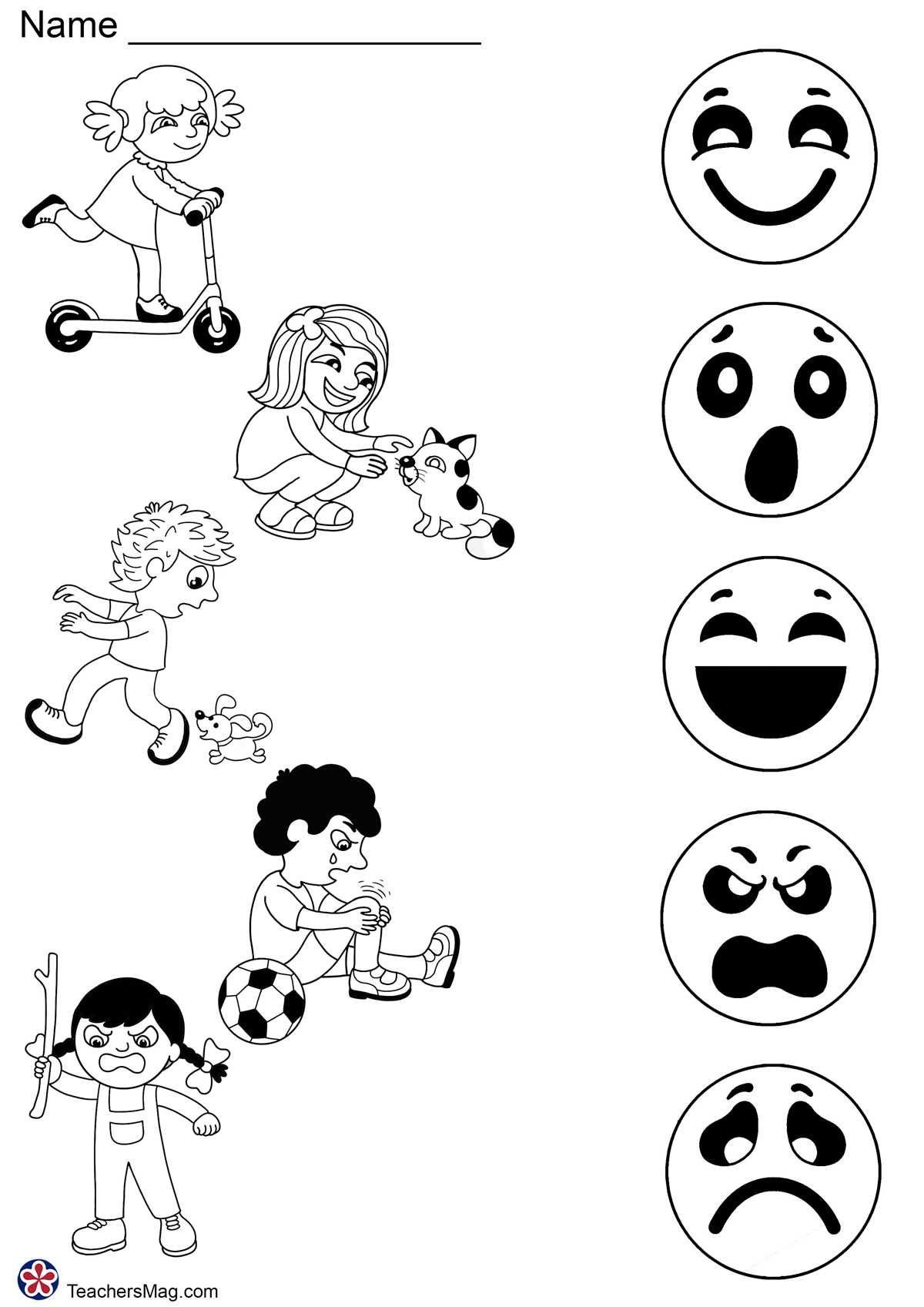
Once you have the cards, divide them into two groups: one with images depicting emotional expressions, and the other with words or phrases that describe those emotions. For example, cards with images of a joyful face can be paired with the word “happiness.” This will encourage players to connect visual cues with the language used to describe emotions.
For younger children, it’s helpful to start with more basic emotions like “happy,” “sad,” “angry,” and “surprised.” As they become more comfortable, you can introduce more complex feelings like “frustrated,” “excited,” or “embarrassed.” This gradual progression will allow children to build a more nuanced understanding of emotional states.
Use these cards in a variety of ways. One of the simplest methods is to spread them out on a table and ask players to match the emotional expression with the appropriate word or phrase. You can also play memory games where the cards are placed face down, and players take turns flipping over two at a time to find matching pairs.
If you want to deepen the activity, you can add context to each emotional card. For example, on a card with a picture of a person looking disappointed, add a short sentence such as, “I didn’t get the toy I wanted for my birthday.” This adds a storytelling element to the exercise, encouraging children to think about real-life situations that might evoke specific feelings.
As an advanced step, challenge participants to explain a situation in their life where they experienced the emotion shown on the card. This not only helps with emotional recognition but also with emotional expression. It’s a great way for individuals to practice communicating their feelings and improving their emotional vocabulary.
Lastly, consider using these cards in group settings where players take turns describing a scenario or acting out an emotion. This makes the activity even more engaging and allows for social interaction. It’s an excellent way for both children and adults to strengthen emotional intelligence while having fun.
How to Create Your Own Emotion Identification Cards
Begin by choosing a set of images or symbols that clearly represent different feelings. These can be photos of facial expressions, hand-drawn illustrations, or even abstract shapes that convey the essence of each emotion. Make sure each picture is distinct and recognizable to avoid confusion. Place the images on one side of the cards and, on the opposite side, write a brief description or the word that corresponds to the emotion being depicted.
To add variety and challenge, consider varying the intensity of the emotion in the images. For instance, a mild version of happiness could be depicted by a slight smile, while a stronger expression could show a wide grin. You can also introduce a color code to indicate different categories of feelings, such as warm colors for joy or cool colors for sadness. Printing these cards on sturdy paper or laminating them will ensure they last longer and hold up during repeated use.