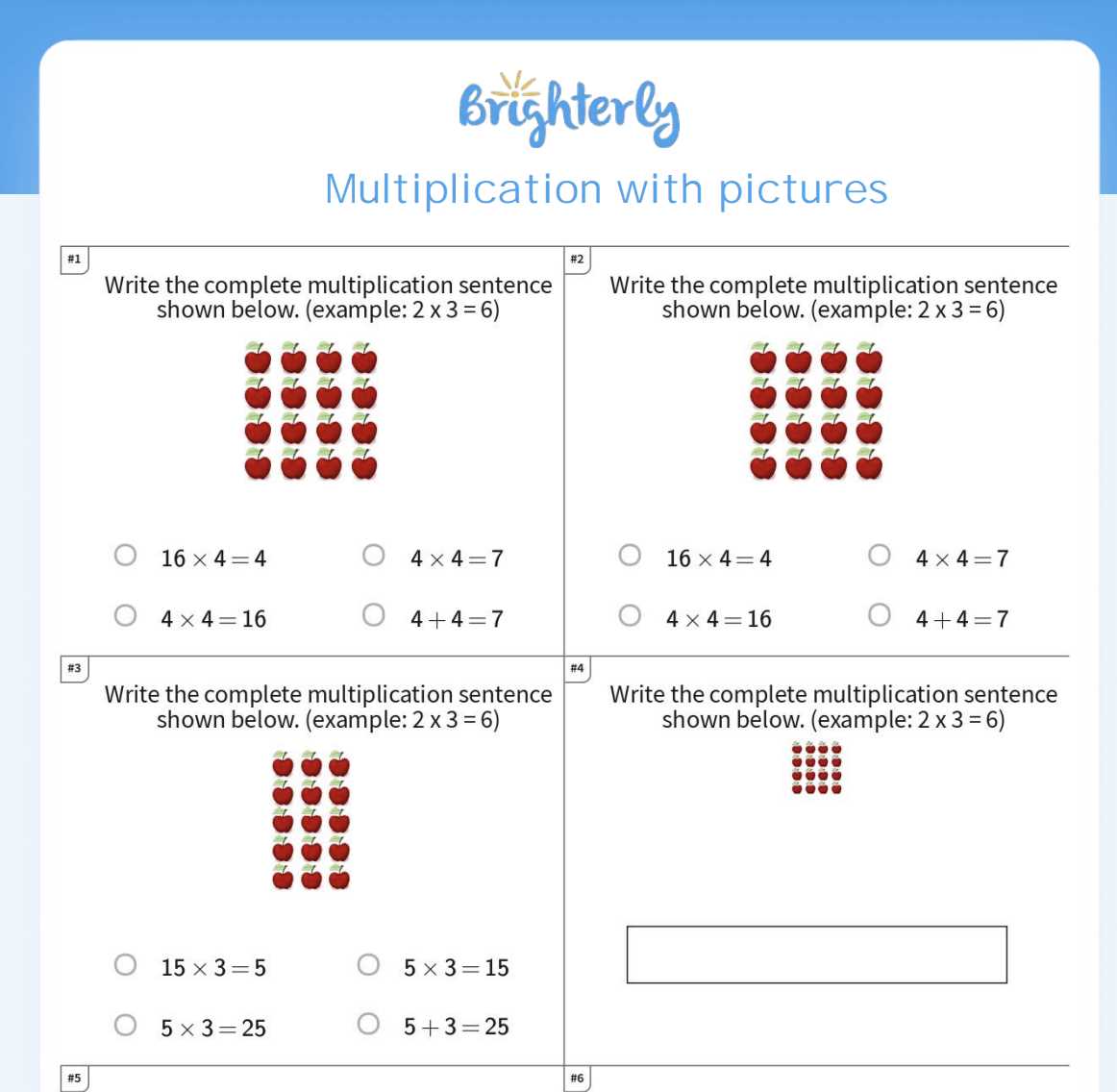
Enhance your child’s ability to solve multiplication problems by offering targeted exercises that strengthen basic skills. These activities feature a variety of difficulty levels, gradually building up from simpler equations to more challenging ones, ensuring steady progress. By providing a diverse set of problems, you can keep learning engaging and fresh, preventing boredom and repetition.
Incorporating these drills into daily practice will help students become more confident in their calculations. Set aside a few minutes each day to work through problems, focusing on both speed and accuracy. Encourage your child to time themselves and track their improvement, as this can foster a sense of accomplishment.
These tasks are designed to sharpen mental math skills, allowing students to quickly recall multiplication facts without relying on external tools. By mastering these fundamental skills, children will develop a solid foundation for more complex arithmetic as they advance in their studies.
3x Table Practice for Young Learners
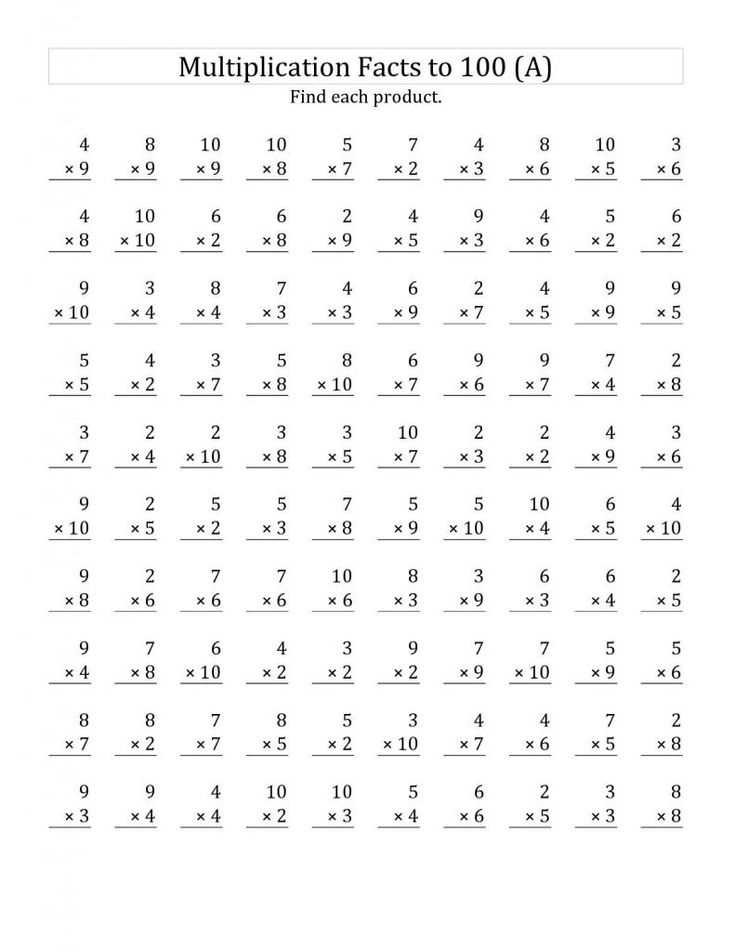
Start with the 3x table to build a solid foundation for understanding number patterns. Begin by practicing small sets of simple questions like “3 × 4” or “3 × 7”. These types of problems help kids visualize the relationships between numbers and develop fluency quickly.
Use repetitive tasks to reinforce learning. A great way to solidify these concepts is by creating lists where each number from 1 to 12 is multiplied by 3. For example, list all the answers for “3 times 1,” “3 times 2,” and so on. These sets can be used for quick daily drills.
- 3 × 1 = 3
- 3 × 2 = 6
- 3 × 3 = 9
- 3 × 4 = 12
- 3 × 5 = 15
Challenge learners with word problems that involve simple real-life scenarios. For instance, ask them to calculate how many total apples there are in three baskets if each basket contains 3 apples. This contextual approach reinforces practical applications of multiplication.
- How many apples in 5 baskets with 3 apples each?
- If each box has 3 pencils, how many pencils are there in 6 boxes?
For more variety, mix in problems with missing factors. A question like “3 × ? = 18” makes students think about the inverse process. Such exercises improve their ability to quickly recognize and solve multiplication facts mentally.
How to Find the Best Multiplication Practice Sheets for Young Learners
Start by looking for resources that offer a variety of formats. This ensures students can experience different styles of problems. For example, some might focus on single-digit problems, while others increase in complexity with two-digit numbers. Offering a range helps engage different learning needs.
Next, assess how the exercises are structured. Seek options that include a mix of problems with varying difficulty levels, from simple times tables to multi-step challenges. This variety aids in keeping students interested while still providing opportunities for mastery.
It’s also helpful to check for immediate feedback. Some tools or sites allow answers to be checked quickly, which lets learners correct their mistakes in real time. Immediate correction helps in reinforcing concepts and minimizes frustration.
Look for sources that align with standard teaching methods. If you prefer aligning activities with school curriculum benchmarks, find resources that focus on specific skills like skip-counting, factor recognition, and basic division as these often complement times table work.
Ensure the quality of presentation. Clean, easy-to-read fonts and uncluttered designs help children focus on the tasks without unnecessary distractions. Tools that highlight key numbers or structures visually often help students recognize patterns faster.
Lastly, try to find content that is easily accessible. Whether the resources are on a dedicated website, part of an educational app, or printable documents, they should be easy to download or view without complicated steps. A smooth access process keeps the focus on learning, not on technology issues.