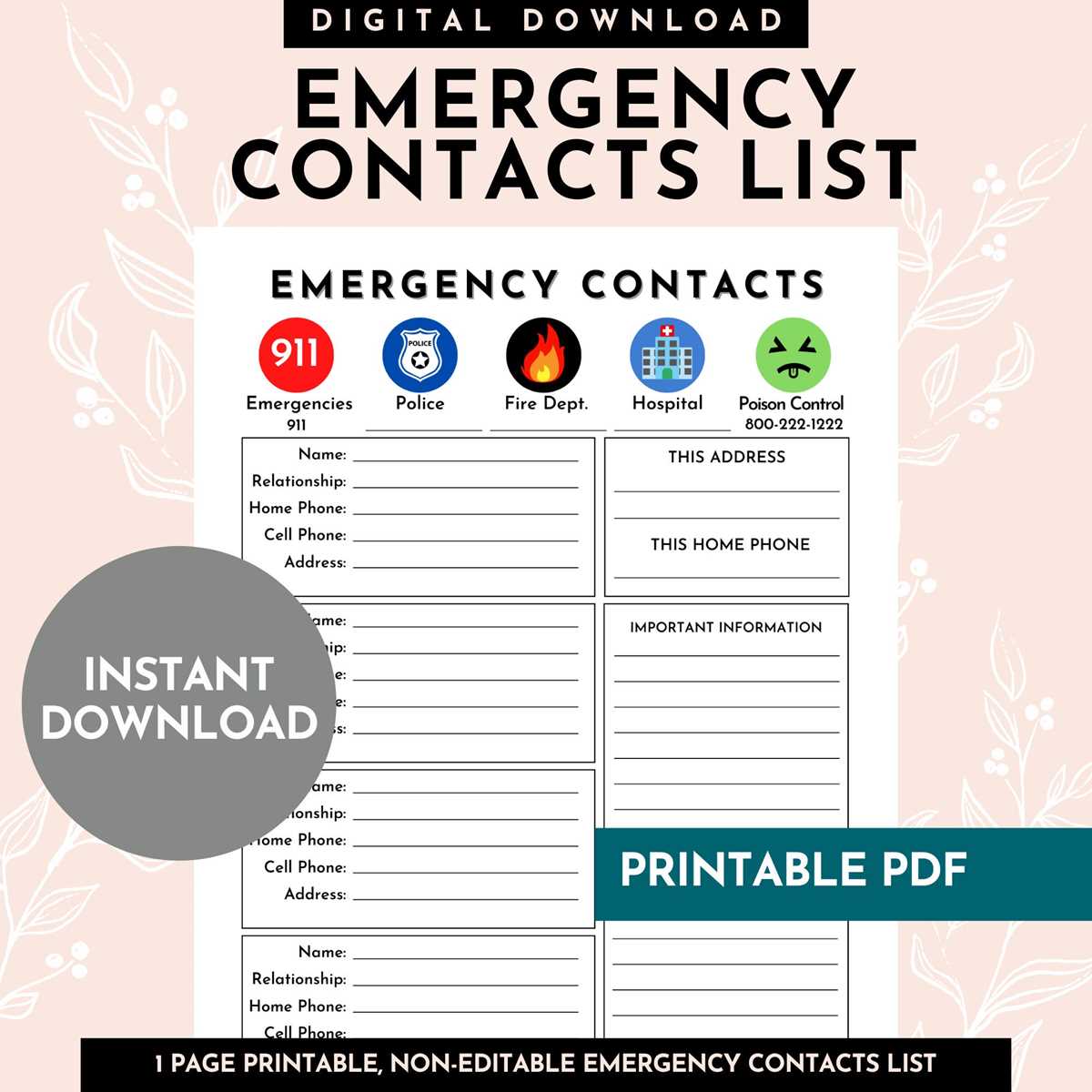
Ensure that you have all critical contact details readily available. Write down the most important contacts such as local medical centers, law enforcement, fire departments, and utility services. Make sure each entry includes the phone numbers and any other relevant information like addresses or hours of operation.
Having a well-organized document with contact info can save valuable time during critical moments. Group contacts by category, such as healthcare, utilities, or authorities, so you can quickly locate the number you need. Ensure that all details are kept up-to-date, including new phone numbers or office hours.
Store the contact information in a place that’s both accessible and safe. Consider keeping it in physical form at home, as well as a digital version that can be easily shared or accessed during emergencies. This redundancy will ensure you’re prepared no matter the situation.
Organizing Key Contact Information for Quick Access
When creating a document with critical contacts, it’s important to categorize them. Include the most necessary services, such as hospitals, police, fire stations, and local utilities. Ensure the details are clear and easy to find by writing them in a legible format. For each service, include at least one phone number, address, and any relevant notes such as operating hours or after-hours availability.
Separate each section into distinct categories to make retrieval faster. For instance, you could have one section for medical services, another for public safety, and another for utilities. This will reduce confusion during stressful situations when time is of the essence.
Include local poison control centers, animal control, and other unique contacts that may be relevant in your area. It’s often helpful to also include emergency contacts for neighbors or family members who live nearby and can assist in case you are unreachable.
Ensure the contact details are as specific as possible. For medical centers, list any specialties that may be important, such as trauma units or pediatric services. For fire stations, note which one is closest to your location, in case of a fire hazard or other related issues.
Always remember to update your list regularly. Hospitals, clinics, and government services often change phone numbers, and keeping the details current ensures you’re never reaching out to outdated contacts during a critical moment.
If you keep a digital copy of this contact list, make sure it’s stored securely but remains easily accessible on your phone or another device that you carry regularly. Cloud-based storage can be a helpful backup in case of loss or damage to your devices.
Another option is to create a physical version of your contact list. Having a hard copy in a visible and accessible location, such as on the fridge or a bulletin board, can be reassuring, especially if you lose access to your phone or other devices.
Lastly, always share this contact document with those in your household or any other relevant parties, like caregivers or close friends. This way, everyone is on the same page and knows where to find the information they need in case of an urgent situation.
How to Organize Your Emergency Contacts
Start by grouping all relevant contacts into categories for quicker access. Divide them into sections like medical, legal, public safety, and utilities. For each category, list at least one main contact and a secondary one for backup. This ensures that you have multiple ways to get help if the primary contact is unavailable.
For medical needs, include hospitals, urgent care centers, and poison control numbers. Be sure to write down the contact for your primary physician or local healthcare providers as well. If there are any specialized services, such as trauma care or pediatric units, make a note of that information to ensure it’s easily accessible.
In the public safety section, include numbers for fire departments, police stations, and local shelters. Also, add your local utility companies for water, electricity, and gas. These details can be helpful in case of power outages, gas leaks, or other critical situations where immediate action is needed.
Finally, keep your contacts updated. Regularly check that the information is current and remove any outdated entries. Set a reminder to review your contact sheet every few months to ensure it’s as effective as possible when needed the most.