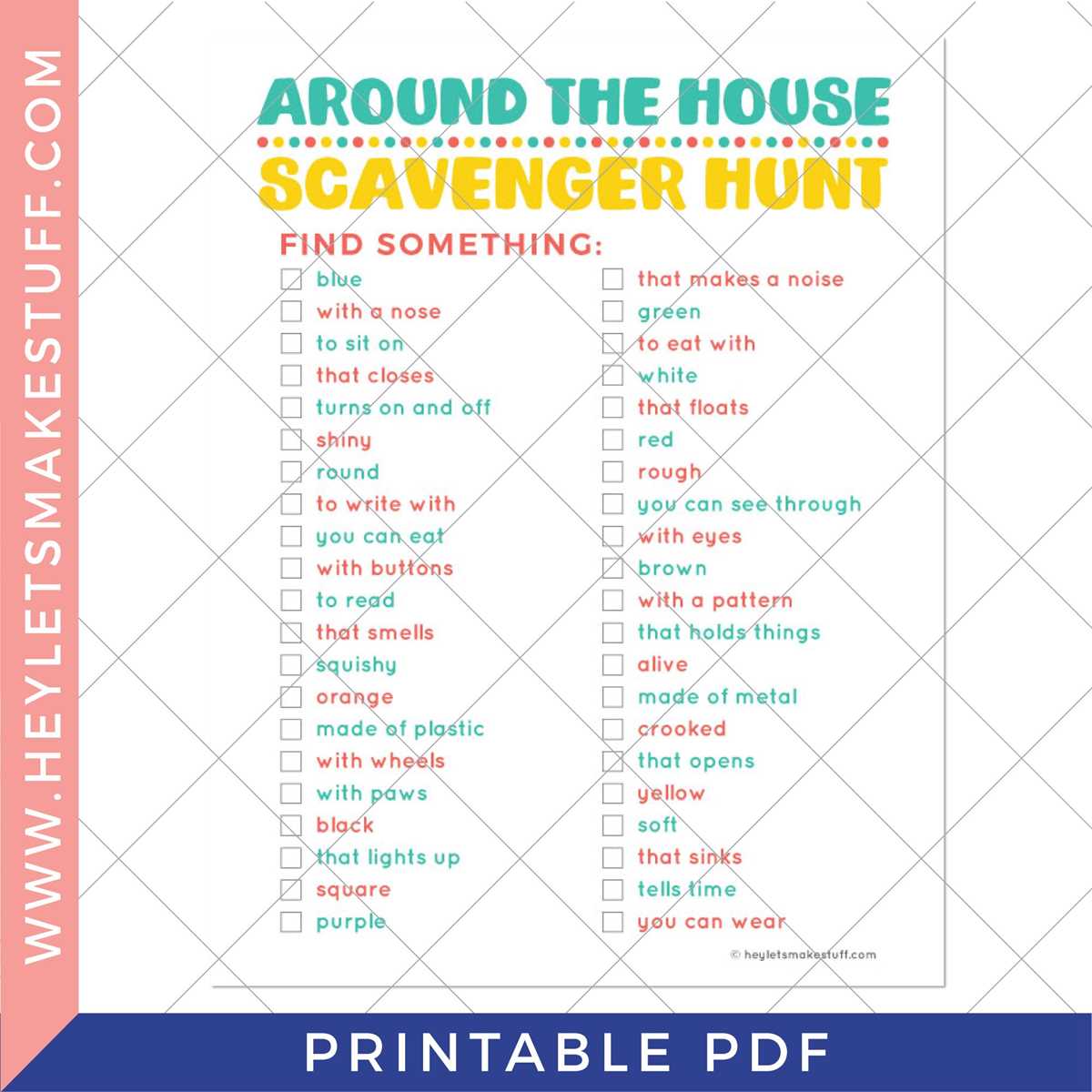
To organize an engaging activity for children, start by creating a list of items they can search for around the house. These items should be easy to find yet challenging enough to hold their attention. You can tailor the difficulty by considering their age and familiarity with the environment. For younger kids, include common objects like toys, books, or kitchen utensils, while for older ones, you can add riddles or clues to make the activity more complex.
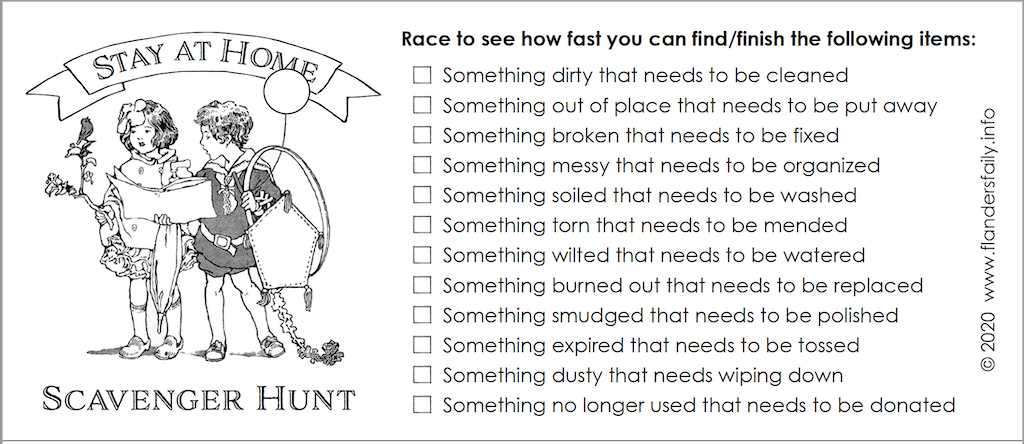
Using ready-made templates can significantly simplify the process. These templates often include pre-designed clues, themes, and even graphics to make the game more visually appealing. Whether you’re looking for a traditional or themed adventure, these materials can save you time and effort. You can easily find these resources online and adapt them to fit your space or needs.
Don’t forget to adjust the difficulty and time limit to match the group’s energy levels. Some children might need more time to explore and solve clues, while others might prefer a quick-paced challenge. To add a twist, consider incorporating some physical challenges like hopping to a location or balancing objects while moving from one place to another.
Indoor Exploration Game Ideas and Tips
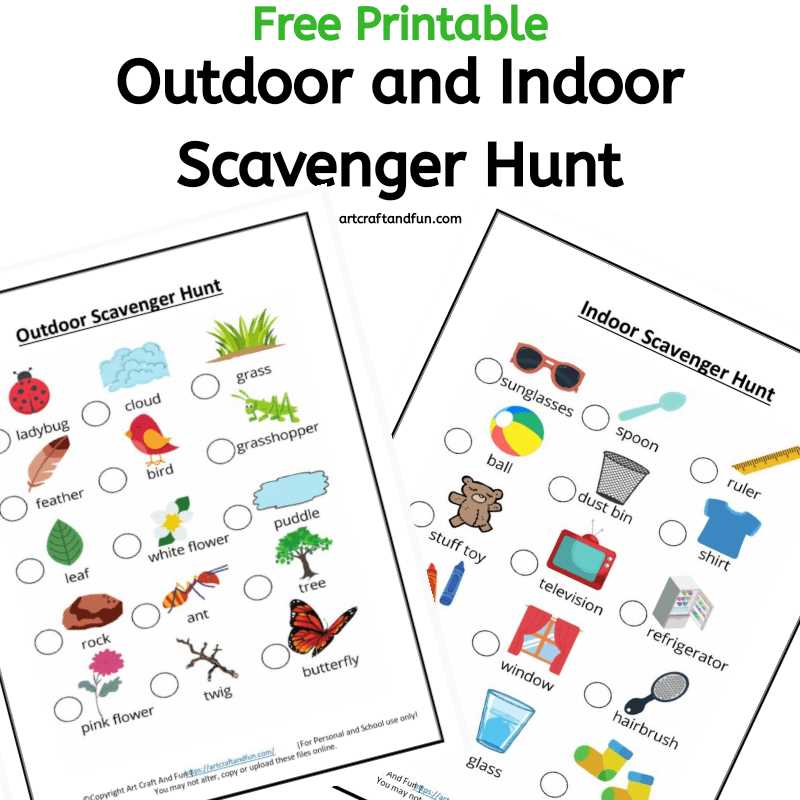
Start by choosing a theme for the exploration challenge. Popular ideas include treasure hunts, color-based searches, or object identification. This helps to structure the experience and adds a sense of purpose to the activity. For younger children, use basic items like toys or household objects that are easy to find. Older kids might enjoy more complex items like specific books, kitchen tools, or items from different rooms.
To make the challenge more engaging, create clues that lead participants to the next item. For example, “Find something that makes noise” or “Look for a book with a blue cover.” Clues should vary in difficulty to keep everyone involved and allow them to use different skills, from problem-solving to observation.
If you’re hosting the activity with a group, consider setting up stations or different zones in the house. This can help break the game into sections, giving kids the opportunity to explore different areas and keeping the game dynamic. Each zone can have its own set of challenges or themed items to find.
Include some interactive tasks alongside the search. For example, one clue could involve a physical task like jumping three times before continuing, or balancing a small object while moving. This helps to burn off extra energy and keeps everyone engaged in the activity.
Time limits can add a competitive element, but make sure they are reasonable for the age and abilities of the participants. For younger children, remove time limits and allow them to explore at their own pace. For older kids or competitive groups, set clear start and end times to make the game more exciting.
For an added educational element, choose items that can spark curiosity. Include questions related to the objects or themes being searched for. For example, if a child finds a clock, ask them about how it works or what time it is. This adds depth to the experience and makes it a fun learning opportunity.
Make the activity more fun by including small rewards for each item found or challenge completed. Stickers, small toys, or even a certificate for completing the challenge can motivate children to keep going. You can also create team challenges, where participants work together to find all the items on their list.
Lastly, ensure that the space is safe for all participants. Remove obstacles, ensure furniture is stable, and clear paths to avoid accidents during the exploration. Setting up in advance will ensure a smooth and enjoyable experience for everyone involved.
How to Set Up a Fun Exploration Game for Kids
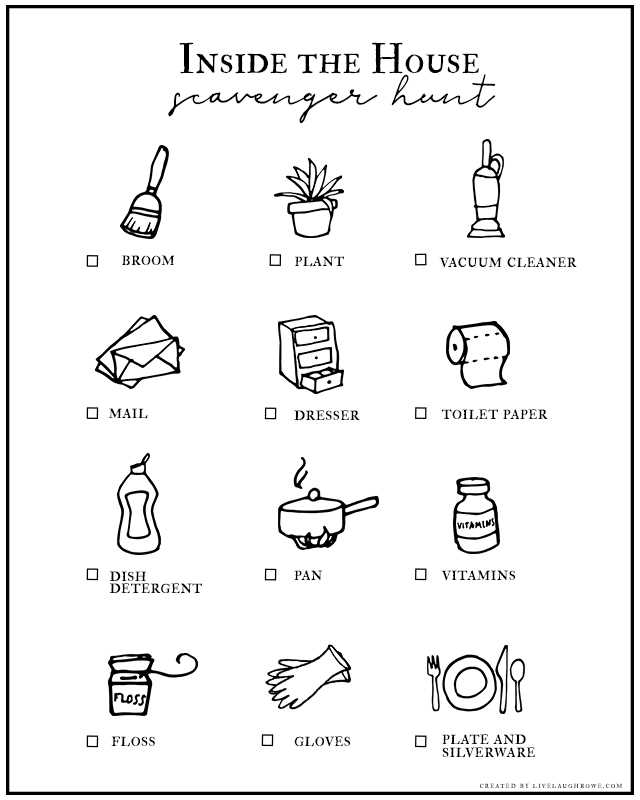
Begin by deciding the theme for the activity. You can choose a general object search, such as finding everyday items, or opt for something more specific like colors, textures, or even animals. Once the theme is established, create a list of items for the participants to find. Write down clues that are age-appropriate, ranging from simple descriptions for younger children to more challenging riddles for older kids. Place each item around the house, ensuring that it is easily reachable and safe for kids to explore.
Next, consider adding fun challenges or mini-games along the way. For example, you could incorporate tasks like “jump three times” or “spin around” before continuing the search. To keep the energy up, set a timer for each round or make it a race between teams. At the end, reward the participants with small prizes like stickers, toys, or a certificate for completing the challenge. This will motivate them to keep going and add an element of excitement to the game.