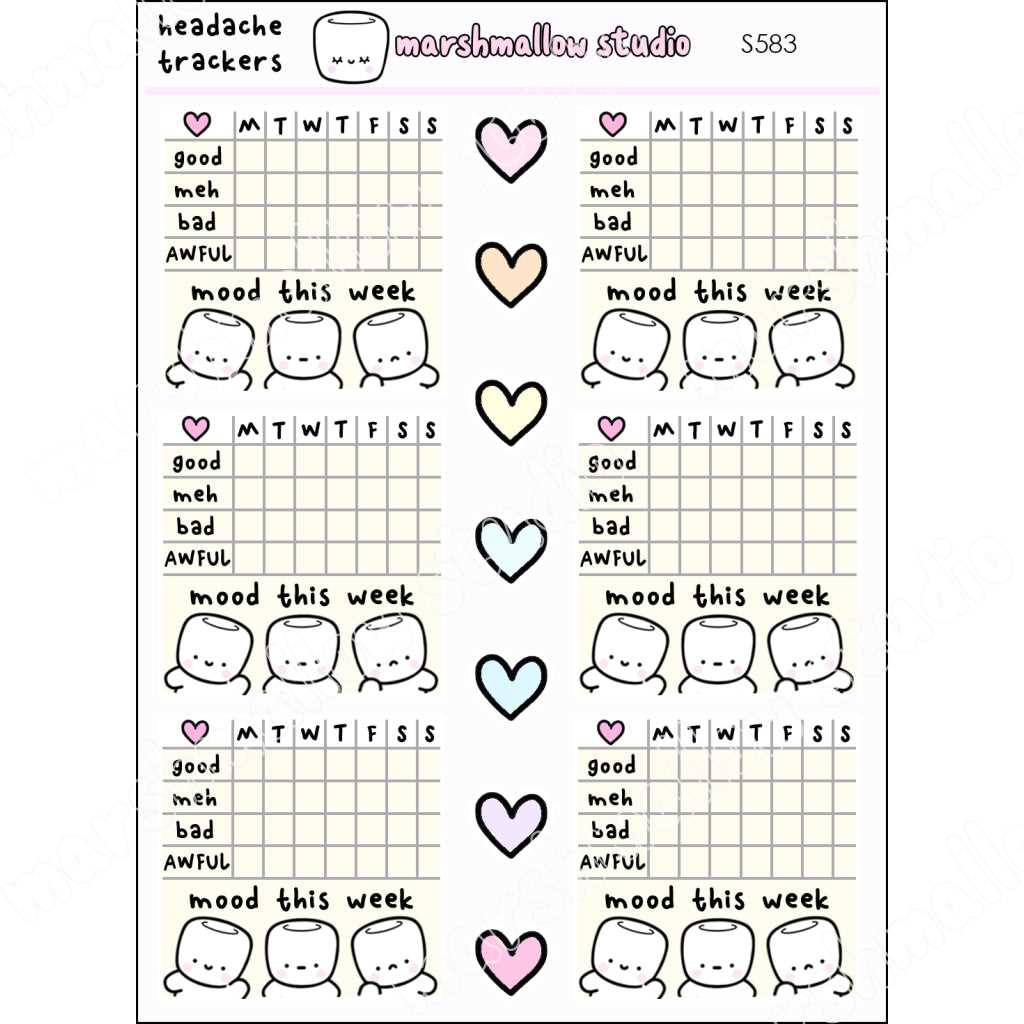
To monitor emotional well-being, start by using a simple chart that allows for daily check-ins. You can design a table where each day is represented by a row and a range of colors or symbols is used to denote varying emotional states. This approach helps in visually tracking fluctuations over time.
Once you have your chart, decide on the frequency of tracking. Many people find that recording their emotional states twice a day – morning and evening – provides a comprehensive view of their emotional health. You can mark off emotions such as happiness, anxiety, or sadness using different colors, making it easy to spot patterns.
For an added layer of insight, consider incorporating space to note external factors that may contribute to your feelings, such as weather, events, or interactions. This can be helpful for identifying triggers or understanding certain emotional patterns. Creating a template that works for you is a practical way to stay aware of your emotional state and make adjustments as needed.
Printable Mood Trackers
Create a simple template with spaces for tracking your emotions throughout the day. Include different options such as happy, sad, anxious, and calm. Using symbols or colors to represent each feeling can make the process more visual and easier to understand at a glance.
Record your emotional state at set times each day, like morning, afternoon, and evening. This helps to get an accurate picture of your emotional fluctuations and makes it easier to spot patterns in your behavior over time.
Adding a section to track the triggers of each feeling can give valuable insights. Whether it’s a stressful event, a conversation, or a relaxing activity, knowing what causes emotional changes can help you address these factors more effectively.
At the end of each week, look over your filled template. Reflect on the data and try to identify any recurring trends or shifts. This review process can help you better understand your emotional triggers and make adjustments in your daily routine to improve your well-being.
To maintain consistency, print several templates at once. This way, you’ll always have one ready to go and can maintain your tracking habit without interruptions. Keeping them in a notebook or folder also makes it easy to look back on your progress over time.
How to Choose the Right Mood Tracker Template for Your Needs
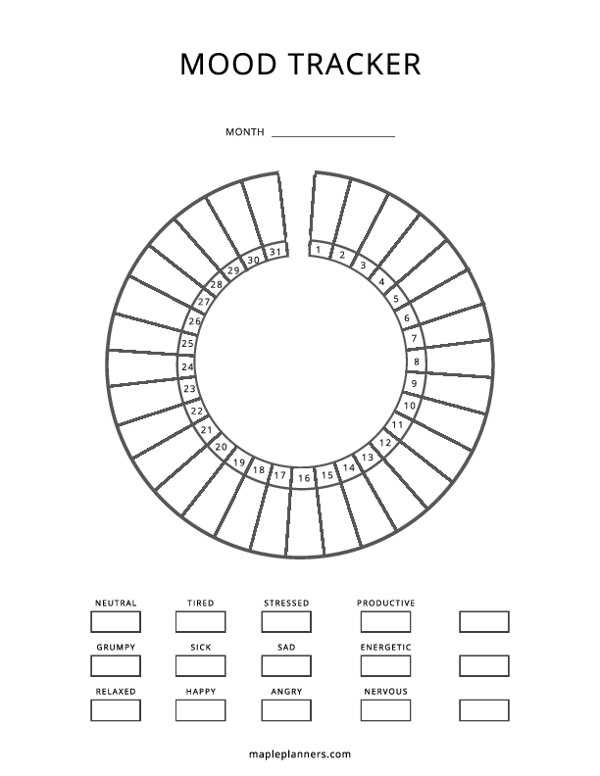
Start by considering what aspects of your emotional state you want to track. Some templates focus on daily feelings, while others allow for tracking triggers and patterns. If you need to observe specific emotions like stress or happiness, choose a layout that includes a variety of emotional states to select from.
Think about the level of detail you want. Simpler designs may only require you to mark your emotions with color or a number, while more complex ones might involve writing short notes about your feelings or activities. Choose a template that matches the level of commitment you are willing to make.
Consider your daily schedule. If you can only track a few times each day, a minimalistic layout with fewer time slots may be ideal. However, if you have the ability to track your state throughout the day, look for a design that offers multiple entries per day, such as morning, afternoon, and evening columns.
Decide if you want to include additional sections, like a space for identifying triggers, reflections, or goals. Some templates are designed with these extra features to give you more insight into the factors influencing your emotional well-being. Choose one that aligns with your self-improvement goals.
Finally, think about format and accessibility. Would you prefer a paper template or a digital version? Digital templates can often be customized more easily, but a printed version may give you a more tangible and engaging way to track your feelings. Select what fits best with your personal style and needs.