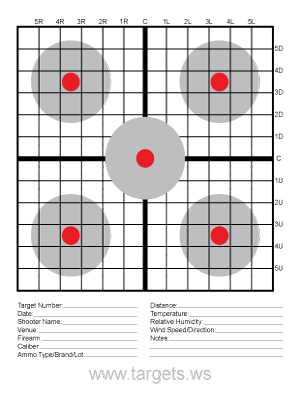
If you are aiming to fine-tune your firearm’s accuracy for distances close to 100 yards, creating an effective reference chart is key. Start with a blank sheet and print a calibrated pattern that closely mimics the real-world conditions of your shooting area. Ensure the pattern is proportionally correct to help gauge your elevation and windage adjustments with precision.
When preparing the layout, consider including various indicators for bullet drop and wind deflection at your target distance. Using a standard pattern with numbered increments will help you quickly evaluate your rifle’s grouping and adjust for consistent shot placement.
Focus on ensuring the printed sheet is of the correct scale. Too small or large a print can distort your results, leading to incorrect adjustments. Using high-quality paper is also important to maintain the clarity of your reference and keep the print sharp during repeated use.
Key Tip: After printing, test your setup by shooting at the chart in different conditions (like varying wind speeds) to determine the practical effectiveness of the adjustments you’re making. With this method, you’ll achieve more consistent and precise shots when shooting at longer distances.
Precise Alignment for Your Rifle at 100 Yards
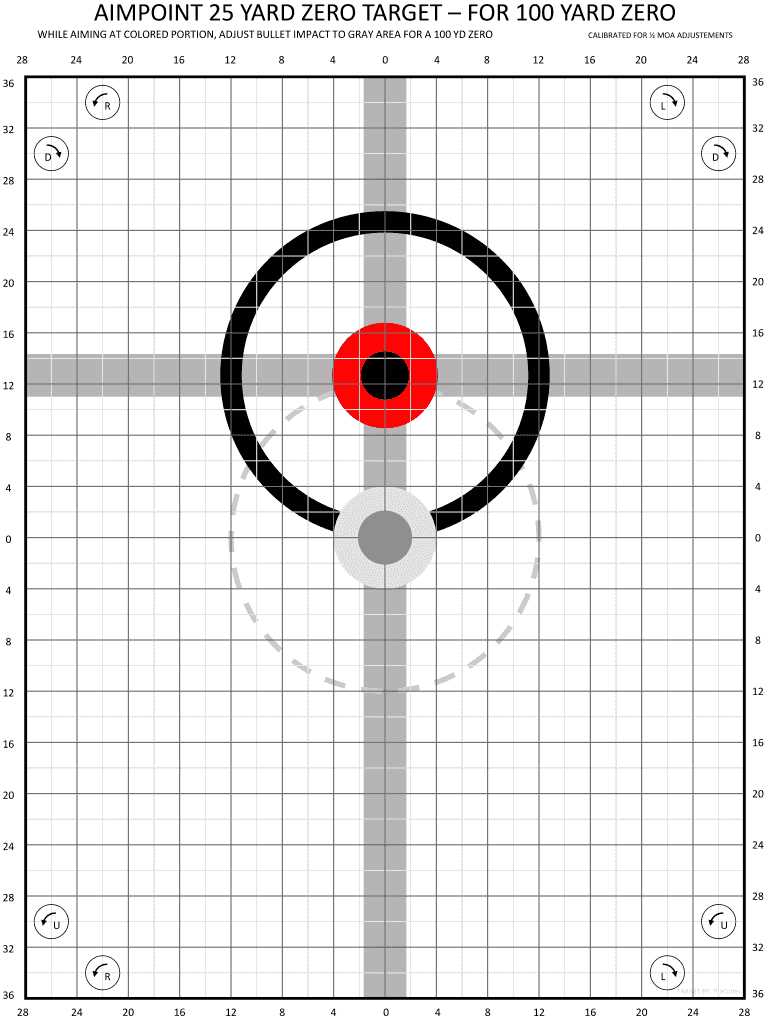
Begin by printing out a full-size silhouette, ensuring that the dimensions match the real-world size of your shooting platform. This ensures that when you line up your scope or sights, it closely mimics the actual distance and conditions encountered on the range. Use high-quality paper to avoid distortion, and check that the printout is scaled correctly–measure twice to avoid errors.
Ensure your firearm is stable during the adjustment process. A bench rest or sandbag setup can help minimize movement, providing a consistent shooting position for each shot. This will allow for more reliable results when fine-tuning your settings.
Next, focus on selecting the right ammunition. A heavier round with a flatter trajectory may perform differently from a lighter, faster one. Experiment with several types to find which one suits your setup best, then stick with it for consistency across sessions.
When aligning your sights or scope, begin with a broad setting, shooting at the paper to gauge where your rounds land in relation to your aim point. From there, adjust incrementally to center the group as closely as possible to the center mark of the sheet.
After each shot, make a mental note of where your round landed. Small adjustments, especially on the windage and elevation knobs of a scope, are more effective than large, dramatic shifts. Test this method, repeating the process at least three times to confirm the alignment remains consistent across different shots.
Once adjustments are complete, test the configuration from various distances to ensure the calibration holds true. If possible, take several shots from a known distance and compare your results. A consistent pattern of shots will confirm the correct alignment, ready for any future challenges.
How to Print a 100 Yard Zero Target at Home
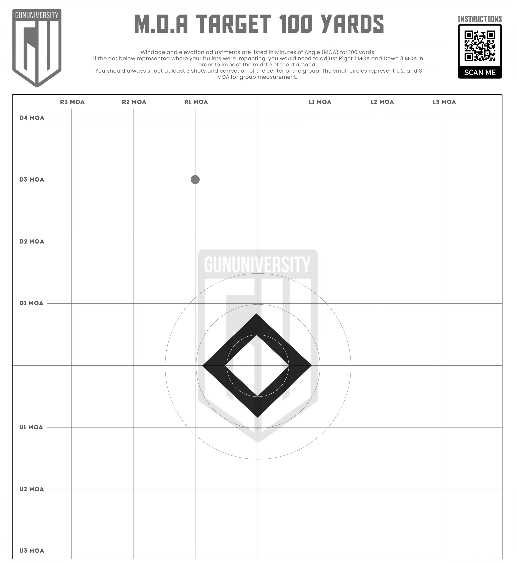
First, find a well-designed template for the distance you’re testing. Many websites provide free options, but ensure it includes proper scaling for a standard shooting range. Download the file and verify the dimensions before printing.
Ensure your printer is set to “actual size” or “100%” under scaling settings. This prevents the printed image from being distorted and ensures accuracy in measurement. Double-check that the paper size is correctly selected, usually 8.5×11 inches for common printers.
If your printer cannot handle large formats, consider printing the design on multiple sheets of paper. After printing, use tape or glue to piece the pages together, making sure the alignment stays true to the original dimensions.
Use a high-quality paper for better durability. Standard printer paper can work, but a heavier weight will prevent the image from tearing easily, especially if exposed to outdoor conditions.
For a more realistic setup, print the target in black and white. This minimizes ink use while keeping the contrast high enough for easy visibility. Ensure the lines and rings stand out clearly for accurate shot placement.
Once printed, measure the placement of the printed target on your backer board or cardboard. The center of the printout should align with the center of your shooting range setup, ensuring an accurate alignment for your shots.
Test the printed design by firing a few rounds from a safe distance. Adjust the print as necessary, checking that the rings match with your point of impact for a reliable and precise setup.
Choosing the Right Paper and Printer Settings for Accuracy
Use high-quality, heavy-weight paper with a weight between 200-250 gsm for the most precise results. This type of paper minimizes warping during printing and ensures that your design remains sharp and well-defined. Avoid using lightweight or glossy papers, as they can distort the lines, especially if you are printing at high resolution.
Set your printer resolution to at least 1200 DPI for crisp and clear details. Higher DPI values, such as 2400, provide even greater clarity but may increase print times and ink usage. Use the printer’s best quality or photo setting, as this will help capture fine lines and small elements, which are crucial for accurate measurements during use.
Ensure that your paper is properly aligned in the printer to prevent any misalignment that could affect the accuracy of the print. Always perform a test print on regular paper before using your premium stock to check if the design fits correctly on the sheet.
- Choose matte or satin paper for reduced glare when reading measurements.
- Consider a color-managed printer if you need to maintain precise color matching for more complex patterns.
- For best results, avoid using draft settings, as they compromise print quality.
Step-by-Step Guide to Mounting the Target for Optimal Zeroing
First, place the aiming sheet at a stable height, about 1.5 to 2 feet above the ground, ensuring it remains centered with your shooting position. The sheet should be securely fastened using strong adhesive or clips, so it stays rigid and does not shift during use. This ensures minimal movement, which can cause inconsistencies in alignment during the adjustment process. Double-check that the sheet is level both horizontally and vertically to avoid angled shots.
Next, confirm the sheet is positioned directly in line with the barrel of your firearm. Use a rangefinder or laser pointer to double-check the distance to ensure it is set correctly. The center of the sheet should align with your line of sight, and the distance should match the required distance for your calibration process. After mounting, step back and examine the sheet from your shooting position to verify visibility and clarity of markers before you proceed with shooting.
How to Adjust Your Rifle Scope for a 100 Yard Distance
Start by ensuring your rifle is securely mounted on a stable rest or bipod. This is critical for consistent results. Without a steady platform, even the best adjustments will be inaccurate.
Next, check the magnification level of your scope. Set it to a medium power, usually between 4x and 6x, for a balance between field of view and target clarity. High magnification can reduce your ability to spot adjustments at a longer range.
Before making any adjustments, fire a group of three to five shots. Use a stable position and a firm grip to avoid any variables. The first group will give you an initial idea of how much correction is needed.
After firing the first group, examine the shot placement on your paper. If the shots are high or low, you will need to adjust the elevation knob. To correct for shots that are too low, turn the knob clockwise. For shots too high, rotate it counterclockwise.
For horizontal adjustments, check if your group is left or right of center. To shift the shots right, turn the windage knob clockwise. For a leftward shift, turn it counterclockwise. Make sure to adjust one dial at a time to track changes effectively.
After each adjustment, fire another group of shots to confirm the changes. A good practice is to shoot one round and evaluate its placement. Then, adjust the scope as needed and shoot again until the group tightens up in the desired spot.
Once your shots are consistently centered, confirm the consistency of your adjustments by firing a few more rounds. If your shots start spreading, it could indicate a loose scope or mount. Double-check everything before proceeding.
| Adjustment | Direction | Purpose |
|---|---|---|
| Elevation | Clockwise (raise), Counterclockwise (lower) | Correct vertical shot placement |
| Windage | Clockwise (right), Counterclockwise (left) | Correct horizontal shot placement |