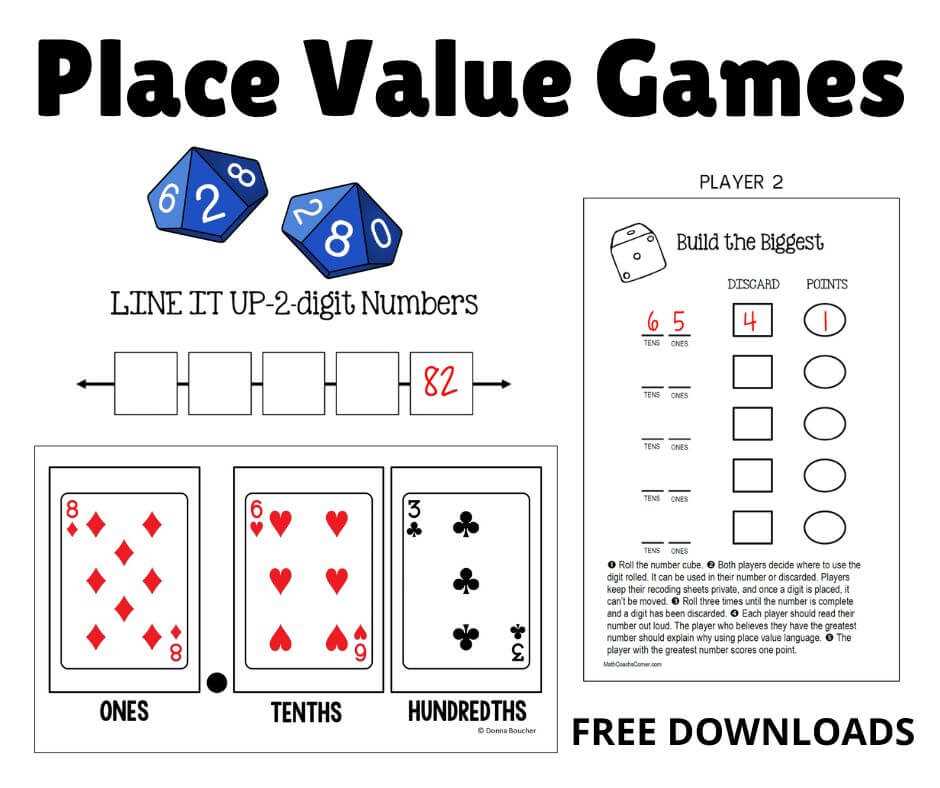
Start by incorporating engaging exercises that focus on number recognition and arrangement into your child’s routine. These hands-on resources will make learning the structure of numbers more interactive, providing immediate practice with digits, tens, hundreds, and beyond. Whether you’re a teacher, tutor, or parent, having materials that students can physically manipulate gives them a clearer grasp of numerical systems.
For younger learners, charts and puzzles that break down numbers into digestible parts are particularly effective. Using clear and colorful designs allows children to visualize and compare different values side by side. Add some creativity to these activities with worksheets that feature blocks, cards, or even dice to manipulate number sequences–helping them identify patterns as they go.
Tailor these exercises to your students’ current level. For beginners, focus on identifying and ordering smaller numbers, then gradually increase the complexity. As students become more confident, include activities that challenge their ability to understand multi-digit numbers, with an emphasis on expanding their comprehension of number relationships.
Additionally, make use of free resources available online, where you can easily download a variety of ready-to-use worksheets and cards. These can be printed and immediately integrated into your teaching plan, saving time while giving students the opportunity to practice at their own pace. With these tools, reinforcing key concepts becomes a fun, hands-on experience.
Printable Exercises to Strengthen Number Comprehension
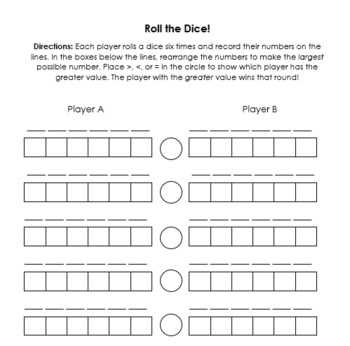
Start with worksheets that require students to match digits with their corresponding quantities. These exercises help reinforce the connection between written numbers and their physical representations. Use block diagrams or pictures that illustrate how numbers increase with each step in the sequence.
For a hands-on experience, use number charts where kids fill in missing digits. This practice encourages them to recognize the relationships between tens, hundreds, and thousands, helping them visualize and understand multi-digit numbers more clearly.
Consider interactive card games that prompt children to build larger numbers by combining individual digits. This method is great for practicing number decomposition and strengthening the ability to read and understand multi-digit numbers.
For students who are already comfortable with basic concepts, add challenges such as identifying the smallest or largest number within a set of given digits. This task sharpens their ability to compare numbers and strengthens their sense of magnitude.
Another approach is to print out a set of number strips that show digits in varying orders. Children can then rearrange these strips to form the correct numerical sequence, which encourages their cognitive understanding of how numbers work together.
Don’t forget about timed drills, which can boost students’ speed in recognizing and organizing numbers. Print sheets that present random numbers to be sorted in ascending or descending order. The repetition and time pressure help increase their fluency with the concept.
To make learning fun and less structured, include activities where kids are encouraged to write their own numbers using a given set of digits. This creative task helps reinforce their understanding of place and positional structure while allowing them to express their comprehension.
Finally, incorporate printable matching games where kids match written numbers to pictures or number words. This adds an additional layer of connection, helping them solidify their understanding through different forms of representation.
How to Use Printable Place Value Games in the Classroom
Start by distributing number-based worksheets that allow students to visually break down multi-digit numbers. These resources can be used for individual practice, helping students grasp the fundamental structure of numbers and their positional significance.
For group activities, print a set of number cards and have students work together to arrange them into correct sequences. This collaborative effort promotes peer learning and encourages discussions around the different roles digits play in forming larger numbers.
Incorporate timed activities where students race to arrange a set of numbers in order. This not only reinforces their understanding of number organization but also helps build their speed and confidence in recognizing number patterns under pressure.
Use number strips or blocks to create a physical activity in which students arrange digits into larger numbers. By interacting with tangible objects, students are more likely to retain the concept of number positioning and how it impacts their overall value.
Print worksheets that contain number puzzles, such as identifying which number is missing in a sequence. This form of exercise enhances problem-solving skills and improves their ability to work with number sequences in various contexts.
Introduce a challenge where students need to rewrite numbers in words. This exercise connects written numbers with their verbal form, reinforcing the understanding of numerical structures through both written and oral language.
Lastly, integrate these tools into routine classroom assessments. Use the printed resources as part of quizzes or games, offering rewards for correct answers. This encourages students to engage regularly with the materials, helping reinforce their understanding in a playful and non-stressful way.
Top Printable Place Value Games for Early Learners
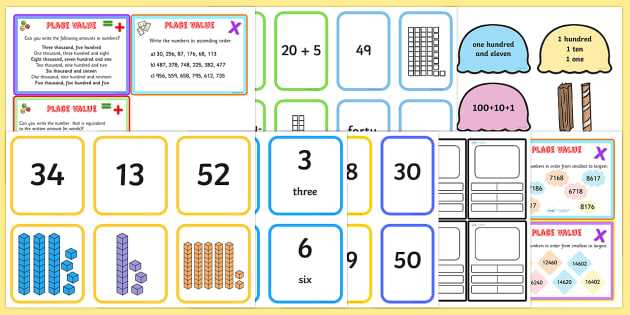
Begin with number matching exercises where children match digits to visual representations. These exercises often include blocks or counters, making it easier for young learners to understand the connection between numbers and their physical form.
Number sequence puzzles are highly effective for early learners. Use simple worksheets where kids need to order numbers from smallest to largest or vice versa. This helps them understand number relationships while building their confidence in sequencing.
Interactive number chart activities can also be engaging. Print large charts where students color in specific sections based on the number given. This reinforces both the identification of numbers and their corresponding positions within a sequence.
Printable Place Value Charts for Hands-On Practice
Use number grids to help students visualize how digits shift across different places. These charts are particularly effective when teaching how numbers grow in value with each position change, from ones to tens, hundreds, and thousands. Provide charts where students can fill in or color different places to strengthen their understanding.
Organize the charts into columns with headings for each place. For example, a row with numbers where children fill in digits for tens, hundreds, and thousands. These charts can be printed in various formats, allowing students to practice both single-digit and multi-digit numbers. Consider using interactive versions where they can write in digits with dry-erase markers.
- For beginners: Focus on tens and ones to build a solid base.
- For advanced learners: Introduce charts that include up to the thousand’s place.
- Incorporate color-coding to show the relationship between each place’s value.
Additionally, include challenges where students must write the expanded form of a number based on the chart. This reinforces their ability to translate between standard and expanded notation, giving them further practice in understanding number composition.
Creating Custom Place Value Games for Different Skill Levels
Start by tailoring activities to match the skill level of your students. For beginners, focus on tasks that involve recognizing and ordering single-digit numbers. Simple worksheets that involve sorting numbers into increasing or decreasing order can be helpful. You can print large grids with digits where students need to find the smallest or largest number in a set of numbers, building their confidence with fundamental concepts.
For intermediate learners, introduce exercises that require building multi-digit numbers from a given set of digits. Use cut-out cards or number strips, where students must arrange the digits in the correct order to form larger numbers. You can add complexity by having them write the numbers in expanded form or compare them against other numbers based on place positions.
For more advanced learners, challenge them with exercises that involve decimal numbers. You can create a game where students place decimals on a number line or compare fractions and decimals, making sure to include different levels of difficulty. Offering these types of activities will encourage them to think critically about the relationship between digits in more complex numbers.
| Skill Level | Activity Example | Focus Area |
|---|---|---|
| Beginner | Sorting numbers into order | Recognizing and arranging single digits |
| Intermediate | Building multi-digit numbers from given digits | Understanding the structure of larger numbers |
| Advanced | Comparing decimal numbers on a number line | Working with decimals and fractions |
Encourage students to create their own number sequences as part of an exercise. For example, challenge them to come up with a series of numbers that follow a certain pattern. This will not only boost their understanding of place relationships but also help them grasp the logic behind number construction.
For a hands-on approach, create physical manipulatives like number blocks or counters. These tools can be adapted for any skill level. Beginners can use blocks to count and arrange numbers, while advanced learners can use them to build and decompose larger numbers, reinforcing their understanding of the relationships between the digits in a number.
Lastly, create games that integrate multiple types of activities into one. For example, a game might have students build a number from a set of digits, then identify whether the number is even or odd, or determine if it fits within a specific range. By combining activities, students will deepen their understanding of the material in an engaging and dynamic way.