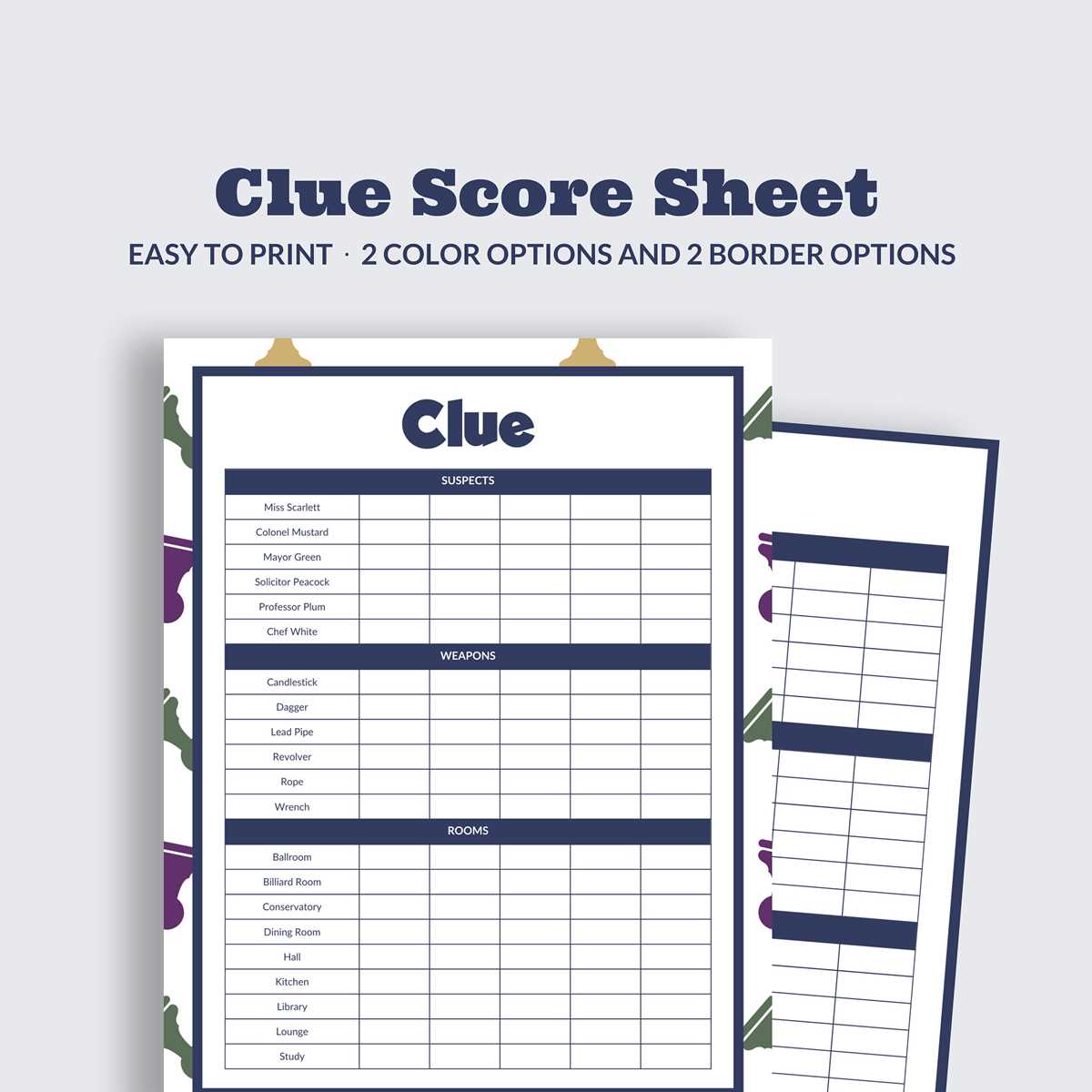
To enhance your game experience, consider creating a personalized tracking document for participants. This will help keep tabs on progress, player performance, and important notes throughout the game. Begin by defining what data needs to be tracked–whether it’s individual points, achievements, or specific milestones reached by players during their challenges.
Once the necessary fields are determined, use simple formatting techniques to structure the document. Clearly labeled sections will help players easily follow along and stay engaged. For example, use separate columns for different tasks or rounds, and make sure there’s space for notes about each player’s performance.
For convenience, you can design this tracking document to be printed and distributed, making it accessible to all participants. Ensure that it’s designed for clarity, with large enough font sizes and ample space for writing. A straightforward design will prevent any confusion and keep the focus on the game itself.
Creating a Custom Tracking Document for Your Game
Start by determining the key information you want to track during the game. This could include individual participant names, actions, or milestones achieved during each round. Clearly define what categories are relevant to your event, such as clues given, points earned, or rounds completed.
Next, organize this information in a structured table. Each column should represent a different aspect of the game, such as player names, round numbers, and the corresponding results. It is helpful to keep the design minimal and focused, with enough space for participants to easily fill in their details during play.
Consider adding checkboxes or spaces for participants to mark completed tasks or achievements. This visual aid can help players easily track their progress. Using different colors or bold fonts for important actions will also improve readability and make the document more engaging.
Once you have finalized the design, ensure the document is easy to print. Adjust the layout so that it fits on standard paper size without crowding the information. Make sure the font size is legible, and leave sufficient margins to prevent any information from being cut off during printing.
Finally, test the sheet by running through a mock game session. This will allow you to make any necessary adjustments and ensure that the document works smoothly for all participants. A well-organized sheet will not only keep the game organized but will also enhance the overall experience for everyone involved.
How to Design a Clue Score Sheet for Your Game
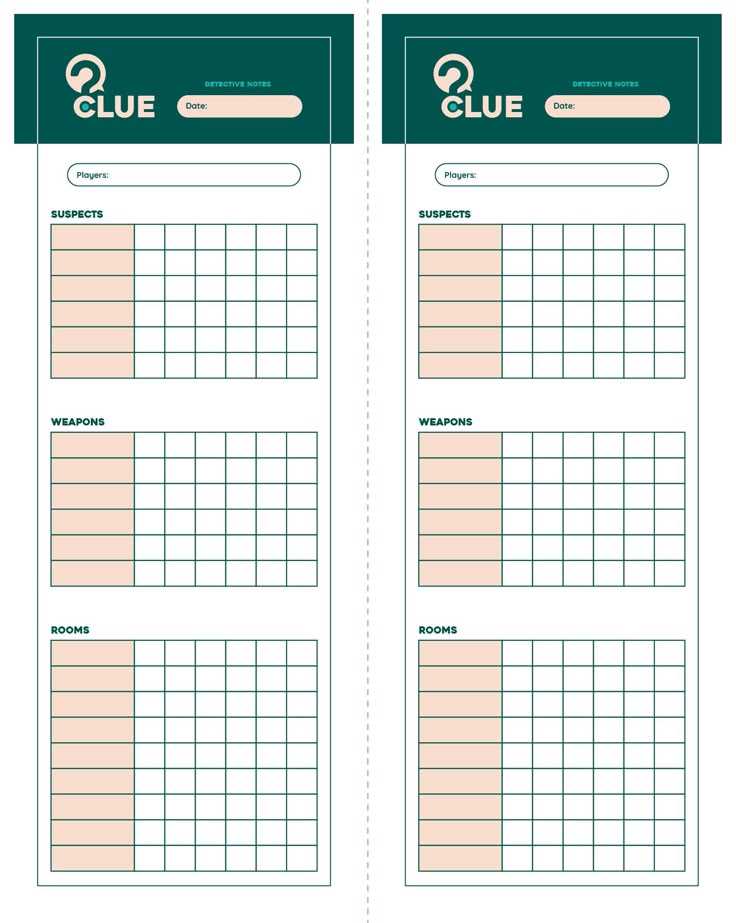
Start by identifying the main components you want to track during your game. This may include participant names, actions completed, or the results of each round. Create columns that reflect these categories, ensuring there is enough space for the details to be filled in as the game progresses.
Next, organize the layout for ease of use. Use clear headings and a clean, minimalist design that allows players to quickly reference the sheet without confusion. Consider color-coding different sections for better visual appeal and easier navigation. Ensure there are large enough spaces for writing legibly.
Finally, test the design in a mock game session to verify its functionality. Make adjustments as needed, ensuring it serves its purpose of tracking information effectively. A well-designed tracker will enhance the flow of the game and keep players engaged without any unnecessary interruptions.
Steps for Printing a Clue Score Sheet at Home
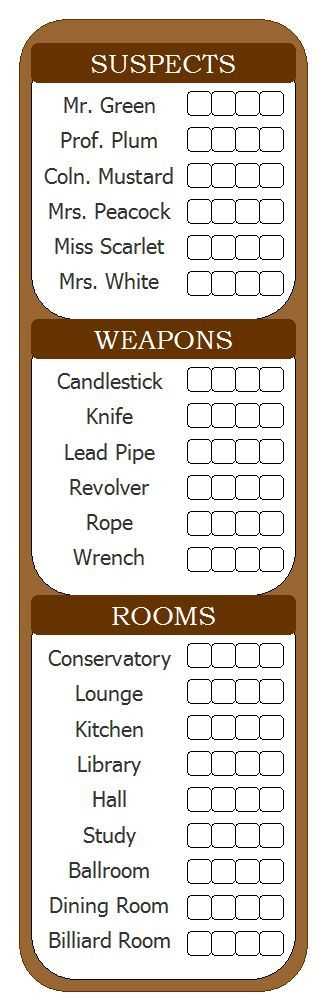
First, ensure your document is properly formatted for printing. Check that the font is legible and that all sections are clearly separated to make filling out the form easy. Preview the document on your computer screen before printing to ensure it fits your paper size without any cut-off content.
Next, load your printer with the appropriate paper size. Most home printers will handle letter-sized paper (8.5×11 inches) without any issues. Go to your printer settings, select the correct paper type, and print the document. If necessary, print a test page first to confirm that everything looks as expected.
Customizing the Score Sheet for Different Game Formats
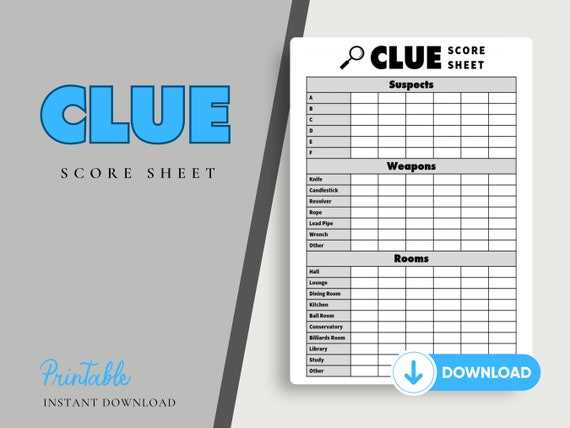
To tailor the form for various game types, adjust the categories and scoring system to match the specific rules of your game. For example, if playing a timed version, include time tracking columns. Alternatively, if it’s a trivia game, add spaces for questions, answers, and points earned.
Another option is to design a version that accommodates multiple players or teams. Include separate sections for each participant and ensure there’s enough space to track their progress. This allows you to quickly see who is leading or falling behind throughout the game.
Consider adjusting the layout to fit the complexity of the game. For example, for a game that requires more detailed tracking, such as in-depth puzzles, create a more extensive form with additional rows and columns for each round or challenge. This ensures everything is organized and easy to follow during the gameplay.
Organizing Clue Categories and Scoring Systems
Begin by dividing the categories into specific themes. If the game has a general knowledge format, split the categories by topics such as history, geography, science, and pop culture. This allows players to focus on areas they know best while maintaining a balanced challenge. For a mystery or detective game, categorize clues based on different types of puzzles or information sources, such as visual, textual, or auditory clues.
Next, design the scoring system to reflect the difficulty level of each category. Assign higher point values to tougher questions or puzzles and lower values to easier ones. This approach adds a level of strategy, as players must decide whether to take risks for higher points or play it safe with lower-value tasks.
For a team-based format, include a section where each team’s points are recorded separately. This structure helps keep track of the group’s progress, especially in games with multiple rounds or levels. Teams can be awarded points based on the accuracy of their answers or the number of successful clues they solve.
In some games, the point system can be dynamic, where certain actions earn bonus points. For example, players who solve a particularly challenging clue can receive bonus points or additional chances to advance in the game. Include a column or section dedicated to such bonuses, ensuring clarity for both the players and the organizer.
Keep the layout simple and intuitive. Organizing the categories and point values in a table format can make tracking easy. List the categories in rows or columns, with corresponding point values beside each one. This allows players to see what they are aiming for and helps the organizer manage the game smoothly.
For a more competitive experience, implement a tiered scoring system. For example, a game could have three levels: easy, medium, and hard. Players or teams who choose to answer higher difficulty questions earn more points. This encourages strategic decision-making and helps add excitement to the game.
When using a points-based scoring system, make sure to clarify the rules for earning points. Decide whether points are awarded per correct answer or after completing a set of challenges. Additionally, for penalty-based games, include a section for deductions or negative points to balance out the scoring system.
Finally, it’s important to have a summary section at the end of the game. This can include a final score tally, an overall leaderboard, and potentially a reward or achievement list for top performers. This gives players a clear and satisfying end to the game and helps in determining winners in a fair and organized manner.