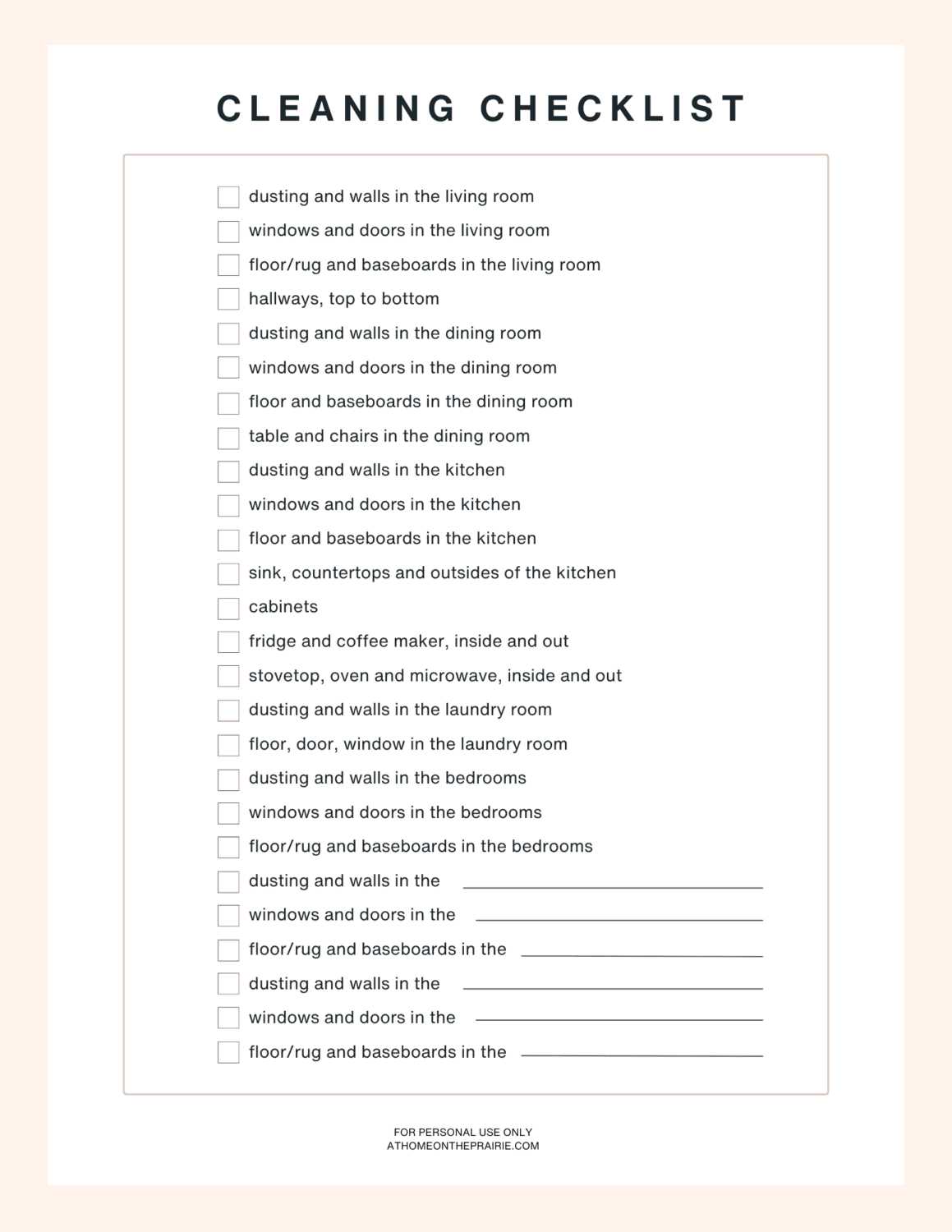
To stay on top of everyday duties, creating a schedule for completing household tasks is a practical approach. A well-structured plan can help break down the workload and ensure that nothing is overlooked. Using a physical copy of your schedule allows you to visually track and cross off tasks, providing a satisfying sense of accomplishment.
When setting up your routine, prioritize your responsibilities based on urgency and frequency. Start by grouping tasks into categories, such as cleaning, organizing, and maintenance. Allocate specific days or time slots for each type of task, adjusting them to your availability and household needs. For example, a quick sweep of high-traffic areas might be better suited for daily routines, while deep cleaning could be scheduled weekly.
One of the benefits of having a printed schedule is the flexibility to easily update it as your needs change. You can quickly add or remove tasks, adjust deadlines, or create reminders for special projects like seasonal cleaning. This adaptability keeps your home in order without the feeling of being overwhelmed.
By tracking tasks on paper, you’re more likely to follow through and avoid forgetting important details. Whether you’re managing the home alone or with others, a physical reminder keeps everyone accountable and ensures smooth household operation. Additionally, children and family members can participate in keeping up with the plan, fostering a sense of teamwork and responsibility.
Printable Household Task Organizer
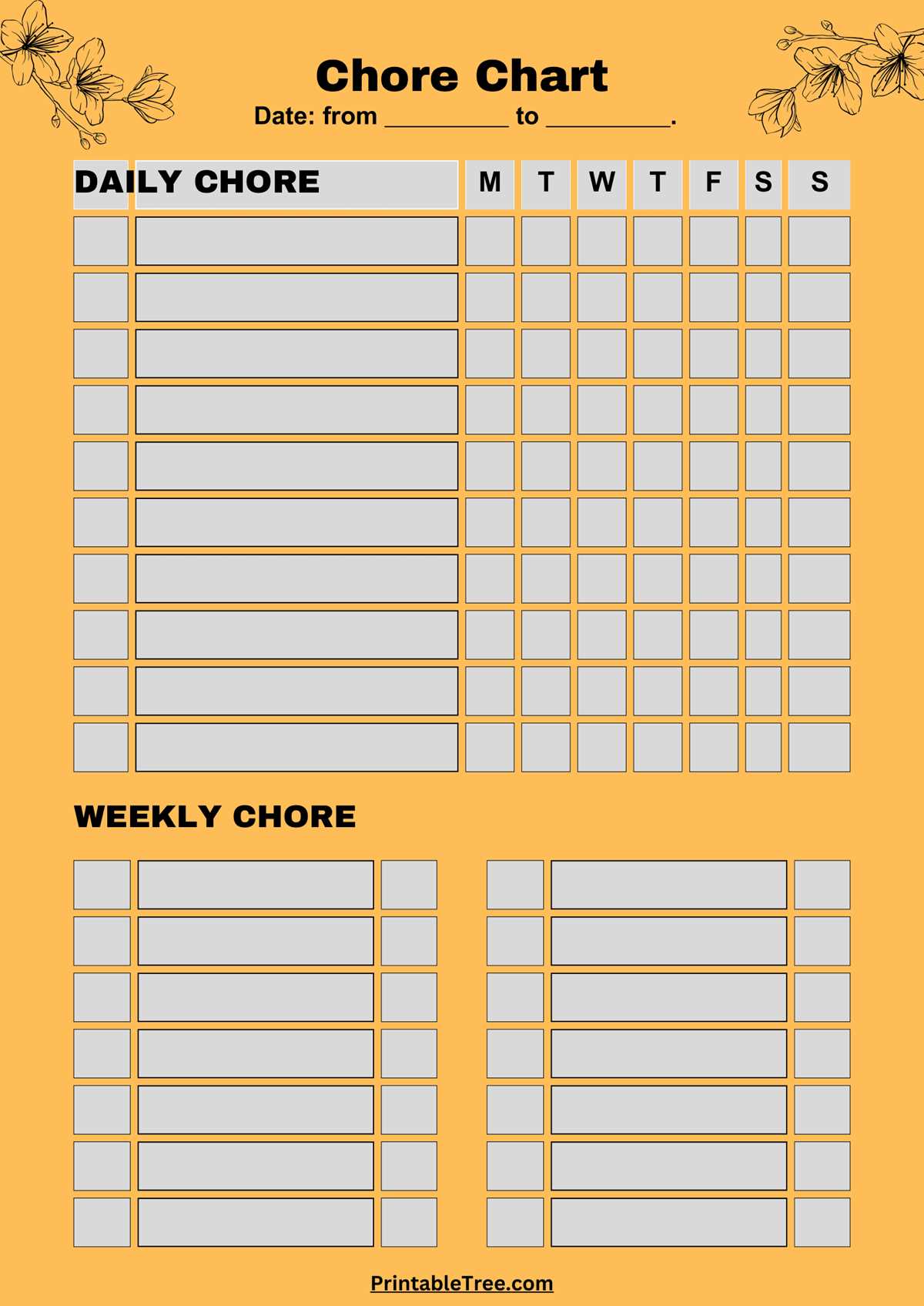
Having a structured method for completing tasks at home can greatly reduce stress and increase productivity. A pre-made schedule with clearly defined duties allows you to quickly see what needs attention each day. It also helps avoid last-minute scrambling when it’s time to clean or maintain your space.
To begin, break down your tasks into categories such as cleaning, organizing, and upkeep. For each category, list the specific duties you want to complete, ensuring the tasks are manageable and clear. For example, instead of “clean kitchen,” list specific tasks like “wipe down counters” and “wash dishes.” This makes the plan more actionable and less overwhelming.
It’s crucial to create a format that works for you. Some prefer a simple checklist, while others may need time blocks for specific tasks. A table format, with columns for each day of the week, is ideal for those who want to assign certain duties to specific days, making it easier to track which tasks are due and when they’ve been completed.
If you have a busy schedule, try to group similar tasks together. For example, combine all laundry-related duties (washing, drying, folding) into one slot, or set a dedicated time for cleaning all floors at once. This minimizes disruptions to your day and allows you to focus on one type of work at a time.
Another useful feature is to add time estimates for each task. For example, assign “15 minutes” to wiping down kitchen counters or “30 minutes” for vacuuming all rooms. This helps keep you on track and prevents the feeling of being overwhelmed by a long to-do list.
For households with multiple people, it’s beneficial to assign tasks to each member. By writing everyone’s responsibilities down, there is less confusion, and the work is divided fairly. This can be especially useful for families or roommates who want to share the workload without miscommunication.
Lastly, make sure your schedule is easy to update. As your routine changes, adjust the duties accordingly. If new tasks come up or old ones are no longer necessary, you should be able to quickly add or remove them without any hassle. This flexibility ensures your schedule remains realistic and adaptable to changing needs.
How to Create a Custom Household Task Plan
Start by identifying the tasks that need to be done each day. Make sure to include both recurring duties, like cleaning or cooking, and one-off tasks that may come up, such as organizing a room or checking appliances. It’s important to ensure you have all relevant tasks covered without overloading your schedule.
Next, categorize the tasks. Group them by type: cleaning, maintenance, organization, etc. This helps prevent confusion later on and makes it easier to focus on one category at a time. For example, under “cleaning,” include tasks like wiping counters, vacuuming, or washing windows. Each category can be assigned to a specific day or time block during the week.
Once you have a list of tasks and categories, prioritize them. Some responsibilities need to be done more frequently or require more time. For instance, you might need to dust and vacuum every two days, but deep-cleaning the bathroom could happen weekly. Assigning priority helps you focus on more urgent or time-sensitive tasks first.
Consider time management when planning your day. Estimate how much time each task will take and include that in your schedule. This will allow you to realistically allocate time for each item and avoid feeling rushed or overwhelmed. For example, if vacuuming takes 20 minutes, schedule that task with enough buffer time to complete it without interruptions.
Assigning tasks to specific days of the week ensures that you stay organized. For example, you could set “laundry day” every Wednesday or “dusting day” every Monday. Use a table format to make the schedule easier to follow, like this:
| Day | Task | Time Estimate |
|---|---|---|
| Monday | Vacuum all rooms | 20 minutes |
| Tuesday | Wipe down kitchen surfaces | 15 minutes |
| Wednesday | Do laundry | 1 hour |
| Thursday | Dust furniture | 15 minutes |
| Friday | Clean bathroom | 30 minutes |
Be sure to leave room for flexibility. Not every day will go according to plan, so it’s important to be able to adjust your schedule. If a task doesn’t get completed on a particular day, move it to another day and shift things around as needed.
Lastly, don’t forget to review your schedule at regular intervals. As you get more familiar with how long each task takes or how often it needs to be done, you can make adjustments to improve efficiency. Periodically revising the schedule will help keep it relevant and aligned with your current needs.
Top Tools for Printing Your Household Task Planner
One of the easiest ways to create and print your task schedule is by using a word processor like Microsoft Word or Google Docs. Both offer customizable templates that allow you to quickly design your task planner. You can adjust the layout, font size, and even add checkboxes to mark off completed items. For quick access, Google Docs also offers cloud storage, making it easy to access your planner from any device.
If you’re looking for something more specialized, consider using online tools like Canva or Trello. Canva provides customizable templates specifically for organizing tasks, while Trello uses a board-and-card system, making it easy to assign responsibilities and track progress. Both options allow you to easily export your tasks and print them at any time.
How to Organize Household Tasks by Priority
Begin by identifying which duties have the highest urgency. These are typically tasks that impact health, safety, or overall functionality, such as taking out the trash, cleaning up food spills, or ensuring appliances are in good working order. Mark these tasks as “high priority” and tackle them first.
Next, assess tasks based on frequency. Some responsibilities need to be done daily, such as washing dishes or tidying up common areas, while others, like cleaning windows or organizing a closet, may only need to be done weekly or monthly. Assign a priority level to each task based on how often it needs to be addressed.
Consider the time commitment required for each task. Tasks that take longer to complete should be scheduled with more attention to detail. For example, deep cleaning the kitchen may require a larger time block, while wiping down counters can be done quickly. Assign these tasks accordingly, ensuring that time-intensive duties are spread out.
When multiple people are involved in managing the home, divide tasks by priority. Make sure that each family member or roommate understands which tasks require immediate attention and which can be handled later. This avoids confusion and ensures that important duties get done without delay.
Utilize a visual tool, like a color-coded calendar or a priority matrix, to organize the tasks. For example, you can use green for high-priority items, yellow for medium-priority tasks, and red for low-priority duties. This helps you visually distinguish which items need attention first.
Another useful technique is to block out time in your schedule based on priority. Set aside specific time slots for tackling high-priority tasks and leave less critical activities for later in the day or week. This way, you prevent burnout and ensure that the most important responsibilities are completed first.
Finally, review your tasks periodically. As needs and circumstances change, you may need to adjust your priorities. Some tasks may become more urgent while others can be delayed, so revisiting the list helps you stay on track and adapt to changing demands.
Printable Task Schedules for Different Family Sizes
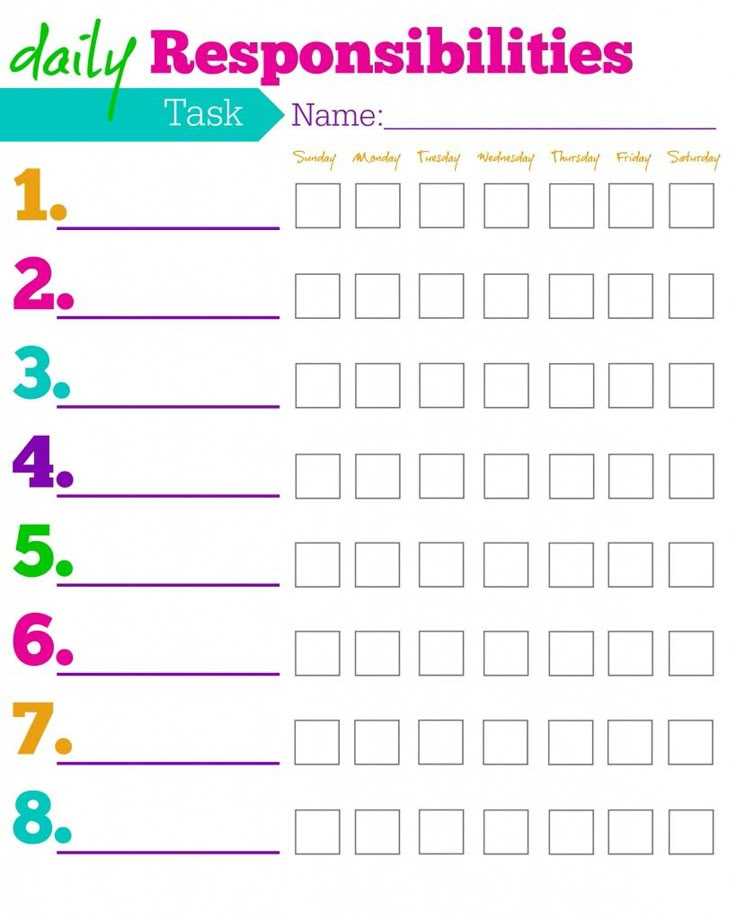
For smaller households, tasks can be divided more flexibly. In a family of one or two, it’s easier to share responsibilities. You can create a simpler schedule, assigning one or two tasks per person each day. For example, one person may handle all cleaning while the other takes care of organizing, reducing time spent managing who does what.
With a larger family, it’s crucial to split the workload evenly. In this case, assign age-appropriate duties to each member, keeping track of who is responsible for what. This not only prevents any one person from being overwhelmed but also teaches everyone to contribute. Create specific categories for younger children, such as “put away toys” or “help set the table.” This ensures everyone is involved without overburdening anyone.
For families with teenagers, the tasks can be more advanced. Assign them duties like vacuuming, mopping, or even doing laundry. A good practice is to designate a family meeting once a week to go over who will take care of which responsibilities, allowing for a fair distribution based on everyone’s schedule and abilities.
In larger families with diverse needs, a weekly schedule might work better than a daily one. This allows for more flexibility and ensures that certain tasks are completed within the week. For example, designate a particular day for cleaning the garage or tidying up shared spaces like the living room or bathroom, with everyone pitching in to get the job done.
Use different symbols or colors to represent tasks for various family members. For example, you could assign one color to each person, and every task they’re responsible for will appear in their designated color. This method visually clarifies who is doing what and makes it easier for everyone to follow.
For homes where everyone works or attends school, it’s important to create a schedule that doesn’t interfere with busy hours. Assign tasks for the evening or on weekends, with everyone rotating duties. This ensures that important tasks still get done without disrupting personal schedules.
Review the schedule monthly or quarterly, adjusting tasks as needed. As kids grow or family members’ schedules change, responsibilities may shift. Regularly updating the task plan ensures that it remains manageable and fair for everyone involved.