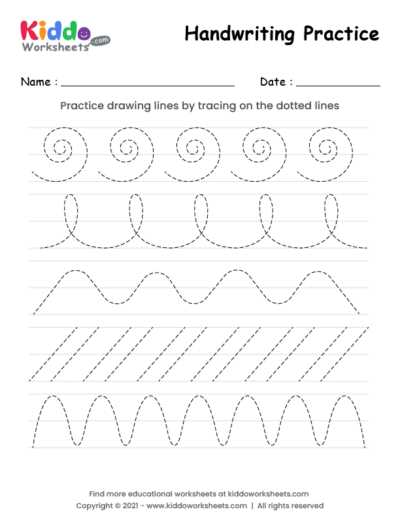
Start by focusing on activities that improve fine motor skills. Choosing activities that encourage children to follow lines and shapes is a good approach to developing writing abilities. These exercises help young learners build muscle memory for letter formation, offering clear paths for them to follow as they practice drawing letters and numbers. This practice helps children gain confidence and accuracy with each stroke.
Look for patterns and shapes that are easy to follow yet challenging enough to keep the child engaged. For example, starting with basic shapes like circles, squares, and triangles allows children to understand the basic movements needed for more complex characters. Once these patterns are mastered, they can move on to letters and words that are linked with the shapes they’ve already learned.
Consider a variety of designs that cater to different learning styles. Some children may prefer more structured paths, while others benefit from a more free-flowing design. Make sure the materials you choose are easy to understand and offer visual cues to help them progress at their own pace. Practice with these tools daily, and you will see noticeable improvements in both motor coordination and letter formation accuracy.
Detailed Plan for Tracing Practice Materials
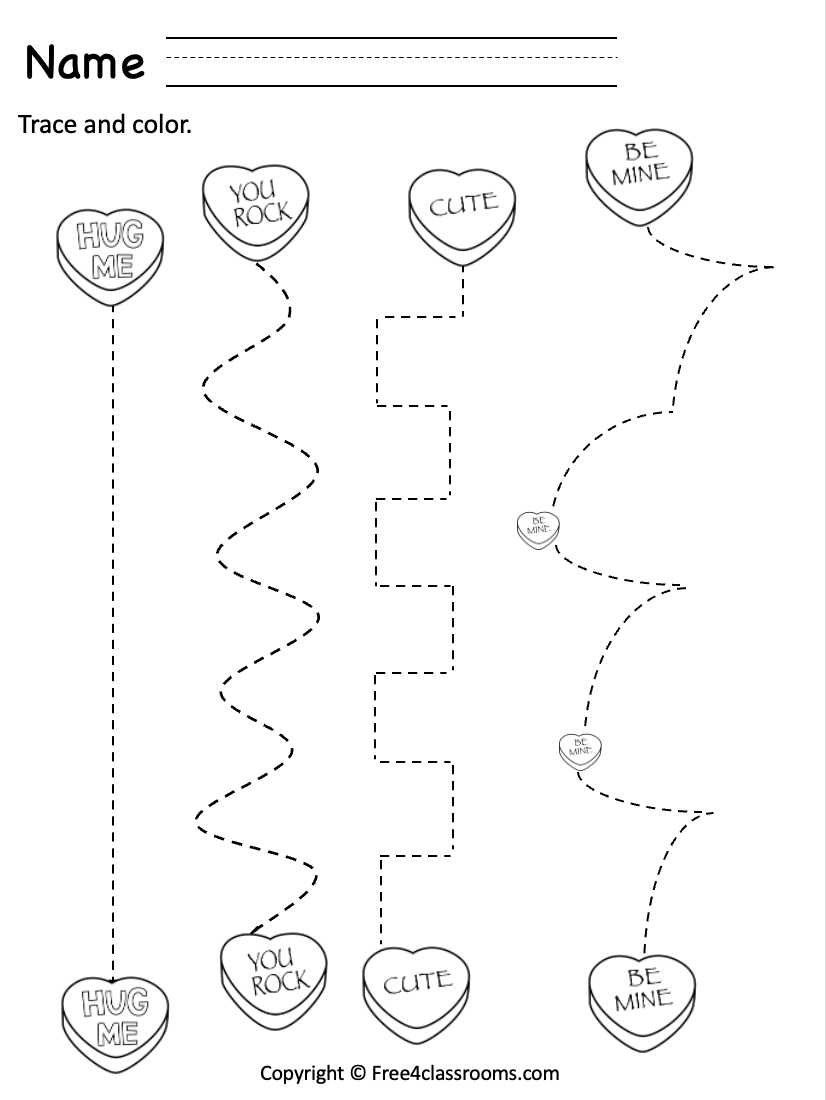
Begin by selecting simple lines and shapes for the first stage of development. Start with basic vertical and horizontal strokes, then progress to more complex diagonal lines. These initial exercises help children understand how to control their hand movements, which is a key skill for writing. Gradually introduce curves and closed shapes such as circles and squares to help refine their coordination.
Next, introduce basic letters using straight lines and simple curves. Use large outlines for the characters to make it easier for young learners to follow. This will allow them to practice each letter’s shape without feeling overwhelmed. Incorporating a variety of fonts and styles will keep the exercises engaging and dynamic.
Once letter formation is mastered, add more advanced tasks that involve connecting letters to form words. Create exercises that encourage both recognition and repetition. This stage also helps to strengthen muscle memory and consistency in writing. Focus on patterns in the words that will make it easier for children to remember the structure of each letter when it appears in different contexts.
Finally, introduce writing in a continuous flow, focusing on fluid transitions between letters and words. Provide feedback and offer plenty of opportunities to practice in different contexts, such as matching words to pictures or writing short sentences. These activities will help children internalize writing mechanics while keeping them engaged and motivated to improve.
How to Choose the Best Tracing Templates for Beginners
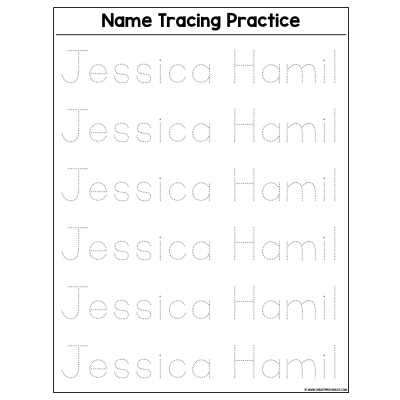
Start with large, simple shapes that are easy to follow. Begin with basic lines like straight, curved, and zig-zag shapes to help improve fine motor skills. These simple templates will allow beginners to practice controlling their hand movements and build confidence in their ability to form shapes. Once they are comfortable, introduce more complex forms like circles and squares.
Consider the material’s complexity. Avoid templates with excessive detail or small elements. Beginners should be encouraged to start with clear, simple outlines so they are not overwhelmed. Templates with larger spaces and thicker lines are ideal for young learners as they give more room for practice and less frustration.
Choose templates that gradually increase in difficulty. Start with shapes and lines, then move to letters and numbers. This progression helps maintain engagement by offering a sense of accomplishment while building on basic skills. Be sure that each new template introduces a new challenge that is still achievable for beginners.
Templates featuring bold, easy-to-follow outlines work best for those who are new to writing. Beginners should be able to trace comfortably within the lines, helping them practice precision without becoming discouraged by difficulty. Avoid faint or overly intricate lines that might confuse young learners or hinder their practice.
Incorporating a variety of fonts or styles can help introduce different writing systems or learning goals. For example, capital letters might be introduced first, followed by lowercase letters, to give a more rounded understanding of the writing system. Use templates that show letters in a manner that encourages correct form and spacing.
For an engaging experience, look for templates that incorporate fun elements like pictures or themes. Animals, nature, or everyday objects can make tracing more enjoyable, which can improve focus and interest. These thematic elements also encourage children to practice writing by associating the activity with something they find exciting.
Consider the age and ability of the learner when selecting templates. For younger children, simpler templates such as basic shapes and large, bold characters will be more effective. As children gain more experience, templates with smaller details or slightly more intricate shapes can be introduced to challenge them.
Lastly, ensure that the templates offer enough variety. Some children may excel with just one type of exercise, while others may need a mix of tracing numbers, letters, and objects. The best resources provide a balance of different tasks to keep learning exciting and to accommodate various learning styles and speeds.