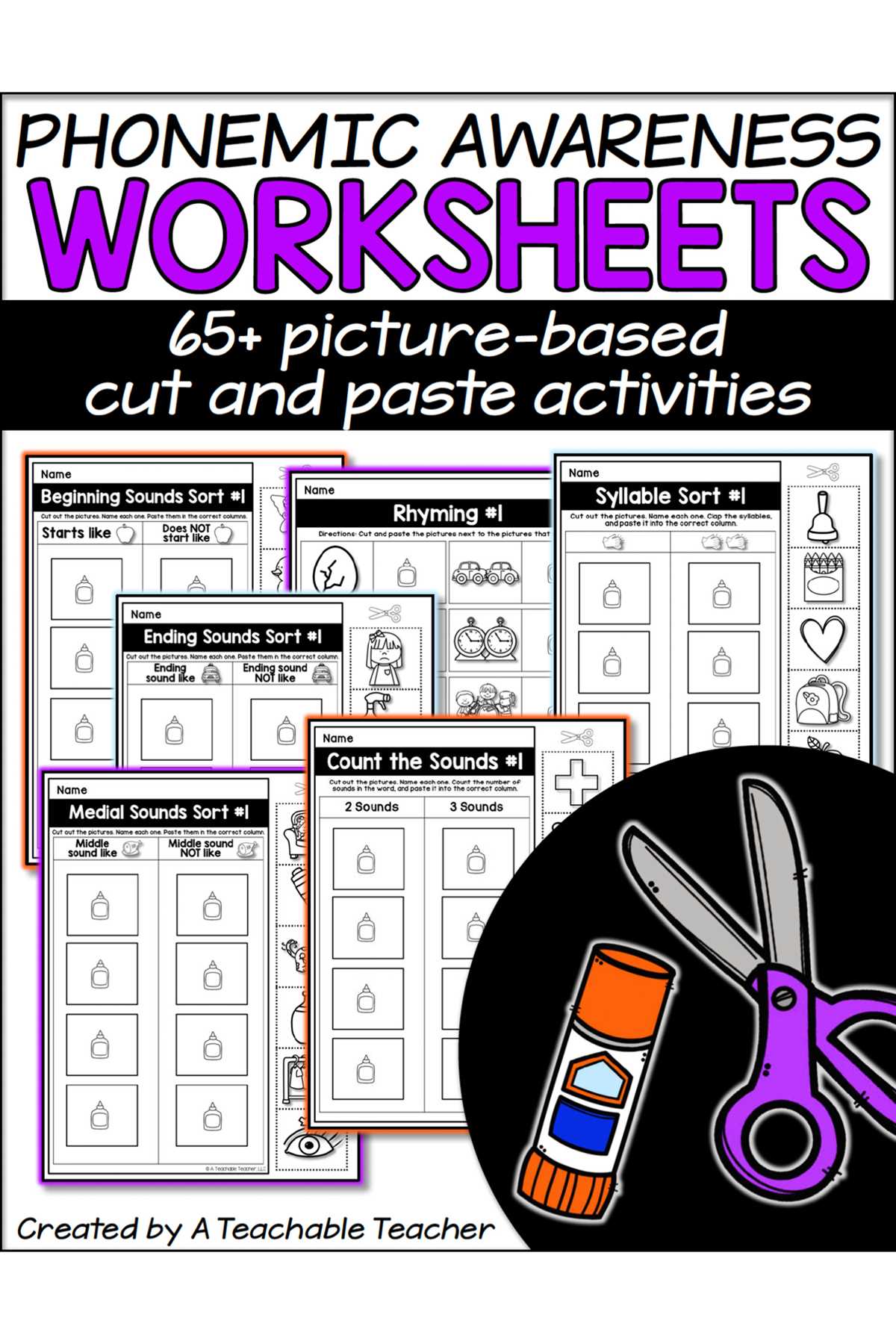
Use worksheets that challenge children to match words with similar sounds to improve their understanding of sound-letter relationships. These tasks are a simple way to reinforce how words are built from individual sounds, helping students link the spoken form of a word with its written counterpart. Include exercises where students match pictures with corresponding sounds or complete sound-based patterns in words.
Sorting tasks can be especially helpful, where children group words or images based on their beginning, middle, or final sounds. This method encourages not only recognition but also auditory discrimination skills. Blending exercises, where children combine sounds to form words, can be another powerful tool for improving their ability to decode unfamiliar words.
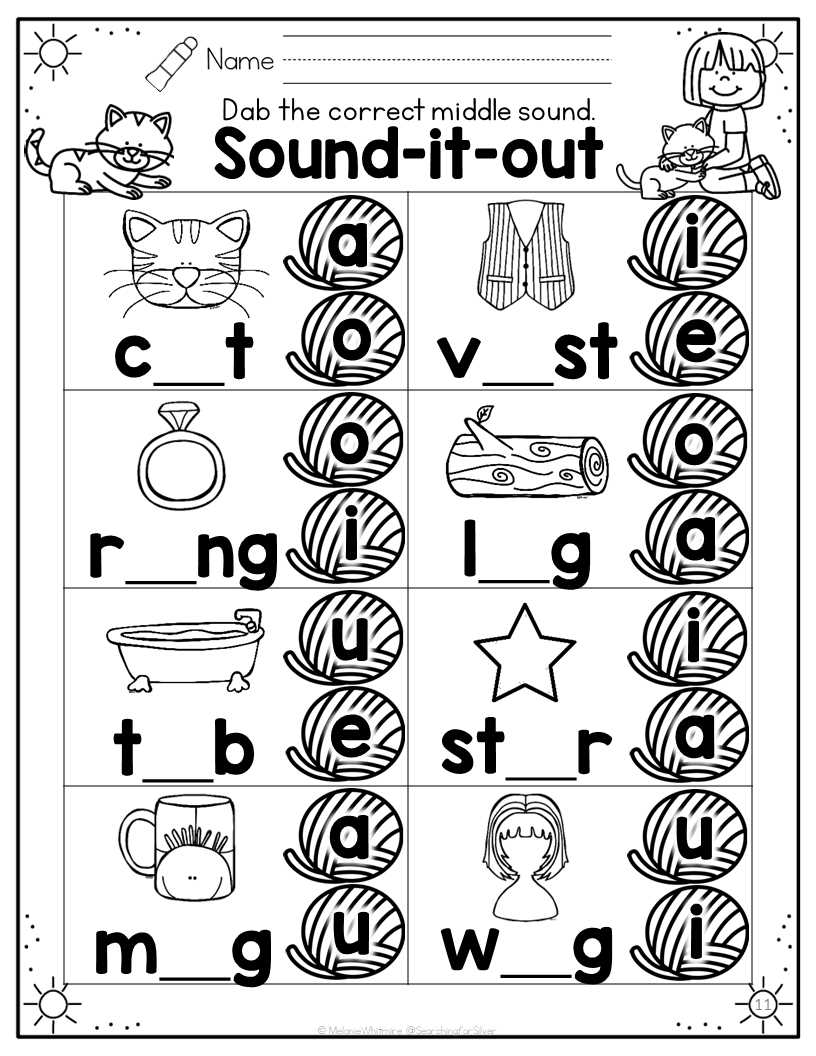
Introduce word-based puzzles that require children to identify or fill in missing sounds. These tasks push students to apply their understanding in more complex contexts, reinforcing their ability to segment and blend sounds fluently. Using games or sorting challenges that focus on rhyming or minimal pairs will also sharpen their listening skills, enabling them to distinguish subtle differences in sounds.
Engaging Techniques for Teaching Sound Recognition
Design exercises where children match sounds with corresponding letters. Use simple flashcards with a letter on one side and a picture of an object that begins with that sound on the other. This helps link sounds and symbols, a critical foundation for reading.
Create worksheets with missing initial or final sounds. For example, a sheet with pictures like “cat”, “dog”, and “sun” where the first or last letter is missing. Children can fill in the blanks, reinforcing their understanding of letter-sound associations.
Introduce sorting games where kids group words by their starting or ending sounds. This can be done with various sets of images or words on cards. For example, categorize objects with the same beginning sounds, such as “bat” and “ball” in one pile, or “sun” and “sock” in another.
Incorporate rhyming tasks by giving students pairs of words that rhyme and asking them to identify the common ending sounds. For instance, “hop” and “top”. These types of exercises help with sound segmentation and blending.
Include activities where students are asked to segment words into individual sounds. Start with short words like “cat” or “dog”, and gradually increase the length and complexity of the words. This enhances their ability to hear and identify discrete sounds within words.
Use word-building exercises where children are given a set of letters and asked to create words. Begin with simple consonant-vowel-consonant (CVC) words like “mat” or “pit”, then progress to more complex structures as their skills grow.
Incorporate hands-on activities such as sound hunts. Ask children to find objects around the room or at home that start with specific sounds. This encourages active participation and reinforces sound recognition in real-world contexts.
Creating Flashcards for Phoneme Recognition
Begin by focusing on single sounds and their corresponding letters. For example, choose words like “cat” for the /k/ sound and “bat” for the /b/ sound. This will help students associate distinct sounds with their written symbols. Each flashcard should feature the letter or blend on one side and an image that represents a word starting with that sound on the other.
Use high-contrast colors to make the cards visually engaging. This improves the clarity of both the letter and the accompanying picture, allowing for quicker identification. Keep the images simple and clear to avoid any distractions from the target sound.
Choose words that are phonetically straightforward, avoiding silent letters or irregular spellings. Words like “dog” or “fish” work well because their spelling aligns directly with the sound they represent. Such clarity reduces confusion and reinforces sound-letter associations.
Incorporate a variety of sounds, not just consonants. Include vowels and diphthongs as well, such as the short /a/ sound in “hat” or the long /oo/ sound in “moon.” This variety ensures that students experience a broad spectrum of sounds, laying the foundation for more complex phonetic skills.
For advanced learners, introduce blends and digraphs. For example, “sh” in “ship” or “ch” in “chip” are crucial for later reading fluency. These cards can be grouped together based on the shared sound or letter pattern, allowing learners to spot similarities between them.
As the learner’s proficiency increases, gradually introduce multi-syllabic words. For instance, “tiger” or “elephant” can help them break down more complex sounds. At this stage, challenge them to recognize the individual sounds within each syllable.
Lastly, ensure that the flashcards are durable. Use sturdy paper or laminate the cards to withstand frequent handling. This durability will keep the cards in good condition through repeated use in practice sessions, making them an ongoing resource for developing sound recognition.
Designing Rhyme Matching Worksheets for Early Learners
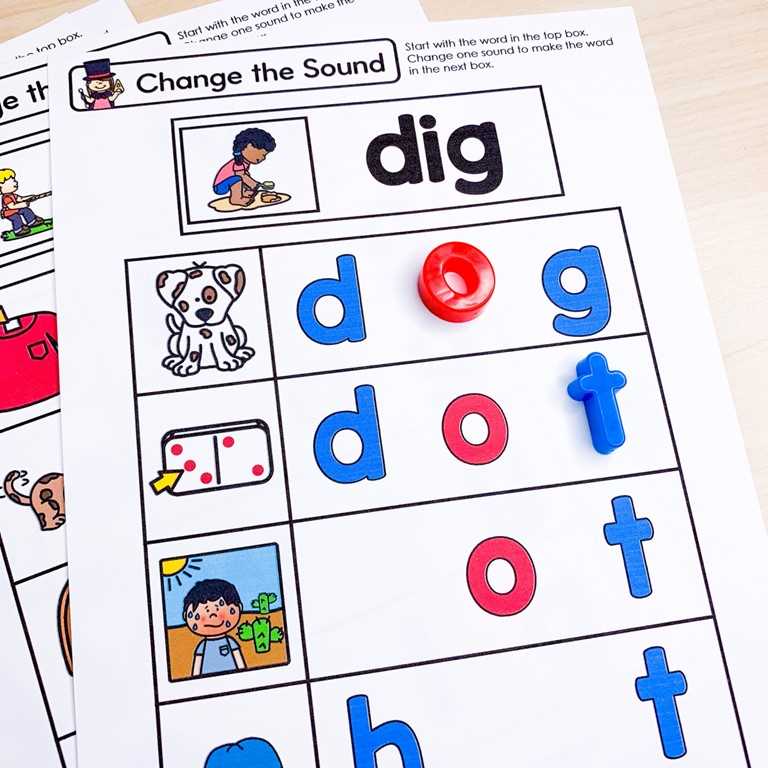
Begin by choosing words with simple, clear rhyming pairs to ensure comprehension. Keep the list short–no more than five or six pairs–so children can focus on each match without feeling overwhelmed. Visual aids like images or drawings help solidify the connection between words and their sounds. Include both familiar and playful words that children can easily pronounce, such as “cat” and “hat,” or “dog” and “log.” Avoid complicated or abstract words that may confuse beginners, and instead focus on words that children commonly encounter in their environment.
To increase engagement, structure the worksheet with two columns: one for the word pairs and another for corresponding images or blanks. Encourage students to draw lines connecting the rhyming words or fill in the blanks with the correct match. Repetition is key–using the same word families in various activities reinforces sound patterns. For added challenge, you can gradually introduce non-rhyming distractors, prompting learners to identify which words do not belong in the set. This promotes critical thinking and helps refine their ability to spot rhymes effectively.
Phoneme Segmentation Practice Sheets
Provide your learners with clear, targeted exercises where they break words into individual sounds. These worksheets should include a range of simple to complex words that gradually challenge their segmentation skills. Offer words with different phoneme structures, such as consonant-vowel-consonant (CVC), consonant-vowel-consonant-vowel (CVCV), and multi-syllabic words. The layout can include boxes or lines where children can write each segment, helping them visually separate sounds and reinforcing their understanding.
To further develop their abilities, consider including activities with images or icons representing the words. For example, a sheet could show a picture of a “cat” with spaces to write “c,” “a,” and “t.” Incorporating visual elements makes the task engaging and provides context for each sound. This method also strengthens their connection between letters and sounds while honing their ability to isolate individual phonemes in real words.
Interactive CVC Word Building Printables
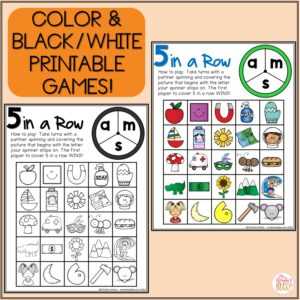
Using letter tiles or cards for building three-letter words is an excellent tool to improve reading skills. These simple resources encourage children to manipulate sounds and blend them into meaningful words. Begin with basic consonant-vowel-consonant (CVC) combinations, like “cat,” “dog,” or “bat,” to build confidence before advancing to more complex words.
One effective method is creating matching exercises. Prepare cards with individual consonants and vowels. The child can then match the correct sounds together, physically constructing words. This helps strengthen sound-symbol correspondence and visual recognition of letter patterns.
Another engaging idea is to design worksheets where children can color the correct word once they’ve identified the right combination. For instance, provide a set of images and a list of word choices. The child will decode the words and circle the correct ones corresponding to the images. This adds a fun, hands-on element to the learning process.
Additionally, using a “word building mat” could provide structure. Draw a simple grid with three spaces: one for the beginning consonant, one for the vowel, and one for the ending consonant. Children can place letters into the grid and create new words by switching out individual letters. This allows for easy practice of blending sounds and constructing multiple words from one set of letters.
These tools help shift the focus from memorization to active participation. Children gain immediate feedback through trial and error, which improves retention. Keep the materials varied to maintain engagement–different fonts, colors, and themes can make the learning process feel like a fresh challenge each time.