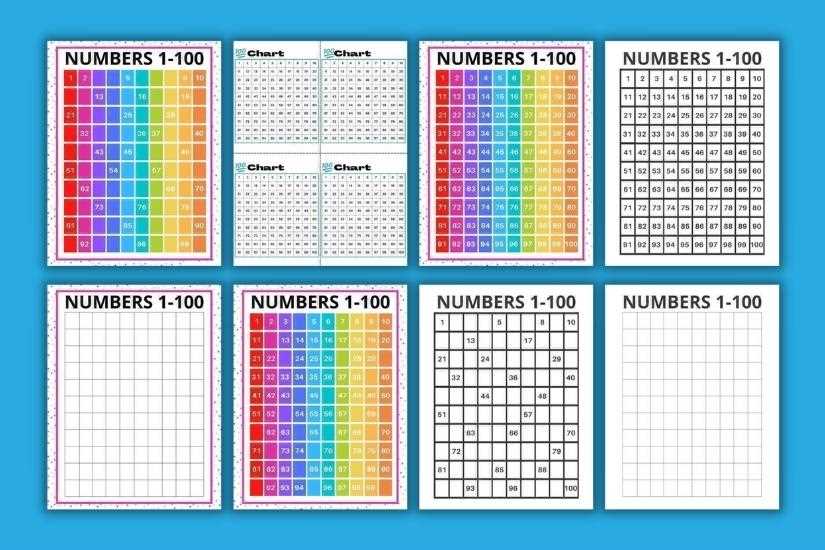
For effective counting practice, consider using a grid from 1 to 100. This visual tool helps students quickly recognize patterns and improve number sequencing skills. Whether in a classroom or at home, it serves as a solid foundation for learning fundamental math concepts.
To make the most out of this grid, begin by having learners trace or point to specific numbers. This builds familiarity with the sequence and aids in memorization. Pairing this exercise with simple addition or subtraction problems can solidify basic arithmetic skills.
For more advanced learners, use the grid to introduce skip counting. Focus on counting by 2s, 5s, and 10s, and encourage students to identify the multiples within the grid. This approach can sharpen both their number sense and multiplication skills.
Another useful strategy is creating challenges where students identify missing numbers within the grid. This technique tests their understanding of number order and enhances their ability to quickly fill in gaps, strengthening their overall number comprehension.
Using a 100 Square Grid for Math Practice
Start by printing out a grid that organizes numbers from 1 to 100. This layout helps students visually connect with the order of numbers. It’s particularly useful for young learners who are just beginning to grasp counting and sequencing.
Use the grid to teach simple addition. For example, students can practice adding numbers by visually counting forward on the grid. Marking numbers and physically counting helps reinforce the concept of “adding on” from a starting point.
Introduce subtraction using the same grid. Have students choose a starting number and then count backward. This practice reinforces the concept of taking away and can serve as a hands-on exercise to understand the inverse relationship between addition and subtraction.
When working with multiplication, focus on skip counting. By counting by 2s, 5s, or 10s, students can learn to identify multiples, providing a visual method to practice basic multiplication facts. This builds a stronger foundation for understanding times tables later on.
Another useful strategy is highlighting numbers in the grid. Ask students to highlight all multiples of a certain number, such as all multiples of 3. This helps them visually grasp patterns and relationships between numbers.
For a more interactive exercise, have students fill in a grid with missing numbers. You can leave blank spaces in the grid and ask students to fill in the missing spots. This activity reinforces number recognition and the concept of order.
To make the exercise more engaging, add fun activities like “number hunts.” Have students search for specific numbers within the grid or identify patterns like even and odd numbers. This keeps the task dynamic and offers variety in the learning process.
Finally, customize the grid by adding colors or shapes to certain numbers. This can help draw attention to key concepts, like grouping numbers by tens, which reinforces place value understanding. Color-coding can be an easy way to make the grid more visually appealing and easier to use for learners of all ages.
How to Print a 100 Square Grid for Classroom Use
To prepare a grid for the classroom, start by finding a simple template online or create one in a word processor. Ensure that the layout clearly displays the numbers from 1 to 100, arranged in rows and columns. This will give students a clear visual structure for counting exercises.
Once the design is set, print the grid on standard letter-size paper. If you need a larger version for classroom display, use poster paper or increase the scale when printing. You can also laminate the printed sheet for durability, making it reusable for years to come.
If you want to make the grid more interactive, consider printing a blank version for students to fill in. This can help reinforce number recognition and improve fine motor skills. You can also leave out certain numbers for them to fill in as part of a learning exercise.
For teachers with limited resources, printing the grid in black and white works well. However, adding color can enhance the visual appeal. Highlight key rows or columns with different colors to help students focus on specific counting patterns or number relationships.
Best Practices for Teaching Counting with a 100 Square Grid
Start by focusing on the first row to teach the sequence from 1 to 10. Have students point to each number as they count aloud. This simple exercise builds confidence and helps with number recognition. Repeat this exercise across different rows to solidify their understanding of number progression.
Use the grid to introduce skip counting. Begin with counting by 2s, 5s, and 10s, showing students how each pattern appears on the grid. Highlight multiples of each number to visually demonstrate the skip counting process. This practice helps students quickly identify patterns and improves their multiplication skills.
To add variety, use the grid to practice subtraction. Start with a number and have students count backward to show the relationship between taking away and counting backward. This reinforces the concept of subtraction and helps students become comfortable with both addition and subtraction.
| Counting Practice | Skills Developed |
|---|---|
| Counting by 2s, 5s, and 10s | Recognizing patterns and multiples |
| Counting backward | Understanding subtraction |
| Identifying missing numbers | Improving number recognition |
Incorporate interactive activities such as filling in missing numbers or identifying specific patterns (e.g., even or odd numbers) within the grid. These exercises engage students and provide practical learning experiences that reinforce counting and number patterns.
Using the 100 Square Grid to Teach Skip Counting
Begin by focusing on counting by 2s. Start at 2 and have students count aloud while pointing to each multiple in the grid. Highlight the multiples of 2 to help them visually connect the numbers, making it easier for them to recognize the pattern as they practice.
Next, shift to skip counting by 5s. Use the grid to demonstrate how multiples of 5 align vertically in columns. Have students trace their fingers along the numbers as they count. This exercise strengthens their familiarity with the number sequence and helps reinforce the connection between counting and multiplication.
Counting by 10s is another important skill to teach. Focus on the first column of the grid, which is composed of multiples of 10. By tracing vertically down this column, students can easily see the consistent pattern of adding 10 each time. Encourage students to say the sequence aloud as they move down the grid.
For more advanced learners, introduce skip counting by 3s or 4s. Have students trace the multiples of 3 across the grid, starting at 3, 6, 9, and so on. This may require more focused attention, but it further develops their ability to recognize numerical relationships and helps build a foundation for multiplication.
Interactive activities can make skip counting more engaging. For example, ask students to identify and mark all the multiples of 2, 5, and 10 on a blank grid. This type of activity reinforces the patterns while encouraging active participation and independent learning.
As a variation, use the grid to challenge students to identify missing multiples. Leave blank spaces on the grid and have students fill in the numbers that are part of the skip-counting sequence. This provides an additional layer of practice and strengthens their understanding of counting patterns.
Finally, encourage students to use skip counting to solve simple word problems. For example, “If you have 3 groups of 5, how many are in total?” By applying skip counting in real-world scenarios, students will begin to see its practical applications in everyday life, further solidifying their understanding of the concept.
Incorporating Math Games with a 100 Square Grid
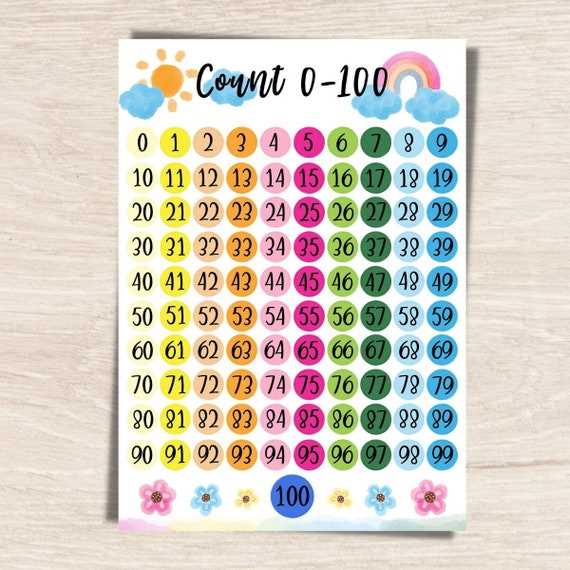
One of the simplest games you can use is “Number Hunt.” Write down a series of numbers on the board, and challenge students to find and mark those numbers on the grid. The student who identifies all the numbers first wins. This game enhances number recognition while making the learning process more interactive and competitive.
Another engaging activity is “Find the Pattern.” Choose a specific pattern (e.g., counting by 2s or 5s) and ask students to trace or highlight all the numbers that follow the pattern. This helps students visually identify the relationship between numbers and reinforces their understanding of skip counting and multiples.
For a more cooperative approach, try a “Team Counting Challenge.” Divide the class into teams, and each team is tasked with identifying a series of numbers in order. The first team to find all their numbers and complete the sequence wins. This fosters teamwork while reinforcing numerical order and sequence skills.
“Fill the Gaps” is another game where students are given a partially filled grid. They must figure out which numbers are missing based on the patterns they know. This exercise strengthens their understanding of numerical order and helps them practice problem-solving and critical thinking skills.
If you want to add a fun twist, try “Number Bingo.” Create bingo cards with different numbers and have students use the grid to find and mark those numbers. The first student to complete a row or column shouts “Bingo!” This game reinforces number recognition and sequencing in a relaxed, game-like environment.
Lastly, consider a “Race to 100” challenge. Give students a number and ask them to race to find it on the grid as quickly as possible. This can be done individually or in small groups, encouraging quick thinking and helping to reinforce the structure of the grid while promoting friendly competition.