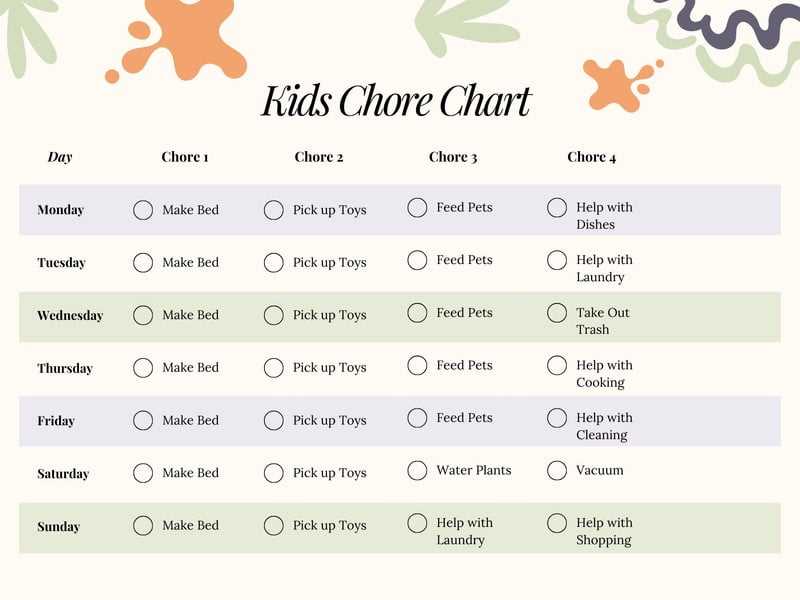
To stay on top of household responsibilities, creating a clear, easy-to-follow plan is key. One of the most effective ways to do this is by designing a task management schedule that breaks down daily duties into manageable steps. Start by listing all essential tasks and assigning them to specific days of the week. This method ensures that each responsibility is taken care of without overwhelming anyone in the household.
Using a layout that visually shows what needs to be done each day will help individuals know exactly what to focus on. Divide the schedule into rows or blocks for each day, with the task assignments clearly marked. Keep the design simple, using checkboxes or bullet points to track progress. This makes it easy to see which tasks are completed and which still need attention.
Tailor the plan to suit your household’s specific needs. For families with children, it’s helpful to incorporate age-appropriate tasks and assign responsibilities according to individual capability. For roommates or larger households, organizing tasks by room or area of the house can help ensure everything gets covered without confusion.
Weekly Task Management Guide
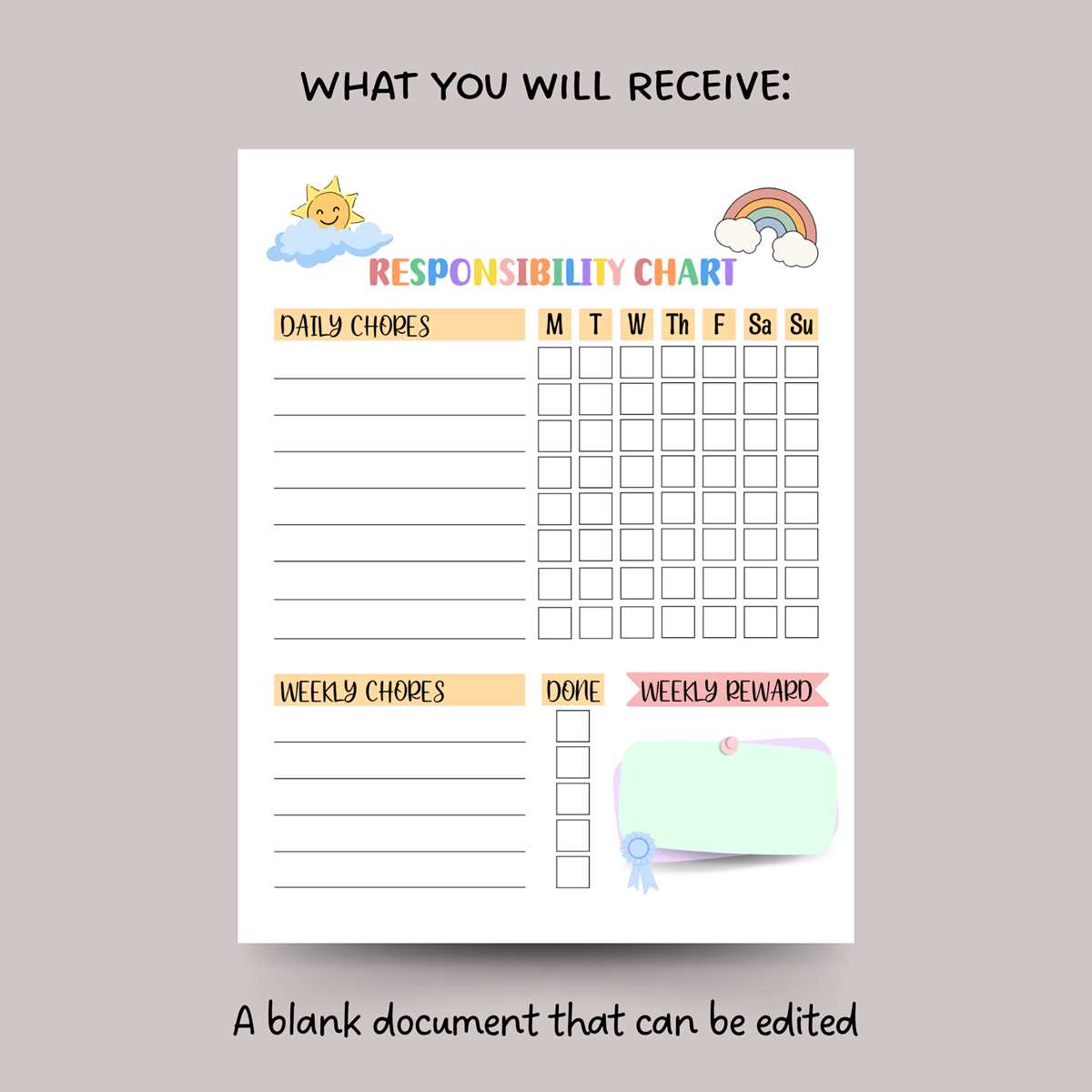
To maintain a tidy and organized home, break down responsibilities into daily, manageable tasks. List all necessary duties such as cleaning, organizing, and meal prep, and divide them across the week. This approach ensures that no task is neglected and no one is overloaded.
Create a simple structure for tracking. Use a table or grid format with columns for each day and rows for specific responsibilities. Each task should be assigned a clear time frame and designated person to keep everyone accountable.
Assign tasks based on individual preferences or capabilities. For example, assign younger members simpler tasks like setting the table, while adults can handle more complex duties such as deep cleaning or home maintenance. The goal is to ensure everyone contributes fairly.
Incorporate a reward system to keep motivation high. For instance, you can set up small incentives, like a family movie night or extra screen time, for completing the week’s tasks. Positive reinforcement can make completing housework more enjoyable for everyone.
Track progress with checkboxes. This simple visual cue allows you to see which tasks have been completed and which ones are still pending. It also adds a sense of accomplishment once tasks are checked off each day.
Make adjustments to the plan as needed. Some tasks may take longer or require more attention on certain days. Flexibility in the schedule can help avoid unnecessary stress or rushed work.
Finally, update the schedule regularly. Add or remove tasks as seasons or events change, like spring cleaning or holiday preparations. A dynamic approach keeps the plan relevant and keeps the household running smoothly year-round.
How to Create a Simple Weekly Task Schedule
Start by deciding which tasks need to be completed during the week. List all the duties, such as cleaning, laundry, grocery shopping, or organizing. Group similar tasks together, like all cleaning-related ones under a single category, for easier tracking.
Divide these tasks into daily activities. Be realistic about the time each task takes. For example, daily cleaning tasks such as making beds and wiping down surfaces can be assigned to the beginning of the week, while deeper cleaning might be saved for the weekend.
Assign tasks to individuals. Write down who will handle each responsibility. It’s helpful to consider preferences and capabilities, so each member of the household feels comfortable with their tasks. Keep the workload balanced to avoid overwhelming anyone.
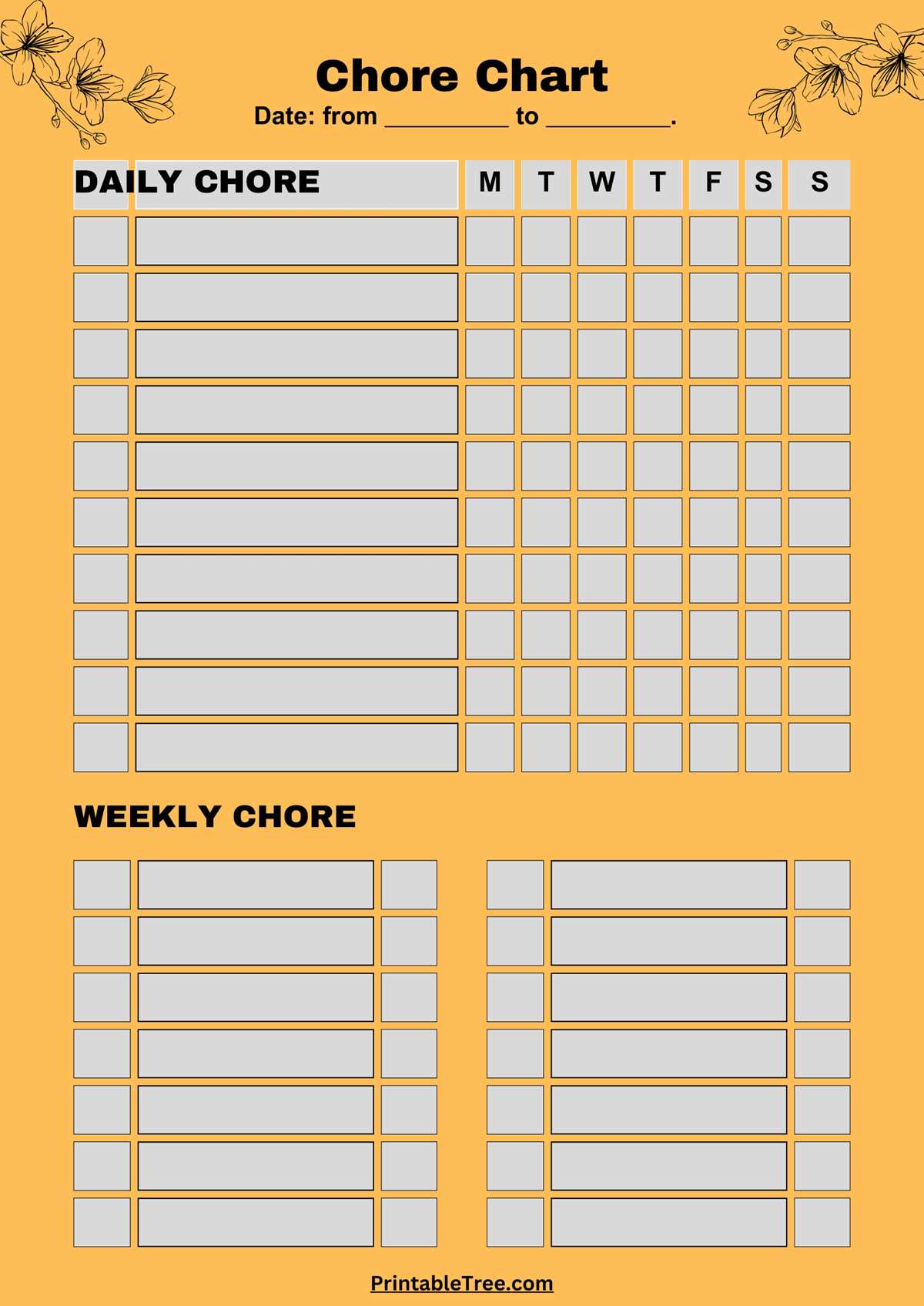
Create a simple grid for tracking progress. Use a table with days of the week listed at the top and tasks listed vertically down the side. You can use a digital tool like a spreadsheet or a physical template to create your schedule.
Add checkboxes or space for notes. This helps to visually track the completion of each task. It also gives room for adjustments, like swapping tasks between days or adding extra responsibilities as needed.
Review the schedule weekly. At the end of each week, assess what worked and what didn’t. Make adjustments as necessary, whether it’s reallocating tasks or adjusting the frequency of certain duties to fit your family’s lifestyle better.
Best Formats for Weekly Task Schedules
The most common format for tracking responsibilities is a simple table. Create columns for each day of the week, and rows for each task. This structure allows for clear visibility and easy tracking of completed duties. Tables work well for small households or individuals with a few tasks.
For families with multiple members, consider a format that includes separate columns for each person. This enables everyone to see their responsibilities at a glance and ensures that no one forgets what they’re assigned to do. It’s easy to add or modify the schedule as needed.
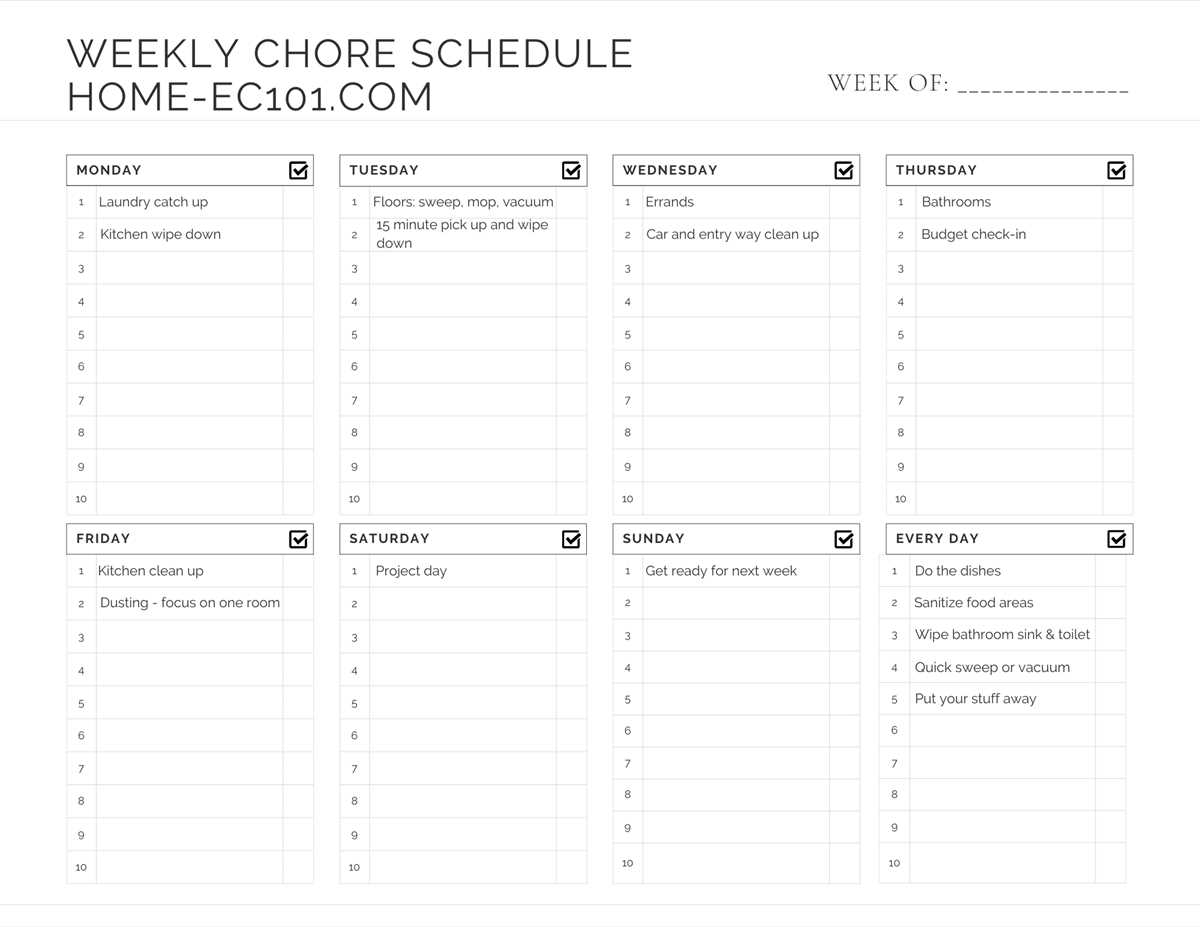
Bullet-point lists are another option, particularly for smaller, more flexible schedules. Create a daily list of tasks with checkboxes next to them. This format is ideal for those who prefer a minimalistic approach or those who want to focus on specific tasks for each day.
For those who like visuals, a color-coded design may be helpful. Each task or person is assigned a specific color, which makes the schedule more engaging. Color-coding can help differentiate between recurring tasks, urgent responsibilities, or different family members’ roles.
Another popular format is a calendar-style layout. This style provides an overview of the entire week on a single page. It’s perfect for those who want to see their tasks organized in a monthly view, with daily activities mapped out in detail. This format is especially useful for households with varying schedules each week.
Digital options are great for households that need flexibility and want to make updates on the go. Using an app or spreadsheet to track responsibilities means tasks can be adjusted instantly. Plus, digital versions can be shared across multiple devices for collaborative scheduling.
Lastly, if you prefer a more creative format, use a grid layout with visual cues such as icons or illustrations. For example, each day’s task might have a related image (like a broom for cleaning or a shopping cart for grocery runs). This approach works well for children or anyone who appreciates more interactive schedules.
Customizing Your Weekly Task Schedule for Family Needs
Start by considering the age and capability of each family member when assigning responsibilities. Younger children can be tasked with simpler, more fun activities like setting the table or feeding pets, while older children or adults can take on more complex tasks. Create columns or separate sections for each person, ensuring a balanced workload across the week.
For families with varying schedules, consider creating flexible slots. This allows tasks to be moved around depending on when someone is available. Additionally, make use of color coding or icons to help visually differentiate between tasks, making it easier to see what needs to be done at a glance. Adjust the layout to fit your family’s unique routine for a more effective system.
How to Assign Tasks and Track Progress on a Household Duty Schedule
Start by assigning tasks based on each individual’s age, ability, and available time. For example, younger family members may be responsible for simpler activities like sorting laundry, while older members can take on more detailed jobs such as vacuuming or cleaning the bathroom. Clearly mark each task with a name or symbol to avoid confusion. Consider rotating tasks weekly to ensure fairness and avoid monotony.
To track progress, establish a system of checkboxes or progress bars. Each family member can check off completed duties, making it easy to see who has finished their assignments. For a more engaging approach, add rewards or incentives for completing all tasks on time, like a family movie night or small treats. Regularly review the schedule to adjust tasks or add new ones as needed, ensuring that everyone is involved and accountable.