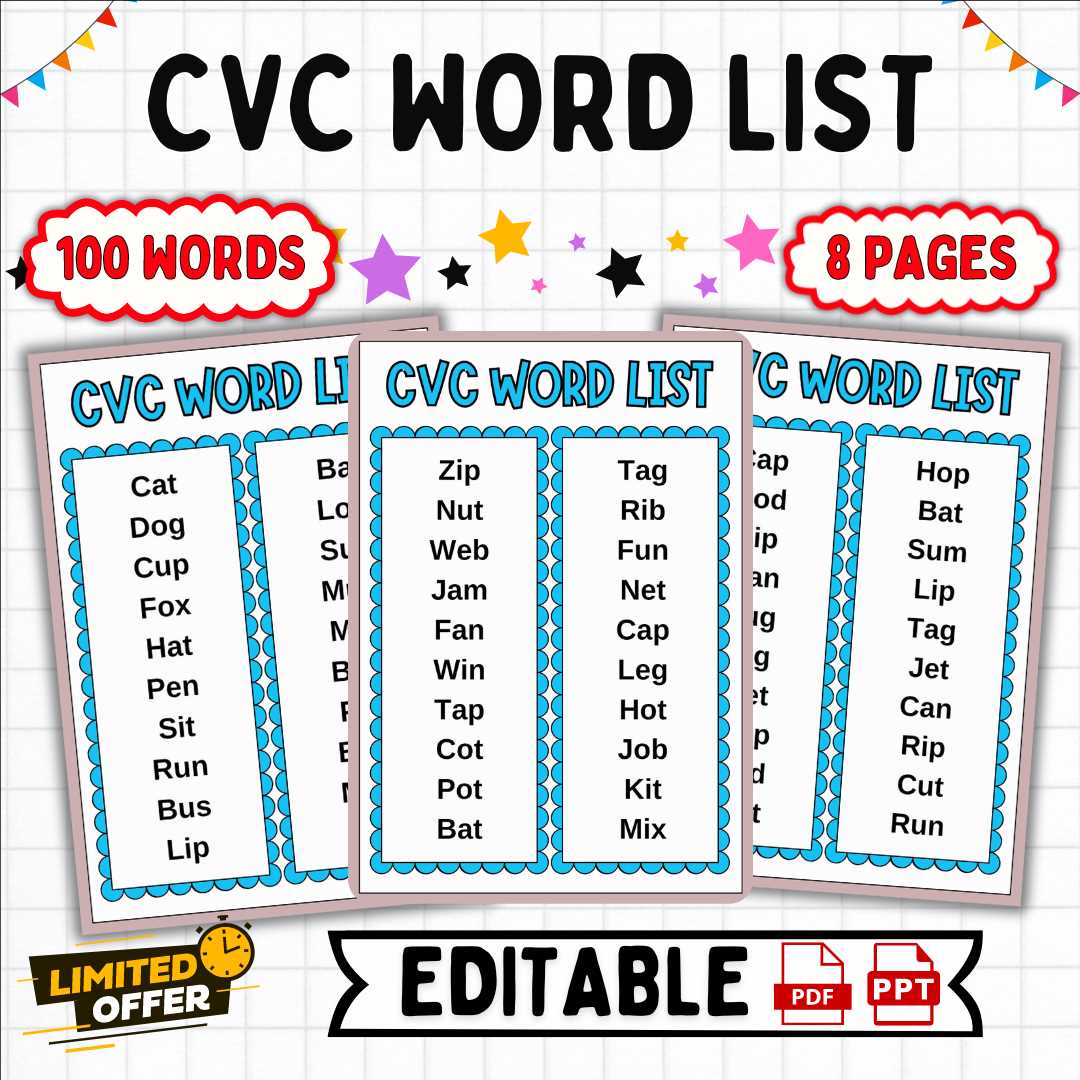
Provide early learners with a set of basic sound patterns to enhance their reading abilities. These combinations, made up of consonants and vowels, are key in helping children decode and blend sounds effectively. Having these combinations readily available for practice allows learners to engage in hands-on exercises, reinforcing their ability to recognize sounds and improve pronunciation. Print these exercises to give students the chance to work at their own pace and revisit them as needed.
Choose combinations that follow a logical structure, starting with the simplest and gradually increasing the complexity. Begin with common letters and sounds that appear frequently in early reading materials. As students master these, introduce more varied sets. The printed materials should be accessible for repeated practice and review, giving learners the chance to become more confident with their phonetic skills.
Keep the selection diverse, ensuring a balance of familiar and new sound combinations. The goal is to help students build a strong foundation, leading to improved fluency. Regular practice with these combinations is key to developing both reading and speaking abilities, as learners begin to blend sounds together naturally and with ease.
HTML
Practical Exercises for Early Readers
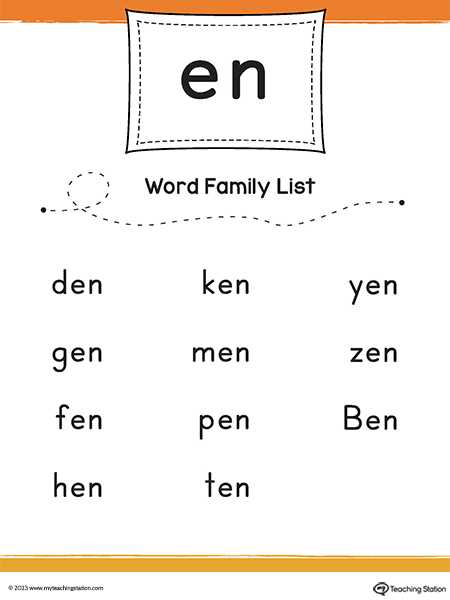
Use simple combinations of consonants and vowels to build fundamental skills. Try focusing on three-letter sequences with a consonant at the start and end, paired with a short vowel in the middle. Examples: “bat”, “cat”, “dog”, “pot”. Print these exercises for hands-on engagement.
Incorporate activities like matching sounds to letters. Prepare cards with different combinations and have children match them with their corresponding images. This promotes sound recognition and reading confidence.
Consider pairing these tasks with activities that use objects in the real world. For example, have a set of cards with pictures of familiar items like “cup” or “pen” and ask children to say the corresponding term. This makes the learning more tangible and relatable.
Develop a series of progressive exercises. Start with simpler patterns, like “bat” and “mat”, then gradually introduce more complex sequences. Each new task should be based on what was already mastered, allowing learners to build upon their existing knowledge.
Introduce color coding to differentiate between consonants and vowels. For example, highlight vowels in blue and consonants in red. This color association can make it easier for young learners to distinguish sounds and improve reading accuracy.
Don’t forget to review regularly. Repetition ensures retention and reinforces the connection between letters and sounds. Create a printable chart with different sound combinations and encourage children to practice daily. Consistency is key to developing reading fluency.What is this?
HTML
How to Create a Printable CVC Word List for Early Learners
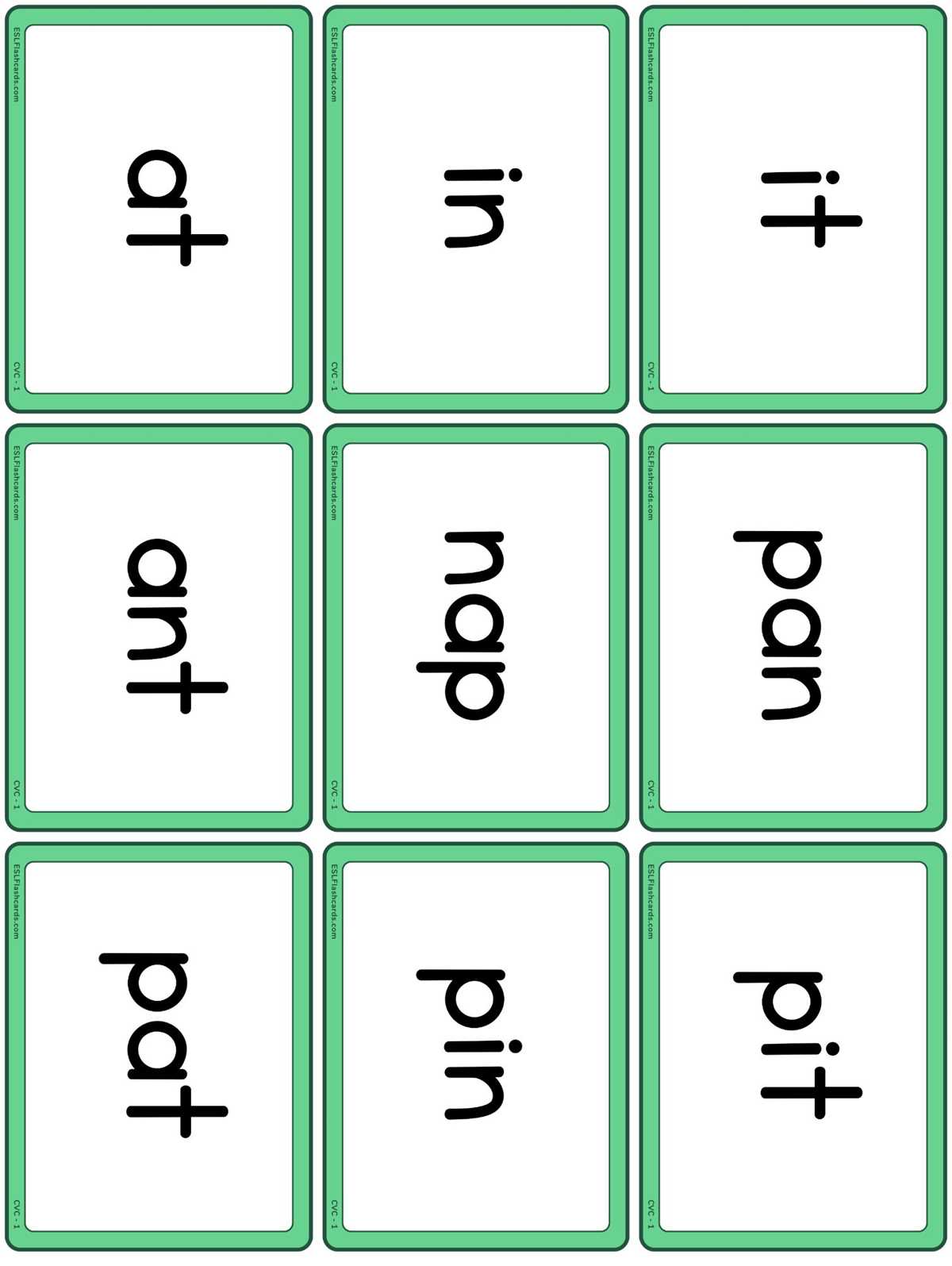
Start with a clear and organized structure. Divide the words into categories based on their phonetic components. For instance, begin with simple combinations like consonant-vowel-consonant words such as “cat”, “bat”, and “dog”. This will help young learners focus on familiar sounds and build confidence as they progress. A good method is to use color coding or spacing to separate different categories, making it visually appealing and easy to follow.
Consider including illustrations next to each example. Young learners often associate words with images, making it easier for them to understand the connection between the sounds and their meanings. If you are creating a handout, ensure that each word and picture pair is well spaced to prevent overcrowding. You can place a small image beside each word or leave a blank space for children to draw their own interpretation.
For maximum engagement, try adding a few interactive elements. A fill-in-the-blank exercise where students can match the correct word to a picture is one way to enhance learning. Alternatively, you can create a table with columns for the word, a picture, and a space for students to write the word themselves. This encourages practice while reinforcing spelling and sound recognition.
| Word | Picture | Write the Word |
|---|---|---|
| cat |  |
______ |
| dog |  |
______ |
| bat |  |
______ |
Finally, before printing, test the document to ensure that the layout is clean and the font is large enough for young readers. Adjust spacing where necessary, and avoid overcrowding text. A well-organized sheet will not only make the material accessible but also encourage learners to engage more actively with the activity.What is this?
Choosing the Right CVC Words for Different Learning Levels
Select simpler patterns for beginners, such as three-letter combinations with distinct consonants and vowels like “cat,” “bat,” and “dog.” These examples allow students to focus on blending sounds without the complexity of silent letters or tricky digraphs. Keep the consonants familiar and easy to articulate, avoiding words with uncommon phonetic combinations.
For early learners, prioritize words with clear and consistent vowel sounds. Words like “pen,” “sit,” and “cup” provide an excellent foundation for mastering short vowel sounds. It’s essential that these examples follow a predictable phonetic structure to prevent confusion and help build confidence in sound-to-letter associations.
As proficiency grows, introduce more challenging words that include digraphs or blends, such as “clay,” “bend,” and “trip.” These combinations encourage students to apply their knowledge of consonant and vowel patterns to more complex examples. It’s helpful to gradually increase difficulty while still focusing on maintaining phonetic consistency.
For intermediate learners, consider adding words with varying vowel combinations, like “heat,” “ship,” and “coat.” This transition helps children gain experience with different vowel sounds and shifts in pronunciation. Challenge them with examples that feature vowel shifts within simple patterns, pushing their understanding while staying within their comfort zone.
Advanced learners can tackle words with silent letters or more complicated combinations, such as “knife,” “walk,” and “comb.” At this stage, students should be able to decode words with a broader range of phonetic rules. Introduce irregular spellings gradually to prevent overwhelming them and to reinforce their decoding skills.
Adapting complexity based on individual progress is key. A well-balanced approach ensures a student’s skills evolve steadily without frustration. Offer a mix of simple and slightly more complex examples regularly to maintain engagement and mastery of different phonetic patterns. This method supports continual improvement while refining reading ability.
Best Fonts and Layouts for Clear CVC Word Sheets
The ideal fonts for clarity and easy reading are sans-serif options like Arial, Helvetica, or Comic Sans. These fonts have clean lines and are widely recognized for their legibility, especially for beginners. Stick to font sizes between 18pt and 24pt for optimal readability, ensuring words aren’t too small or too crowded.
Aligning words in a column format, with each one spaced clearly from the others, aids in focus. Use bold text for the target sounds or syllables, while the rest of the word can remain in regular weight. This helps to draw attention to the most critical parts of the task without overwhelming the reader.
To enhance visual clarity, avoid cluttering the page with unnecessary elements. Keep margins wide enough to prevent words from feeling cramped. A clean, minimalist layout prevents distractions, ensuring that the focus remains entirely on the activity at hand.
White space is as crucial as the words themselves. Ensure there’s enough space between each item and between lines. This simple practice significantly reduces cognitive load, making it easier for readers to track and understand the task.
Finally, use contrasting colors for headers and words, but avoid overusing bright hues. A simple black-on-white scheme is often sufficient. However, gentle variations like blue or green can highlight key sections or different categories without detracting from the content.
How to Customize a CVC Word List for Specific Phonics Needs
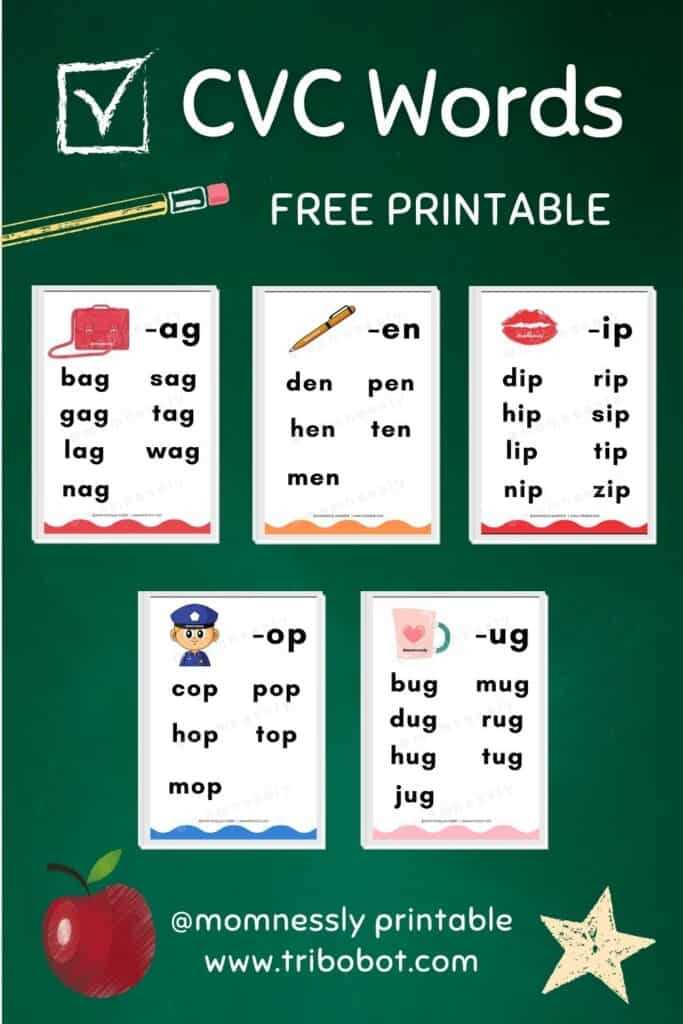
To tailor a phonics resource, prioritize phonetic patterns relevant to a student’s current learning stage. For beginners, start with simple combinations like consonant-vowel-consonant structures, using common sounds. Gradually incorporate more complex patterns such as blends or digraphs to challenge learners. Group words with similar sounds or structures to reinforce phonetic rules and make the learning process more systematic.
Consider incorporating high-frequency words or those related to the child’s interests. If you’re focusing on short vowels, ensure each example features clear vowel sounds that align with the targeted phoneme. When selecting words, use context–like animal names or everyday objects–that will be familiar and engaging. This helps learners make associations between sounds and real-world references.
Adjust the difficulty level by adding variations to the consonant or vowel sounds. For example, instead of repeating “cat,” introduce “cot” or “cut” to reinforce sound differences. Gradually, introduce multisyllabic words or words with silent letters once foundational skills are mastered. This ensures that learners build on their existing knowledge while expanding their phonetic abilities.