
Start by using a structured set of multiplication exercises to help students master basic number skills. A simple grid with all multiplication facts from 1 to 12 will provide clear practice for building confidence.
Ensure that each sheet includes a variety of problems, with both direct multiplication and related challenges. This will help reinforce memorization and allow students to approach each problem from different angles. Providing a mix of easy and slightly challenging tasks will maintain engagement.
Incorporating interactive elements like coloring or drawing into the problems can also keep younger students motivated while they practice. For example, adding color-by-number multiplication activities will make repetitive tasks more fun and less tedious.
For optimal learning, use these exercises consistently. A daily or weekly practice schedule will help students reinforce their skills over time. Consistency is key to mastering multiplication and achieving fluency in mental math.
How to Use Times Tables Worksheets for Effective Practice
To begin, set a specific goal for each session. For example, focus on mastering one number set, such as multiplication by 2, before moving on to more challenging numbers. This helps build a solid foundation and avoids overwhelming the learner.
After completing a set of problems, encourage students to check their answers and review mistakes. This self-correction method reinforces learning and allows for better retention of the multiplication facts. Use a timer to track progress and make sessions more engaging.
| Activity | Duration | Focus |
|---|---|---|
| Single Number Set Practice | 15 minutes | Focus on mastering one number, e.g., 2 times |
| Mixed Practice | 10-15 minutes | Mix different numbers for fluency |
| Self-Correction | 5 minutes | Review errors to improve accuracy |
Finally, incorporate a variety of activities to keep practice interesting. Use visual aids, such as flashcards or charts, along with the written exercises to reinforce learning in different formats. Repetition is key, but varying the method will help maintain engagement and improve overall performance.
Printable Times Tables Worksheets for Kids in Grades 1-6
For younger students in grades 1-3, focus on simple multiplication patterns like 1 through 5. Start with visual charts or grids that show the multiplication process clearly. These can be broken down into smaller tasks, such as completing a row for each number (e.g., all multiples of 2, then 3, etc.).
As students advance to grades 4-6, introduce more complex challenges. Mix different multiplication facts within one sheet, ensuring that the numbers range from 1 to 12. Include word problems or interactive tasks that ask students to apply the facts in real-life scenarios, helping them connect math to everyday situations.
- Grade 1: Simple multiplication facts (1×1 to 5×5).
- Grade 2: Increase difficulty with 6×6 to 8×8, introduce patterns.
- Grade 3: Focus on 9×9 and 10×10 multiplication with a mix of visual aids.
- Grade 4: Add multi-step problems and larger number sets (1-12).
- Grade 5-6: Mix all facts, use real-world applications and timed challenges.
Incorporating visual aids like coloring pages or matching games can make the experience more enjoyable for younger learners, while older students benefit from timed drills that improve speed and accuracy. Consistent practice with varied formats ensures mastery and builds confidence over time.
Strategies for Teaching Multiplication Using Times Tables Sheets
Begin by focusing on one number at a time, such as multiples of 2 or 5. Start with simple exercises where students fill in a few numbers, then gradually increase the complexity by adding more challenging facts. This approach helps learners understand patterns and build confidence.
For students who struggle with memorization, use a repetitive practice method. Set a timer for 5-10 minutes and have them complete a row or column of problems, reinforcing the same multiplication fact. Repetition aids in quicker recall and enhances long-term retention.
Incorporate visual aids like color-coding to differentiate between sets of multiples. For example, use blue for multiples of 2, green for multiples of 3, and so on. This makes it easier for students to recognize patterns and connections between numbers.
Provide real-life applications by turning math facts into everyday scenarios. Ask questions like “If you have 3 bags with 4 apples in each, how many apples do you have?” This method contextualizes math and makes the exercises more engaging for students.
- Use flashcards alongside printed exercises for a more dynamic learning experience.
- Introduce short quizzes after a few sessions to track progress and reinforce understanding.
Introduce “skip counting” for lower-level learners. This helps them understand the relationship between numbers before diving into multiplication. Have them practice counting by 2s, 3s, 5s, etc., and show how these sequences directly relate to multiplication facts.
Lastly, incorporate games such as multiplication bingo or timed challenges. This adds an element of fun while maintaining the focus on mastering multiplication facts. By making learning interactive, students stay motivated and gain a better grasp of the concepts.
Customizing Times Tables Worksheets for Different Learning Levels
For beginners, focus on simpler multiplication sets, such as 1 through 5. Use large fonts and clear spacing to help younger students focus on each fact without feeling overwhelmed. Avoid overcrowding the page with too many problems to keep it approachable.
For intermediate learners, mix in more challenging numbers (6-9) and start introducing variations like word problems or fill-in-the-blank tasks. This will help solidify their understanding of multiplication while introducing more complex exercises.
Advanced students can benefit from exercises that combine multiple facts within one sheet. These might include mixed multiplication problems that require students to switch between different number sets. You can also incorporate timed drills to help improve speed and accuracy.
- Beginner: Focus on small sets (1-5) with visual aids like charts or color coding.
- Intermediate: Mix multiple sets and add simple word problems for real-life context.
- Advanced: Incorporate all facts (1-12), timed exercises, and more complex word problems.
For students with special needs or slower learners, customize the exercises with fewer problems per page and additional guidance such as showing partial answers or hints. Gradually increase difficulty as their confidence grows, ensuring they are not overwhelmed.
Common Mistakes to Avoid When Practicing with Times Tables Sheets
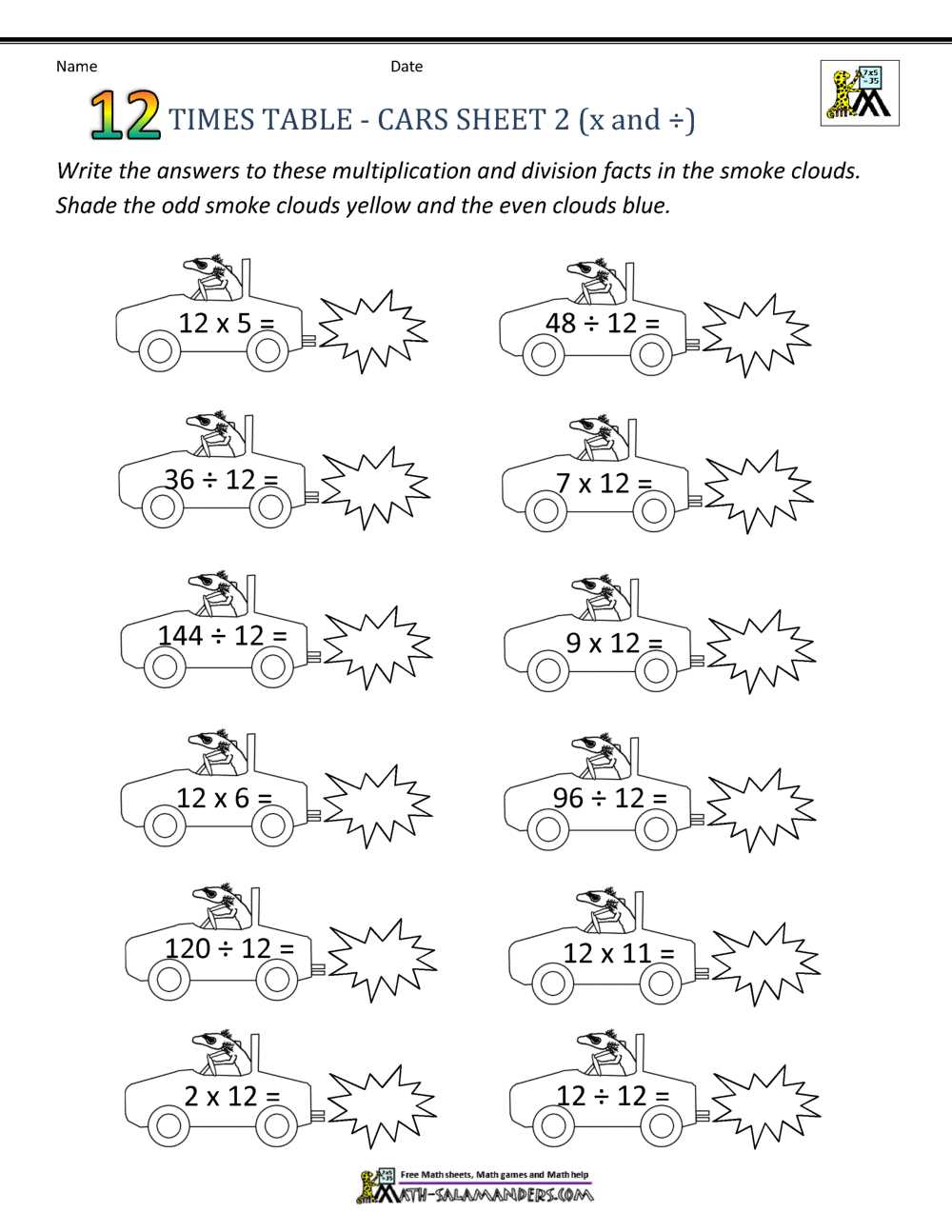
One common mistake is moving on to more difficult multiplication facts too quickly. Stick to mastering one set of numbers at a time. Jumping ahead without full mastery of earlier facts can lead to confusion and hinder progress.
Another issue is relying too heavily on counting by hand. Encourage students to memorize key multiplication facts instead of using counting or adding methods. This will improve their speed and allow for quicker mental calculations.
Overloading a student with too many problems at once can cause frustration. Keep exercises manageable by limiting the number of questions per page. Too many problems in a short time can make the process feel overwhelming rather than encouraging progress.
- Focus on one set of facts at a time (e.g., 2s or 5s).
- Encourage memorization and practice over counting or adding manually.
- Limit the number of problems to avoid overwhelming the learner.
Finally, avoid incorrect marking. When reviewing answers, ensure that all mistakes are addressed clearly. Without understanding where the errors occurred, students are likely to repeat them. Take time to explain and correct each mistake thoroughly.
Free Online Resources for Downloading Times Tables Worksheets
One excellent resource for downloading multiplication exercises is Math-Drills.com, which offers a variety of formats suitable for all grade levels. They provide free, downloadable documents with different sets of problems for different multiplication ranges, such as 1-12, helping students practice progressively.
Education.com also provides free templates, including interactive and printable exercises for multiplying numbers. You can customize the level of difficulty by choosing the number range, making it a versatile option for both beginners and advanced learners.
Another useful site is SuperTeacherWorksheets.com, which includes several multiplication activities along with fun challenges. While some materials require a subscription, they offer a selection of free sheets that are ideal for enhancing practice through engaging formats.