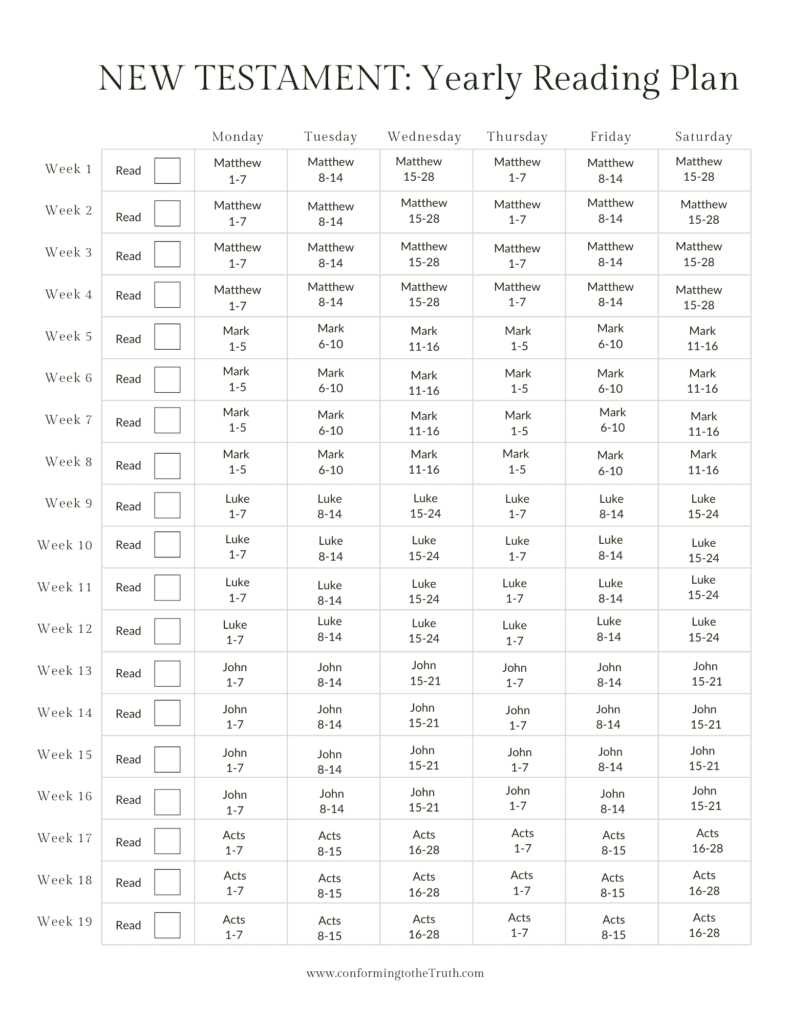
To successfully complete a structured approach to scripture, divide your daily reading into manageable portions. Instead of reading large sections at once, focus on a set number of chapters or verses each day. This allows you to absorb the material more deeply and ensures you stay consistent throughout the process.
Start by selecting a translation that aligns with your reading comprehension and theological understanding. Whether you prefer a more literal version or one with contemporary language, make sure it enhances your engagement with the text. Many individuals choose versions like the New International Version (NIV) or the English Standard Version (ESV) for clarity and accuracy.
Consistency is key to success. Set a specific time each day to read, whether in the morning, during lunch, or before bed. This daily habit will help you stay committed and make scripture reading a part of your routine. Consider using a journal to write reflections or notes about what stood out during your reading.
Structured Scripture Study Schedule
Divide your daily study into manageable sections to stay on track. Aim to read a few chapters each day. This method avoids overwhelming yourself and helps you focus on each passage’s message. Consider breaking your readings into morning and evening sessions for more flexibility.
Start with the Gospels. Focus on Matthew, Mark, Luke, and John to understand the life and teachings of Jesus Christ. These texts will lay the foundation for further readings and offer a clear narrative of His works and ministry.
To add variety and depth, include a mix of Old and New Testament passages throughout your routine. This ensures you gain a balanced perspective, moving from the story of creation through to the early church’s development and letters. Rotate between different genres: historical books, wisdom literature, and epistles.
If you fall behind, don’t get discouraged. Instead of trying to catch up all at once, use extra time to reflect on past readings. You can also use weekends to review key passages or focus on specific books that need more time.
To track your progress, create a checklist or calendar marking off each day’s reading. This not only motivates you to stick with the plan but also gives you a visual representation of your commitment. Seeing your progress will encourage continued effort.
Incorporate reflection and journaling. As you read each passage, take a moment to write down your thoughts. Whether it’s a question, a feeling, or a lesson learned, this practice will enhance your comprehension and help make the scriptures more personal.
Consider joining a study group. Whether online or in person, a community can provide additional insights and accountability. Discussing passages with others can deepen your understanding and offer different perspectives.
Finally, ensure your schedule is flexible. Life can be unpredictable, and missing a day is normal. Adjust as needed and approach the process with patience, knowing that consistent engagement with the text is the ultimate goal.
Choosing the Right Bible Version for Your Study
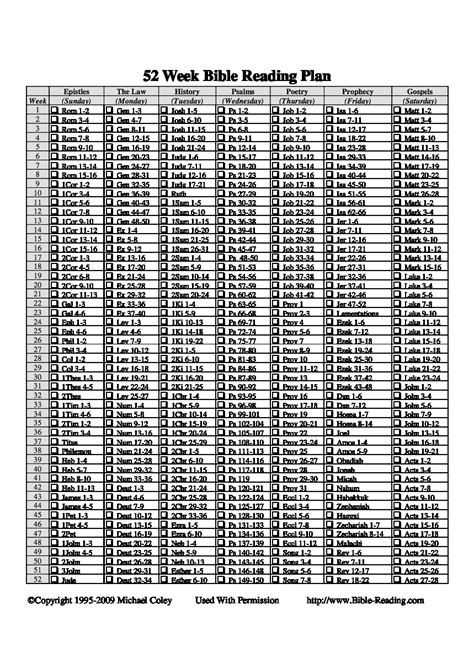
Select a translation that aligns with your comprehension style. If you’re looking for straightforward language, consider versions like the New Living Translation (NLT) or the New International Version (NIV). These translations offer clear, modern English that is easy to understand for new readers.
If you prefer a more traditional style, the King James Version (KJV) or the English Standard Version (ESV) might be ideal. These versions retain a formal tone and are rich in history, often preferred for memorization and theological study.
Consider using a parallel Bible, which displays multiple translations side by side. This allows you to compare wording choices across versions, helping you to better understand the meaning of specific passages.
Make sure to choose a version that suits your spiritual and personal goals. For devotional reading, a version like the NLT might help you connect emotionally. For in-depth study or theological analysis, the ESV or NASB (New American Standard Bible) might offer the detail you need.
Many people find it helpful to read multiple versions throughout their study. Starting with an easy-to-read translation and gradually incorporating a more formal version can help deepen your understanding over time.
How to Break Down the Bible for a Year-Long Study
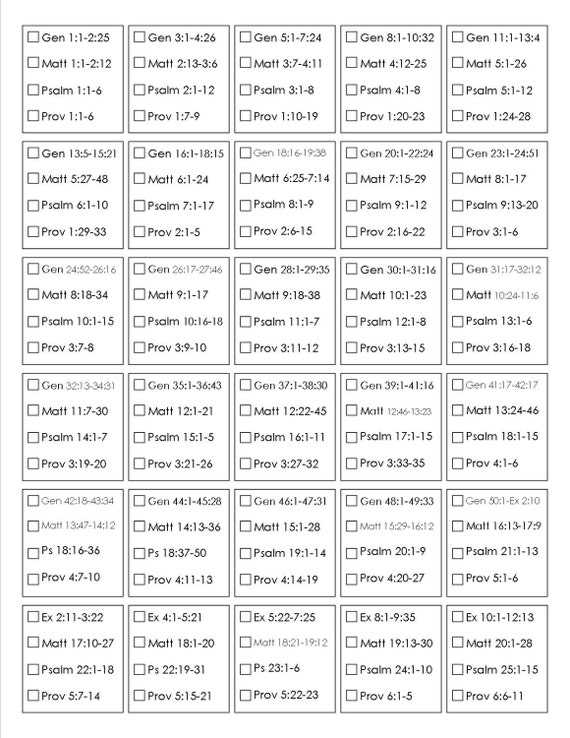
Start by dividing the text into manageable sections. Reading the entire scripture in one sitting can feel overwhelming, so breaking it down into daily or weekly portions makes it more approachable. Aim for a few chapters each day, focusing on both the Old and New Testaments to balance your study.
Set up a reading schedule that includes books of various lengths. Begin with shorter books and gradually move to larger ones. This will help maintain momentum, as the shorter texts are easier to absorb, and you will feel accomplished upon completion.
Group related books together. For example, you can group the Pentateuch (the first five books) and the historical writings, followed by wisdom literature and the prophetic books. This helps to see themes and context more clearly as you read through the sections.
Incorporate rest days throughout your study. Rather than pushing through a heavy section, allow time to reflect on what you’ve read. You can use these days to review the material, journal your thoughts, or engage in additional study like commentary or devotionals.
For a deeper understanding, create a thematic focus for each month. For example, one month could focus on the theme of grace, while another might explore faith. This allows for a more nuanced approach to your study and helps you apply the lessons to your life.
Consider using different resources alongside your study, such as audio versions, study guides, or group discussions. These resources can help bring new perspectives and clarify difficult passages, allowing you to get more out of the year-long journey.
Setting Realistic Goals for Daily Bible Reading
Start by determining how much time you can consistently dedicate each day. Even 10 to 15 minutes can be enough for a focused session. This will help you stick to your routine without feeling overwhelmed.
Break down the material into manageable sections. Instead of setting an arbitrary goal like reading a specific number of chapters, focus on understanding the message. Aim to complete a set number of verses or chapters that match your reading time and pace.
Consider using a tracking method to stay motivated. Marking off completed sections on a calendar or checklist provides a sense of accomplishment and helps you stay on track. Set weekly or monthly milestones to measure progress.
Allow flexibility in your goals. Some days you may have more time to read, while other days you might only be able to focus for a few minutes. Adjusting your expectations based on your schedule will make the habit sustainable in the long term.
Reflect on the reading regularly. Take time to consider what you’ve learned and how you can apply it in your life. This will keep you motivated and help you get the most out of each session.
Tips for Staying Consistent with Your Reading Routine
Set a specific time each day for your sessions. Whether it’s early in the morning or before bed, having a fixed schedule helps turn the habit into a regular part of your routine.
Start small and gradually increase the length of your sessions. Beginning with short, manageable readings ensures that you don’t feel overwhelmed and can focus on building consistency over time.
Use a bookmark or sticky note to track where you left off. This simple tool helps you pick up right where you stopped, reducing the chance of missing a day.
Set reminders on your phone or use a digital calendar to alert you at the same time every day. This ensures that your routine isn’t forgotten and provides a nudge to stay on track.
Join an accountability group or partner with someone. Sharing your progress with a friend can boost motivation and help you stay consistent.
Make it enjoyable. If you prefer to listen, consider audio versions or podcasts that align with your daily goals. This offers variety and can keep you engaged in the process.
Reward yourself when you reach milestones. Whether it’s after a week of consistent reading or completing a chapter, acknowledging your progress makes the routine more rewarding.
Be kind to yourself on the days you miss. If you fall behind, don’t give up entirely. Instead, catch up when possible and focus on resuming your practice without guilt.