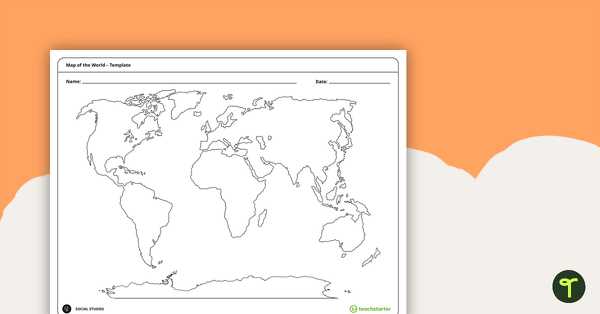
Start by selecting a detailed map that highlights the major landmasses and water bodies. This resource is ideal for teaching geographic features and helping students visualize global locations. It provides clarity when learning the size, shape, and relationships of various territories.
For educational use, choose maps that include clear labels, borders, and important geographical markers. These features make it easier to identify specific locations, such as seas, mountain ranges, and coastal regions. This visual aid reinforces memory retention in young learners and adults alike.
Consider using maps that allow customization for specific exercises. For example, you can add or remove labels, highlight specific areas, or create interactive learning tasks that encourage engagement. This flexibility helps tailor each session to different learning needs and levels.
How to Use Maps of Landmasses and Waters for Education
Begin by incorporating maps into daily lessons, allowing students to physically trace borders and locations. This hands-on approach improves spatial awareness and strengthens memorization of global areas. Encourage learners to identify key regions and their respective features, such as rivers, mountains, or seas.
Additionally, create interactive exercises where students label various parts of the world. This exercise can include challenges like marking specific countries, large bodies of water, or regions based on clues. Regular practice with these maps enhances both geographic literacy and problem-solving skills in a fun, engaging way.
Top Sources for Downloading High-Quality Maps of Landmasses and Waters
National Geographic offers a wide range of detailed maps, including those that outline major landforms and water bodies. Their resources are reliable and feature accurate geographical details, making them perfect for educational use. You can access a variety of options, including interactive and static maps.
Another great source is the US Geological Survey (USGS). Their website provides downloadable maps with high precision, often including elevation data and geological features. These maps are ideal for in-depth studies of the Earth’s surface and for classroom activities focused on geography and science.
For more interactive options, check out Google Earth. It allows users to zoom in on any part of the world, offering satellite imagery with the ability to explore detailed land and water areas. Though not downloadable in the traditional sense, Google Earth is a valuable tool for interactive learning.
Lastly, OpenStreetMap is a free, community-driven platform offering maps with accurate geographic features. It allows users to download and print customized maps, including world and regional maps, with a focus on providing detailed coverage of both urban and natural landscapes.
Benefits of Using Maps for Geography Lessons
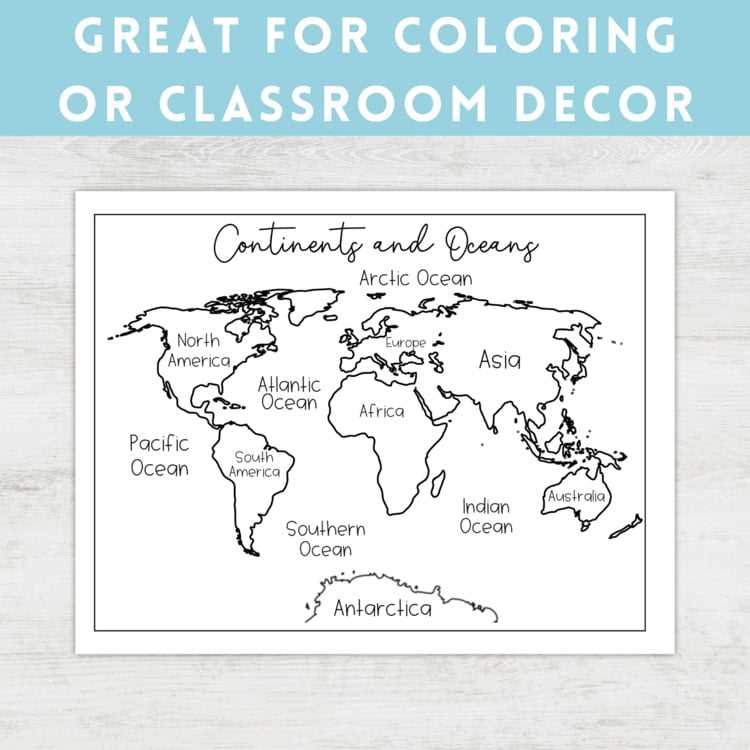
Using maps in geography lessons provides a hands-on approach to learning. Physical interaction with a map allows students to visually connect with geographical locations, making it easier to grasp spatial relationships and proportions. It helps learners understand the size and distribution of regions, rivers, mountains, and other natural features.
Maps also aid in reinforcing memory. The repetitive nature of labeling countries, seas, and mountains helps students internalize geographic information more effectively than through lectures alone. This tactile experience improves long-term retention of the material.
One of the primary benefits is the ability to foster critical thinking. By using a map, students are required to analyze patterns, make comparisons, and solve problems. For example, they may be asked to identify how certain geographical features influence climate or settlement patterns.
Maps also encourage independence in learning. Instead of relying on digital tools or online resources, students can study from physical maps, which require focused attention. This self-reliance helps build problem-solving skills and reinforces concepts without external distractions.
Another key advantage is the improvement of spatial reasoning skills. By working with maps, students develop a better understanding of orientation and how different areas relate to one another geographically. These skills are transferable to other subjects, like mathematics and engineering.
Maps also make learning more engaging and interactive. Students can participate in activities such as scavenger hunts or mapping exercises that challenge them to find specific regions or locate certain features. This interactive method breaks the monotony of traditional lessons and keeps learners engaged.
Lastly, maps support a variety of teaching styles. Whether for visual learners, kinesthetic learners, or those who benefit from repetitive study, maps provide an adaptable resource that can be tailored to suit individual student needs. They serve as a versatile tool for educators to reinforce concepts in diverse ways.
Key Features to Look for in Maps of Landmasses and Waters
Ensure that the map is clear and easy to read. Simple, bold lines for borders and legible font sizes for country names or water bodies are critical for clarity. Avoid maps with overly complex features that could overwhelm learners.
Check for accuracy in the depiction of key regions, water bodies, and mountain ranges. The map should reflect correct geographical data, ensuring that learners are engaging with reliable and up-to-date information. Accurate scale is also crucial for understanding the relative size of areas.
Choose a map with detailed labeling. The more specific the labels, the more useful it is for teaching. Key elements like rivers, deserts, and notable cities should be marked, providing a complete overview of the area depicted.
Consider maps that include color coding for different regions. This visual distinction helps learners identify boundaries and geographical zones quickly. For example, different shades can represent countries or climatic regions, making the map more intuitive.
Look for maps that offer interactive elements. If available, the ability to zoom in on specific areas or add/remove features can enhance learning. Interactive tools help students explore in-depth details and adjust the map for specific tasks or focus areas.
Ensure the map is designed with educational purposes in mind. Some maps include additional features, such as geographical facts, climate zones, or historical data, which can provide more context and deepen students’ understanding of the region.
Finally, select a map that allows for flexibility in use. A printable version should be easily accessible for physical use in the classroom or home. It should also provide enough space for students to add their own notes or labels during study sessions.
How to Customize Maps for Classroom Activities
Begin by adding interactive elements to the maps. For example, leave blank spaces where students can label countries, water bodies, or specific regions. This encourages active learning and helps reinforce memory retention as students physically engage with the material.
Another customization option is to highlight specific areas based on the lesson topic. For geography lessons focusing on climate zones, use color markers to shade regions according to their climate. This will help students visualize differences and patterns across the world.
Incorporate challenges or games, like scavenger hunts or matching exercises, into the maps. Students can be tasked with finding specific countries, capitals, or geographical features based on clues provided. This makes learning more dynamic and helps assess students’ comprehension in a fun, interactive way.
Common Mistakes to Avoid When Using Maps of Landmasses and Waters
One of the most common mistakes is not double-checking the accuracy of the map. Always verify the details, especially borders and major features. A map with outdated or incorrect information can mislead students and hinder the learning process.
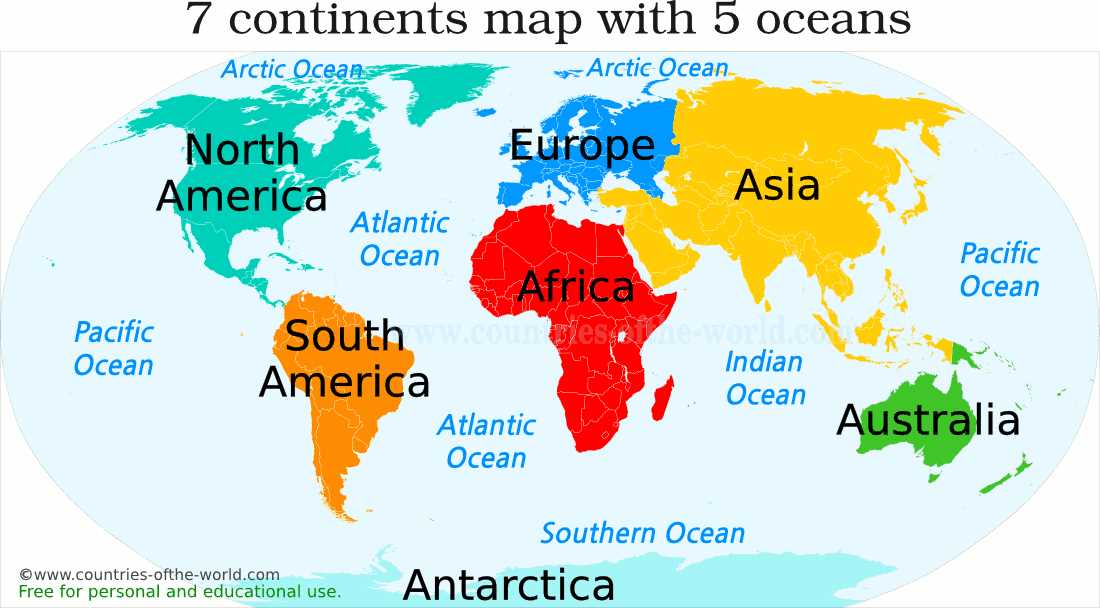
Another mistake is overloading the map with too much information. While it’s tempting to include every country, river, or mountain range, a cluttered map can overwhelm students. Keep it simple and focus on the key features relevant to the lesson. Here’s an example of a well-organized map with essential elements:
| Feature | Importance |
|---|---|
| Country Borders | Helps students identify political divisions. |
| Major Water Bodies | Shows the relationship between land and water. |
| Mountain Ranges | Highlights significant geographical features. |
Finally, don’t forget to update the maps as new information becomes available. Geopolitical changes or natural events may alter the landscape, and an outdated map can affect accuracy in lessons.