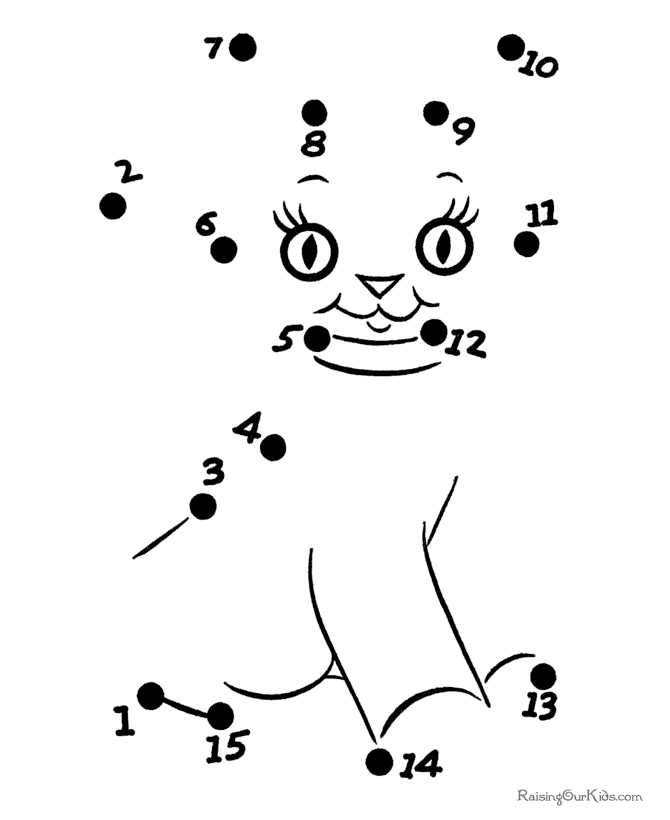
Choose numbered line-drawing sheets with 20–40 points for preschoolers and 50–100 points for early elementary students to train counting accuracy and hand control from the first session. Select black-and-white layouts with bold outlines (1.5–2 pt stroke width) so children clearly see their path and can color finished images without visual clutter.
For ages 3–4, offer large-format pages (A4 or US Letter) featuring simple shapes such as animals, fruits, or vehicles, limited to numbers 1–20. For ages 5–7, increase complexity by introducing sequences up to 100 and mixed counting patterns (skip-counting by 2s or 5s). This approach strengthens number recognition, sequencing logic, and pencil grip stability within 10–15 minutes of practice.
Use themed collections–seasonal illustrations, dinosaurs, space objects, farm animals–to maintain engagement across multiple sessions. Provide answer previews for adults and include small guiding arrows near first points to reduce confusion. Printable PDF files sized under 2 MB load faster and allow quick home or classroom reproduction without loss of line clarity.
For best results, print on 90–120 gsm paper to prevent tearing during coloring and tracing. Store sheets in labeled folders by difficulty level so children can gradually progress from basic counting chains to intricate image-building sequences that require focus, patience, and visual tracking skills.
Easy Connect the Dots Printables: Practical Guide for Parents and Teachers
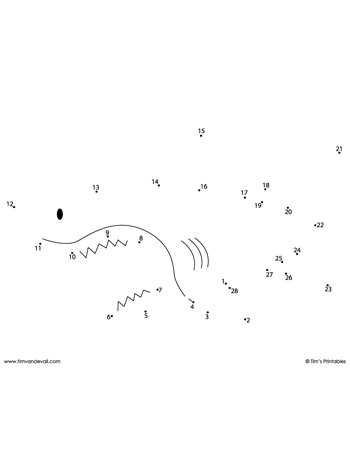
Choose worksheets with 10–20 numbered points for children aged 3–5 and 20–40 for ages 6–8 to match fine motor development and counting skills. For preschool groups, select large-format sheets (A4 or US Letter) with at least 1.5 cm spacing between points to support pencil control. In classrooms, print two difficulty levels for each theme–basic sequences (1–15) and extended sequences (1–50)–so you can differentiate tasks without preparing separate lesson plans.
Use picture-building sequences to reinforce math objectives. For kindergarten, limit numbering to 1–20 and require children to say each number aloud while tracing lines. For first grade, include skip-counting patterns (2, 4, 6… or 5, 10, 15…) and reverse sequences from 30 to 1. Teachers can allocate 7–10 minutes at the beginning of a math block as a warm-up activity, then review common mistakes such as skipped numerals or incorrect order on the board.
Integrate letter-based versions to strengthen alphabet recognition. Provide uppercase A–Z sheets for early learners and mixed-case sequences for older students. To increase complexity, remove visual guides and use dotted micro-markers (3–4 mm) that require more precise strokes. Ask students to color completed images according to a code (vowels in blue, consonants in red) to combine literacy and fine motor practice within a single page.
Control paper quality and writing tools. Standard 80 gsm office paper works for graphite pencils, but 100–120 gsm prevents bleed-through if markers are used. Offer triangular pencils for younger children to promote correct grip. In group settings, laminate selected templates and provide dry-erase markers; this reduces printing costs by up to 70% over a semester when reused weekly.
Track progress using measurable indicators. Record how long a child needs to finish a 25-point sheet; typical completion time for a 6-year-old ranges from 4 to 8 minutes. Note accuracy: zero skipped numbers and clean intersections signal readiness for higher difficulty. Maintain a simple checklist with three criteria–sequence accuracy, line control, task completion–rated on a 3-point scale after each session.
Adapt themes to curriculum topics. During science units, use outlines of animals, plants, or weather symbols; during history lessons, apply silhouettes of landmarks or transport models. Limit each activity to one clear learning objective: number order, alphabet recall, or motor coordination. Avoid mixing more than two skills per sheet to keep cognitive load manageable for children under eight.
Store worksheets in categorized folders (10–20, 20–40, alphabet, skip-counting) and label them with age recommendations and estimated completion time. Keep a master digital file and print batches of 20–30 copies monthly to maintain consistency. Rotate designs every 3–4 weeks to sustain interest while preserving structure and routine in both home and classroom environments.
How to Choose Age-Appropriate Easy Connect the Dots Printables for Preschool and Kindergarten
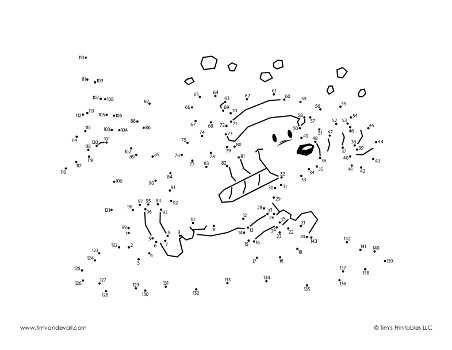
Select worksheets with 5–15 numbered points for children aged 3–4 and 15–30 points for ages 5–6. For younger preschoolers, large markers spaced at least 1.5–2 cm apart reduce visual strain and support pencil control. Kindergarten learners can manage tighter spacing (1–1.5 cm) and multi-step sequences up to 40 numbers if numerals stay within 1–40. Avoid sheets that skip numbers unless a child confidently counts forward without prompts.
Match numeral range to counting ability. A three-year-old who recognizes numbers up to 10 should not receive an activity going to 25. For pre-K learners, use sequences 1–10 or 1–15; for kindergarten, expand to 1–30 or 1–50 depending on curriculum goals. If the goal is number reinforcement, choose pages that clearly display bold, sans-serif numerals at least 14–16 pt in print size so children can identify each step without adult correction.
Evaluate line complexity by shape recognition demands. Simple outlines such as a fish, apple, or house require fewer direction changes and are suitable for early learners. More detailed images (dinosaurs, vehicles, animals with multiple angles) suit older children who can control wrist rotation and maintain steady strokes. Limit sharp angles for preschool; gradual curves build smoother motor patterns.
Use theme-based sequences aligned with current classroom topics. If a group studies farm animals, select number-tracing puzzles forming a cow or tractor. Seasonal themes–pumpkin in October, snowman in winter–maintain interest and encourage task completion. Keep background uncluttered; additional decorative elements distract children who are still building attention spans of 5–10 minutes.
Check cognitive load through trial completion time. A preschool child should finish a page within 3–7 minutes; kindergarteners within 7–12 minutes. Longer duration signals too many points or overly complex routing. Provide thicker paper (at least 90–100 gsm) to prevent tearing during erasing, since younger learners frequently correct lines.
| Age Group | Number Range | Point Count | Spacing Between Points | Estimated Completion Time |
|---|---|---|---|---|
| 3–4 years | 1–10 / 1–15 | 5–15 | 1.5–2 cm | 3–7 minutes |
| 4–5 years | 1–20 | 15–25 | 1–1.5 cm | 5–9 minutes |
| 5–6 years | 1–30 / 1–50 | 25–40 | 1–1.2 cm | 7–12 minutes |
Offer progressive difficulty within a set of worksheets: first straight numerical order, then mild variations such as counting by twos for advanced kindergarten learners. Avoid mixing uppercase and lowercase letters with numbers on early pages; dual-symbol decoding slows younger children. Rotate themes every 2–3 weeks while gradually increasing point density so skill growth remains measurable.
Where to Find Free and Paid Easy Connect the Dots Worksheets Online
Choose trusted educational platforms with clear difficulty filters and PDF downloads. Education.com offers free sample number-sequence worksheets (up to 20, 30, and 50) with an option to upgrade for full library access. Super Teacher Worksheets provides low-cost memberships (around $25 per year) that include hundreds of line-linking puzzles sorted by grade and theme. For completely free materials, check Worksheetfun and K5 Learning, both featuring printable number paths for preschool and kindergarten levels without registration. Teachers can also search Teachers Pay Teachers and filter by price to find zero-cost downloads alongside premium activity packs (typically $1–$5 per set) that include seasonal images, animals, and alphabet sequences.
For broader variety, explore large worksheet directories such as Twisty Noodle, where you can customize number ranges before downloading, or Math-Drills.com, which includes structured counting sequences for early learners. Creative marketplaces like Etsy feature downloadable PDF bundles (usually $3–$10) designed by illustrators, often with themed collections such as farm animals, vehicles, or holiday characters. If you prefer subscription libraries with progress tracking, platforms like ABCmouse and IXL integrate numbered path activities into structured lesson plans for a monthly fee. Always preview sample pages to confirm line clarity, spacing between points, and maximum number range to match a child’s counting skills.
How to Print Connect the Dots Pages in the Right Size and Quality for Home Use
Set paper size to A4 or US Letter (8.5×11 in) in your printer dialog and disable “Fit to page” to prevent distortion of numbered paths. Choose 100% scale to keep spacing between points accurate; reducing to 90–95% can make sequences слишком tight for small hands. For clear lines, select 600 dpi or higher in printer properties and switch paper type to “Plain” or “Matte” to avoid ink spread. Use 90–120 gsm paper for everyday use; 160 gsm cardstock works better for repeated tracing with markers. If outlines appear faint, increase contrast in your PDF viewer by 10–15% before sending file to print. Activate grayscale mode to avoid color shifts that can blur thin strokes.
For sharper results and consistent margins, follow this checklist:
- Open file in a desktop PDF viewer rather than a browser to access full scaling controls.
- Check preview margins: keep at least 10 mm on each side to avoid cropped sequences.
- Select “High quality” or “Best” print mode for intricate images with more than 200 numbered points.
- Run a single test page before batch printing; compare line thickness–ideal stroke weight is 0.5–0.75 pt for clear visibility without ink bleed.
- If printer leaves streaks, clean nozzles and align heads through maintenance settings before printing activity sheets.
- Store printed pages flat for 24 hours so ink fully dries, especially on heavier stock.
These settings preserve clarity of numbered trails, maintain proportional images, and provide sturdy sheets suitable for pencils, gel pens, or fine liners without smudging.