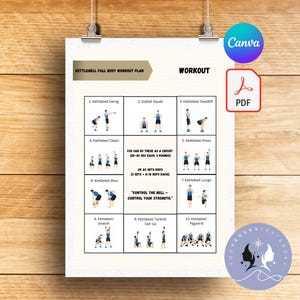
Download a structured one-page training sheet with 12 compound movements and follow a 20-minute protocol: 5 drills, 40 seconds of work, 20 seconds of rest, repeated for 4 rounds. Use a 12–16 kg weight for beginners and 20–24 kg for experienced athletes. This format allows clear tracking of sets, load, and tempo without relying on mobile apps or timers beyond a basic stopwatch.
Session A (Lower Body Focus): hip hinge swings (15 reps), goblet squats (12 reps), reverse lunges (10 per leg), Romanian deadlifts (12 reps), and sumo high pulls (12 reps). Rest 60–90 seconds between rounds. Maintain a neutral spine during hinge patterns and keep heels grounded in squat variations to distribute load across glutes and hamstrings rather than the lower back.
Session B (Upper Body & Core): single-arm presses (8–10 per side), bent-over rows (10–12 per side), floor presses (12 reps), rotational Russian twists (20 total), and plank drags (16 total). Select a load that allows strict form through the final two repetitions. For strength gains, perform 3–5 sets with a 2–3 minute pause between heavy sets.
Weekly layout: train three non-consecutive days, alternating Session A and B. Progress by increasing mass by 2–4 kg or adding 2 repetitions per set each week. Record load, total volume (reps × weight), and perceived exertion directly on the sheet to monitor adaptation and prevent plateaus.
Free Printable Kettlebell Exercises: Practical Workout Sheets for Home and Gym
Download structured workout sheets with clearly listed sets, reps, tempo, and rest intervals, and keep them visible during training to avoid wasting time checking your phone. A single-page layout with 6–8 movements per session works best: one ballistic drill, one squat pattern, one hip hinge, one press, one pull, and one core movement. Leave blank fields for load used and perceived exertion (RPE 1–10) to track progression weekly.
Include the following movement patterns on separate training cards so you can rotate sessions A/B/C without confusion:
- Two-hand swing – 4×15 reps, 30–45 sec rest
- Goblet squat – 4×8–10 reps, 60 sec rest
- Single-arm clean – 3×6 per side
- Overhead press – 3×8 per side
- Reverse lunge with weight in rack position – 3×8 per leg
- Renegade row – 3×10 total reps
- Russian twist – 3×20 total reps
For fat-loss focused sessions, design interval-based templates. Example: 20 minutes EMOM (every minute on the minute). Minute 1: 15 swings. Minute 2: 10 goblet squats. Minute 3: 8 push presses (4 per arm). Minute 4: rest. Repeat five rounds. Leave checkboxes near each minute block so you can mark completed rounds. This format keeps intensity measurable and eliminates guesswork.
Strength-oriented sheets should prioritize load tracking and longer recovery. Use a 5×5 format for front rack squats and strict presses, resting 90–120 seconds. Add a notes column for grip fatigue, shoulder stability, and heart rate after each set. Place a small progression table at the bottom: Week 1 – 16 kg, Week 2 – 18 kg, Week 3 – 20 kg, Week 4 – deload at 14 kg with 3×5. Clear numeric structure prevents random weight selection and supports consistent overload.
Create separate minimalistic cards for home and gym use. Home versions should assume one weight and focus on unilateral drills to increase difficulty without adding load. Gym versions can include double-weight front squats, heavy swings, and complex chains such as clean → squat → press performed for 5 rounds of 5 reps each. Use bold section headers like “Warm-Up (5 min)”, “Main Block (25 min)”, “Finisher (5 min)” so the sheet functions as a ready-to-use training plan rather than a generic list.
Where to Download Free Printable Kettlebell Exercise PDFs with Clear Illustrations and Instructions
Download structured PDF guides with detailed illustrations directly from ACE Fitness, where certified trainers publish strength routines in downloadable format with step-by-step photos, repetition schemes, and safety cues. Their library includes single-tool workouts, progression charts, and technique breakdowns showing grip, hip hinge alignment, and shoulder positioning from multiple angles.
Muscle & Strength provides workout sheets in PDF form that include movement diagrams, muscle activation highlights, and weekly programming templates. Many files feature clearly labeled phases such as warm-up, power segment, hypertrophy block, and conditioning finisher. Each movement description contains bullet-point instructions rather than long paragraphs, which makes the material suitable for quick reference during training.
For highly visual manuals with anatomical overlays, check ExRx.net. The site offers downloadable charts illustrating joint angles, primary and secondary muscle groups, and common execution errors. Their strength index section allows filtering by equipment type and difficulty level, after which PDF pages can be saved for offline use.
University athletic departments also publish structured training packets. Examples include:
- University of Michigan Athletics strength and conditioning handouts
- University of Texas performance training PDFs
- UNC Chapel Hill fitness resource sheets
These documents typically include progression tables, tempo prescriptions (e.g., 3-1-1), rest intervals, and coaching notes written for student athletes.
Bodybuilding.com hosts downloadable workout plans that convert into printer-friendly PDFs. Look for programs that specify load percentages, total volume per session, and illustrated movement breakdowns. Many plans include tracking tables where you can manually record weight used and completed repetitions.
Strength coaches who specialize in ballistic training often share sample chapters of their manuals. On Dragon Door, you can find instructional PDFs featuring sequential photo frames of swings, cleans, presses, and Turkish get-ups. These materials frequently present corrective drills alongside the main lift to refine hip drive and lockout mechanics.
Public health organizations occasionally publish minimal-equipment workout sheets. The CDC Physical Activity section includes resistance training guides with diagrams and concise technique instructions. While broader in scope, some downloadable materials feature single-weight routines adaptable for home training.
When selecting a downloadable guide, verify that it contains:
- High-resolution step photos showing start and finish positions
- Clear breathing cues and spinal alignment notes
- Load progression recommendations (e.g., percentage of bodyweight or RPE scale)
- Set and repetition schemes structured across multiple weeks
- Safety warnings addressing shoulder, lower-back, and grip fatigue risks
Choose documents authored by certified trainers or university programs, and confirm that each movement includes both visual reference and concise written instruction rather than image-only charts.
How to Choose Printable Kettlebell Exercises Based on Skill Level and Available Weight
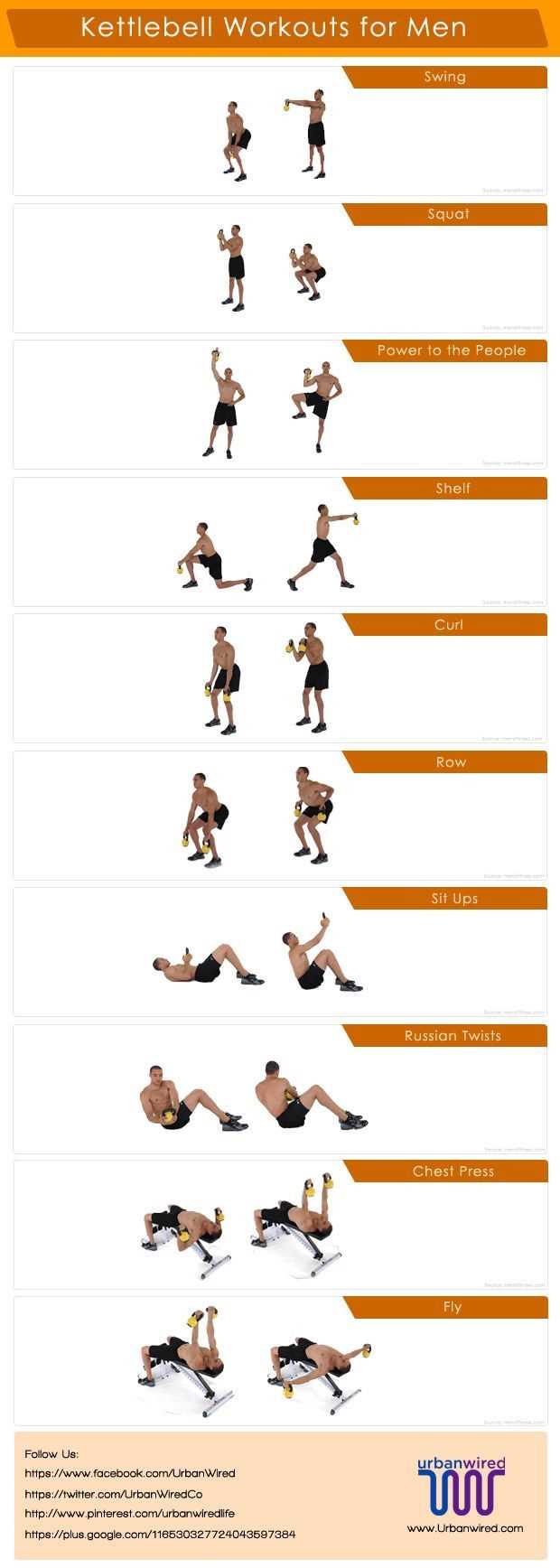
Select training sheets that match both your technical ability and the exact mass of the iron bell you own. If you have only one 12 kg bell, choose movement charts built around single-weight progressions such as goblet squats, two-hand swings, and floor presses with clear repetition ranges (8–15 reps). If you own 16 kg and 24 kg options, prioritize routines that specify load differences between strength lifts (3–6 reps) and conditioning drills (15–25 reps).
Beginners should use plans limited to fundamental patterns: hip hinge, squat, push, pull, and loaded carry. For most untrained men, 12–16 kg is workable for swings; for women, 8–12 kg is common. Instruction pages must show exact set schemes like 3×10 deadlifts and 4×8 goblet squats, avoiding complex sequences. Avoid charts that include snatches or long complexes if you cannot maintain neutral spine and stable shoulder alignment.
Intermediate athletes benefit from sheets that combine ballistic and grind movements within one session. With access to 16–24 kg, look for layouts including 5×5 clean and press, 4×12 swings, and unilateral rows with tempo control (3 seconds eccentric). Choose formats that specify rest intervals (60–120 seconds) rather than vague pacing cues.
Advanced lifters should select high-density or double-bell protocols if two identical weights are available. For example, double 24 kg front squats at 5×5 or timed snatch sets of 10 reps per arm every minute for 10 minutes. The document must detail volume caps (total reps 80–120) and progression rules such as adding 2 reps per set weekly before increasing load.
If your available weight is lighter than recommended, compensate with unilateral variations, slower eccentrics (4–5 seconds), paused reps, or extended sets (15–20 reps). A single 10 kg bell can still create overload through single-leg Romanian deadlifts, overhead carries for 30–40 meters, and strict presses with 2-second pauses overhead.
If the bell is heavier than ideal, reduce complexity. Replace snatches with high pulls, substitute overhead lunges with rack carries, and keep repetition brackets low (3–5). Training sheets must clearly indicate regression options next to each drill so you can downgrade safely without rewriting the plan.
Check whether the layout groups drills by goal: fat loss circuits (30–45 seconds work), maximal strength blocks (long rest, low reps), or skill practice segments (multiple short sets). Match this structure to your capacity; beginners should avoid circuits exceeding 20 total minutes of continuous work, while experienced trainees may handle 30–40 minutes of interval density training.
Choose formats that include tracking fields for weight used, reps completed, and perceived exertion (RPE 1–10 scale). This allows load adjustments of 2–4 kg once sessions feel below RPE 7. Without measurable fields, progression becomes guesswork and the routine loses direction.