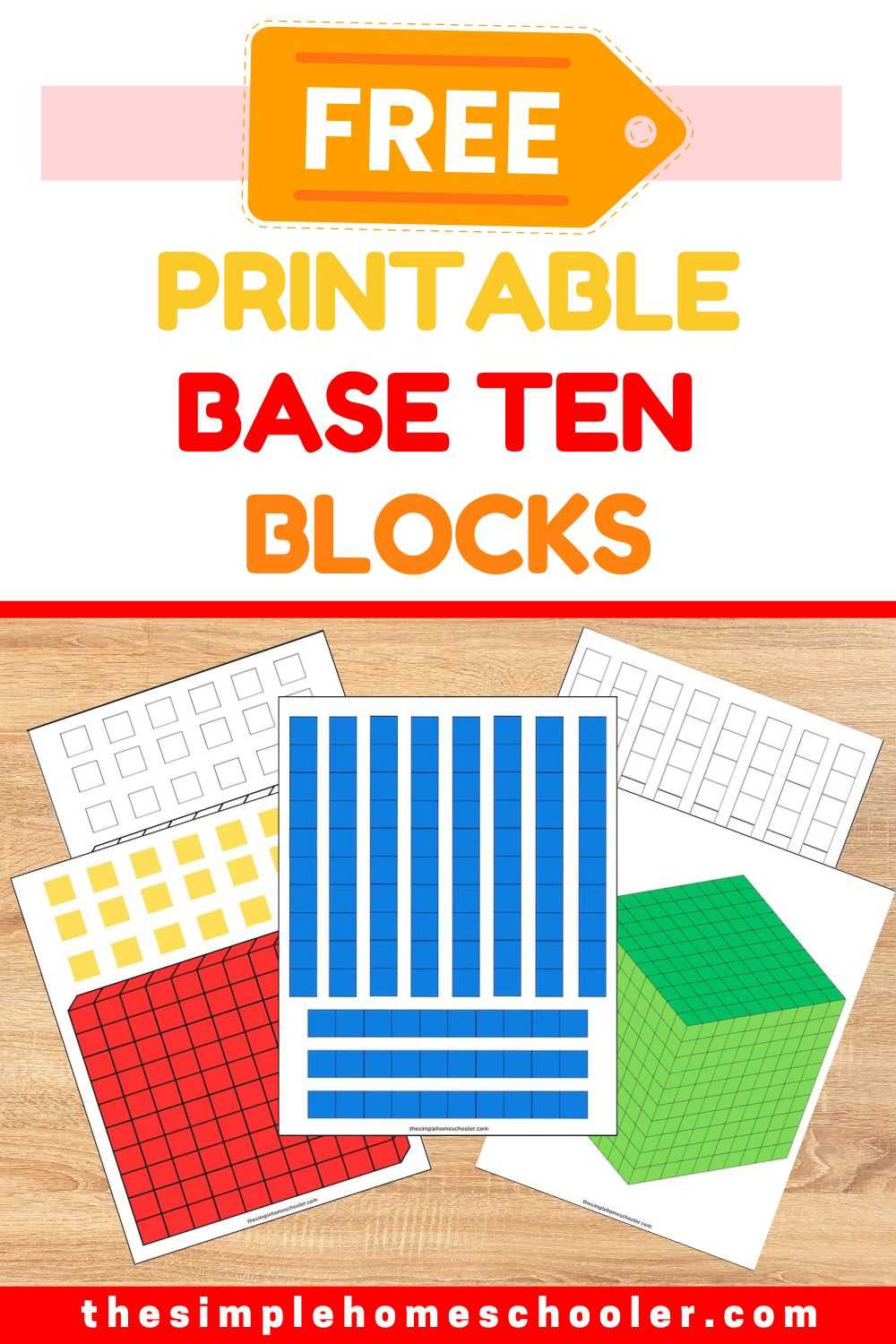
Start by printing units that represent ones, tens, and hundreds. These small, clearly defined items will help young learners understand the place value system. Use different shapes or colors to make each set of units distinct, which will aid in visual recognition.
When creating your materials, focus on clarity. Print them on sturdy paper or card stock to make sure the pieces last through repeated use. Laminate them if you want to increase durability. Ensure the designs are simple and easy to understand, with numbers or labels clearly visible on each piece.
These materials can be used to teach everything from basic addition and subtraction to more complex operations like multiplication and division. Start with small numbers to build a foundation, then gradually introduce larger values as students become comfortable with the system.
Using Units for Understanding Place Value
To teach place value effectively, use printable representations of ones, tens, and hundreds. Start with single units to represent one and build upon them as you move toward teaching larger values. These visuals help students grasp how numbers build upon each other and how each digit in a number has a different weight based on its position.
Ensure that each unit, whether representing one, ten, or a hundred, is visually distinct. You can use different shapes, colors, or sizes to make it easy for students to recognize the difference between values. This visual differentiation reinforces the concept of place value in a hands-on and interactive way.
Once the basic units are printed and ready for use, introduce simple exercises where students group these units to form numbers. Begin with simple addition and subtraction problems, then progress to multiplication and division. This hands-on practice will deepen their understanding of math concepts and build a solid foundation for future lessons.
How to Create and Print Your Own Base 10 Units
Start by designing units using simple software like Word, PowerPoint, or any graphic design tool. Use square shapes for ones, long rectangles for tens, and larger blocks for hundreds. Ensure that each unit is clearly labeled with the value it represents. You can either color-code each type or use distinct patterns for easy recognition. Once the design is finalized, ensure that the dimensions fit on a standard sheet of paper for easy printing.
After printing your units, cut them carefully to maintain uniformity in size and shape. For durability, laminate the pieces or print them on heavier paper. If you plan to use them frequently, consider reinforcing them with a stronger material or sticking them to a backing board. This will allow for better handling during lessons and extended use in various math activities.