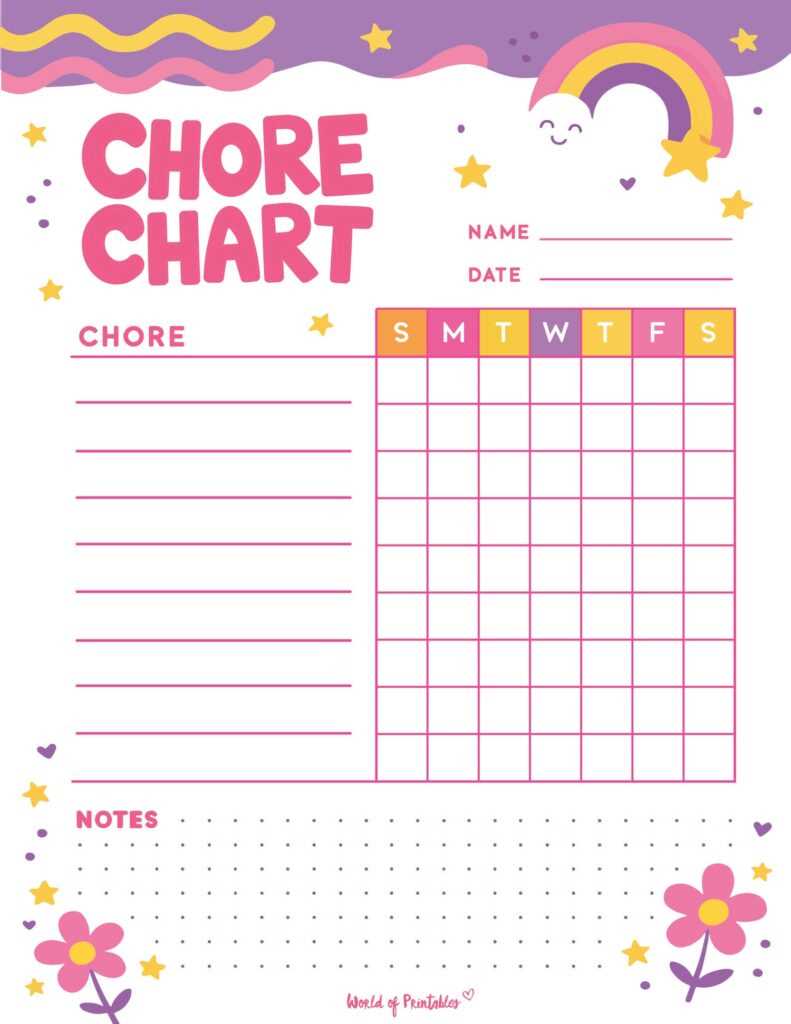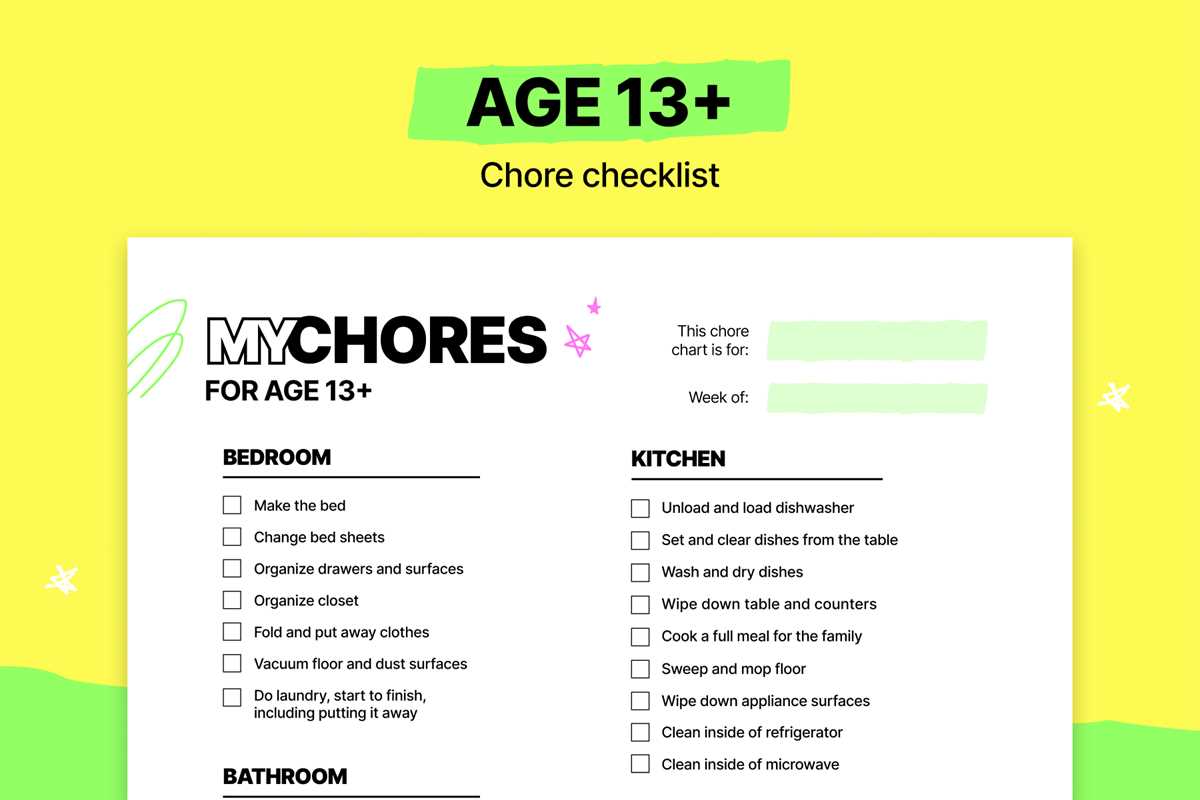
If you want to maintain a clean and organized home, start by creating a simple task schedule that everyone can follow. Design a system where each member of the household has clear responsibilities. This method works best when everyone knows exactly what they need to do and when. Use templates that can be easily printed out and customized according to your needs.
For families with children, this method is particularly helpful. It teaches responsibility and encourages young ones to stay on track with their daily duties. Look for designs that include spaces for names, dates, and tasks, as these can be customized easily. Simple checklists or grids are perfect for this purpose, offering a quick overview of daily or weekly assignments.
For adults, using a similar system can help in organizing home maintenance tasks like cleaning, laundry, or meal prep. Print out a weekly or monthly planner where tasks are divided by days, making it easier to see what’s been done and what still needs attention. Adjusting this schedule as needed helps maintain balance between work, personal life, and home upkeep.
Organize Household Tasks with Simple Templates
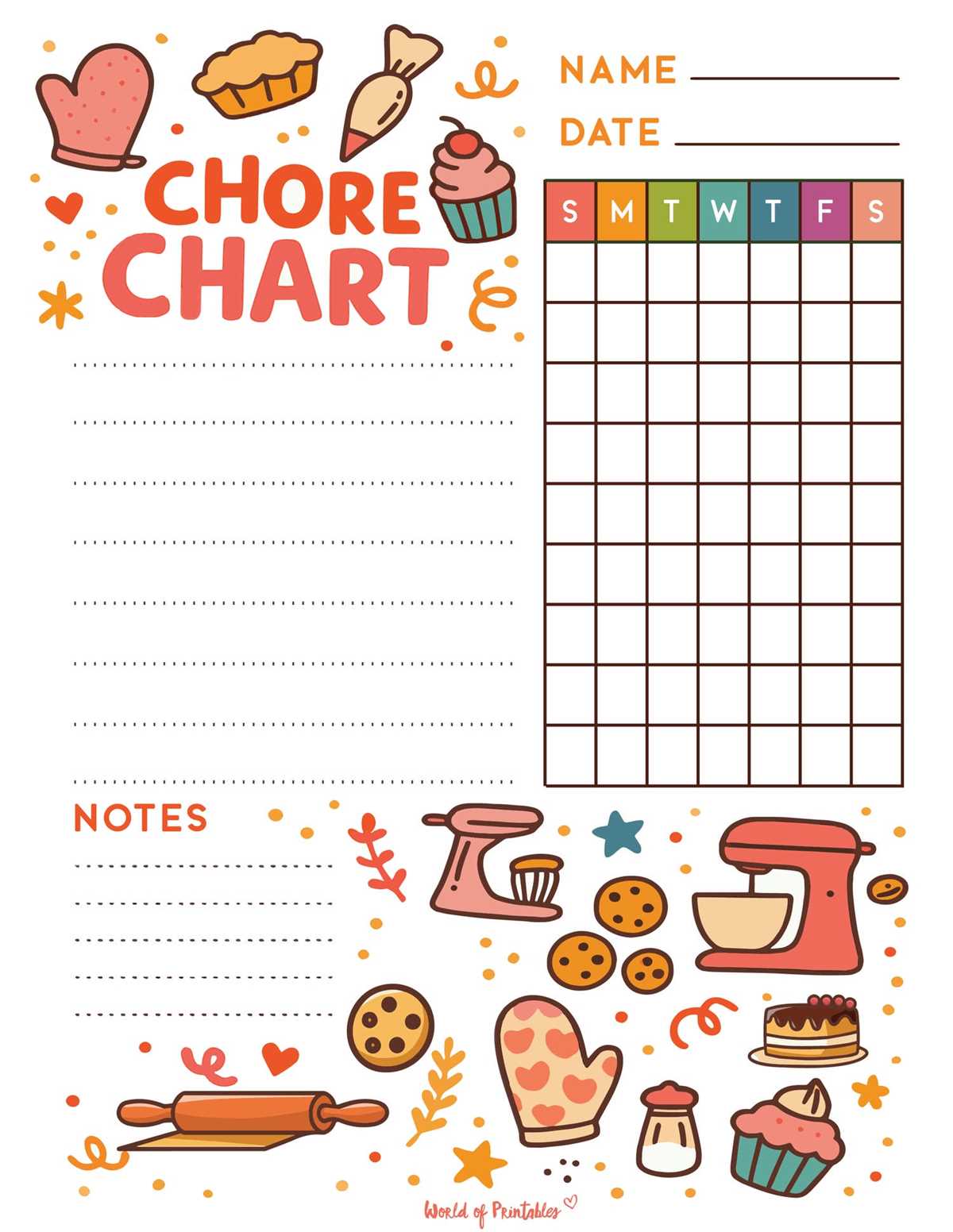
Start by selecting a template that suits your household’s needs. A simple grid layout can help break down responsibilities into manageable tasks. Each row should represent a day of the week or a specific timeframe, and each column should be dedicated to a different task or person.
For families with children, assign easy-to-complete tasks to help build a routine. Choose a format that allows for rewards or incentives once a task is marked as completed. This motivates kids to stick to their responsibilities and fosters a sense of accomplishment.
If your family has multiple members, it’s helpful to color-code each person’s section. This makes it easier to see who is responsible for what at a glance, reducing confusion and increasing efficiency in completing the tasks.
Consider creating different versions for different tasks: one for cleaning, one for organizing, and one for maintenance. By separating tasks into categories, everyone knows exactly what to focus on and when. This division can also be useful if you have more specific cleaning routines or detailed upkeep schedules to follow.
Another effective approach is to break tasks down into sub-tasks. For example, instead of just listing “clean the kitchen,” break it into specific actions like “wipe down counters,” “wash dishes,” and “sweep floor.” This makes each responsibility clearer and easier to complete, which reduces the chance of forgetting something important.
- Designate regular review sessions to track progress. This could be weekly or bi-weekly to ensure that everyone stays on top of their tasks.
- Adjust the list as needed. If a task becomes too repetitive or difficult, swap it for something else to maintain balance and fairness.
Make sure to keep the design simple and clear. Too much detail can overwhelm and demotivate, while too little can lead to confusion. The goal is to make the process straightforward and easily understood by all members of the household.
In addition to basic layouts, there are a variety of templates available that include motivational elements, such as visual progress tracking or reward systems. Consider using a template with progress bars or checkboxes for a more interactive experience. These simple features can significantly improve engagement and commitment to household duties.
How to Create Custom Task Organizers for Kids
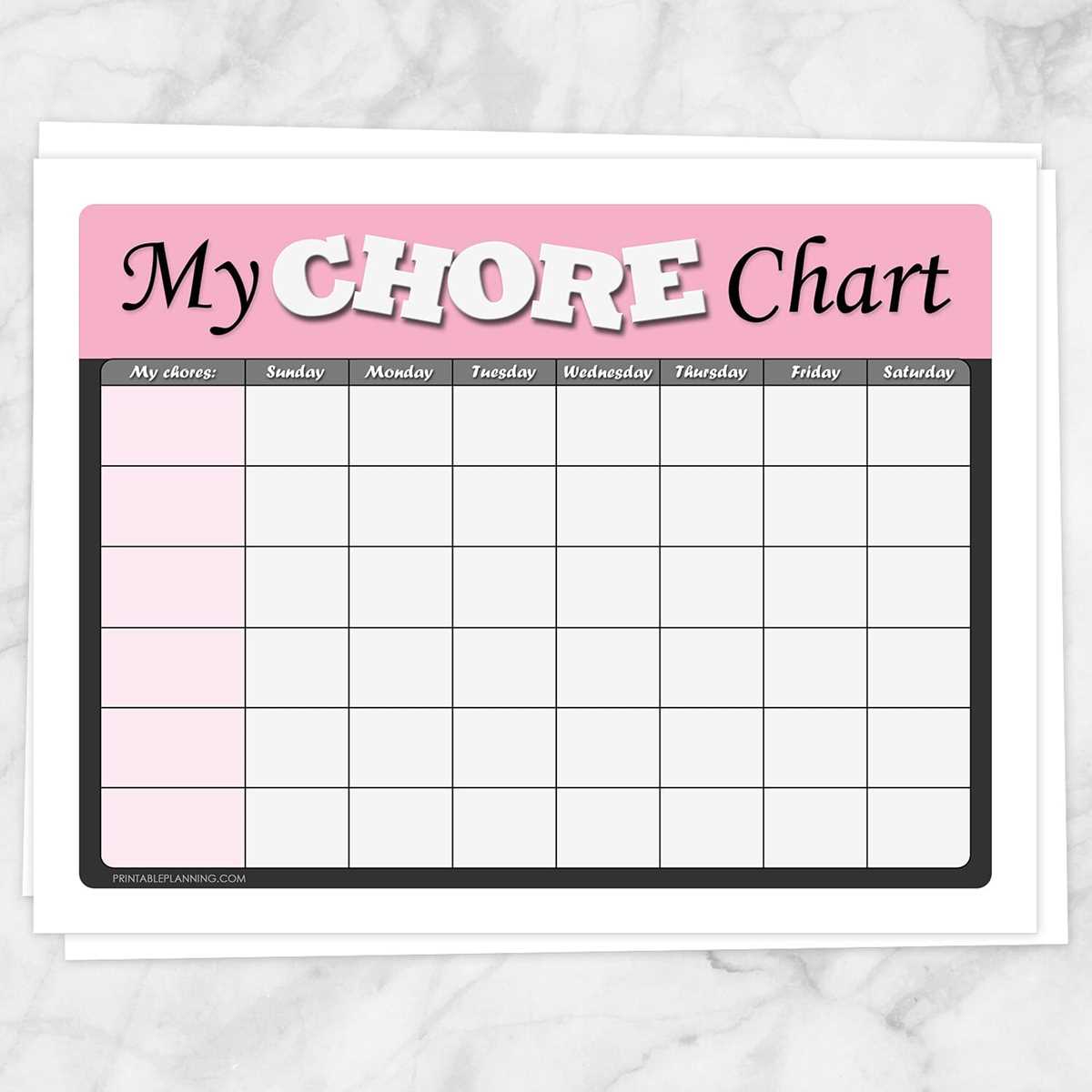
Begin by selecting a simple layout that includes spaces for the child’s name, tasks, and dates. Make sure the design is colorful and visually appealing to keep kids engaged. Use icons or fun images to represent each task, like a broom for cleaning or a plate for dishwashing. This helps young children understand what is expected of them without needing to read everything.
Incorporate a reward system to motivate kids to complete their duties. For example, after finishing a set of tasks, they can earn stickers or points that can be redeemed for a treat or privilege. A progress tracker, such as a chart with checkboxes or a visual meter, can further encourage them to complete their work on time. Keep the tasks short and manageable to ensure they are not overwhelmed, and adjust the difficulty as they grow and improve their skills.