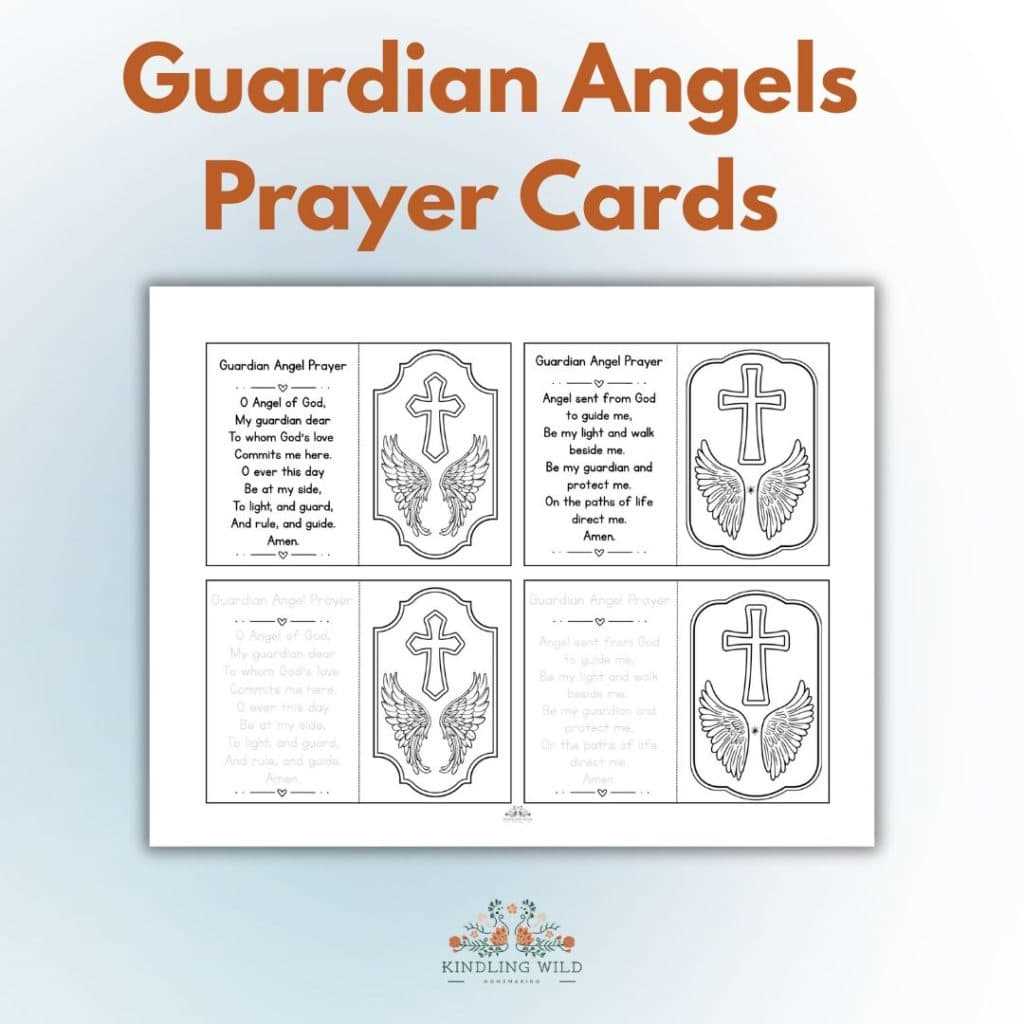
Choose high-resolution devotional images in PDF format (300 DPI or higher) to ensure sharp printing at standard sizes such as 2.5 × 4.25 inches or A7. This format fits easily into a wallet, prayer book, or gift envelope. For durability, select 250–350 gsm matte cardstock and enable double-sided printing with precise margin alignment (at least 0.125-inch bleed) to avoid white borders after trimming.
Opt for sacred artwork that corresponds to specific intentions: Marian depictions for family petitions, Christological scenes for Eucharistic reflection, and portraits of canonized saints linked to particular causes, such as St. Jude for difficult situations or St. Anthony for lost items. Include short invocations or traditional prayers limited to 60–90 words to maintain readability at small scale. Serif fonts at 9–11 pt size improve legibility in compact layouts.
For parish distribution or religious education classes, prepare batches arranged on US Letter or A4 sheets with crop marks for accurate cutting. Laminating pouches at 3 mil thickness extend lifespan and protect against moisture. When sharing digitally, provide files in both print-ready PDF and lightweight JPEG (under 1 MB) for easy messaging and email distribution.
Store finished pieces flat in dry conditions below 60% humidity to prevent curling. Reprint annually if colors fade, especially with inkjet output. A calibrated printer and pigment-based inks produce deeper tones and sharper iconographic details compared to dye-based alternatives.
What Are Printable Holy Cards and When They Are Most Commonly Used
Use downloadable devotional miniatures when you need affordable, customizable prayer keepsakes for parish events, memorials, or classroom catechesis. These small-format faith images–typically 2.5 x 4.25 inches or A6 size–feature sacred artwork on the front and a prayer, scripture verse, or biographical note about a saint on the reverse. Files are usually provided as high-resolution PDFs (300 DPI or higher) with bleed margins for clean trimming. Cardstock between 200–300 gsm ensures durability, while matte coating reduces glare under church lighting.
Such devotional prints are most frequently distributed during sacraments. At baptisms, families often select imagery of the Sacred Heart or guardian angels and include the child’s name and ceremony date. For First Communion and Confirmation, parish coordinators prepare batches of 50–200 pieces with the candidate’s chosen patron saint and a short intercessory prayer. Funeral liturgies rely heavily on memorial prayer slips that display a portrait of the deceased alongside Psalm excerpts; quantities commonly range from 75 to 300 depending on attendance.
They are also widely used during liturgical seasons and feast days. During Lent, parishes circulate passion-themed devotionals featuring Stations of the Cross reflections. In October, many Catholic schools hand out Marian prayer slips for the Rosary month, often including mysteries and daily meditation prompts. On major feast days such as Christmas and Easter, clergy may insert themed devotionals into parish bulletins as take-home prayer aids. Mission trips and retreats frequently incorporate customized pieces with event logos and short mission statements printed beneath the main religious image.
In educational settings, catechists rely on saint-themed prayer prints as memory aids. A classroom set might include 25 different saints aligned with a curriculum calendar, each containing birth/death dates, patronage, and a short quotation. Laminating pouches (3 mil thickness) extend lifespan for repeated student handling. Teachers often assign students to exchange these items after presenting research on figures like Francis of Assisi or Thérèse of Lisieux, reinforcing retention through physical association.
For personal devotion, individuals keep these small sacred prints in wallets, prayer books, or bedside tables. Travelers carry them as compact spiritual reminders; hospital chaplains distribute them during pastoral visits; parish volunteers include them in care packages for the homebound. Printing at home allows rapid production for urgent needs–such as a novena beginning the next day–while professional print shops are preferred for larger batches exceeding 100 copies to maintain color accuracy and precise cutting.
How to Choose the Right Prayer, Saint, or Scripture for a Printable Holy Card
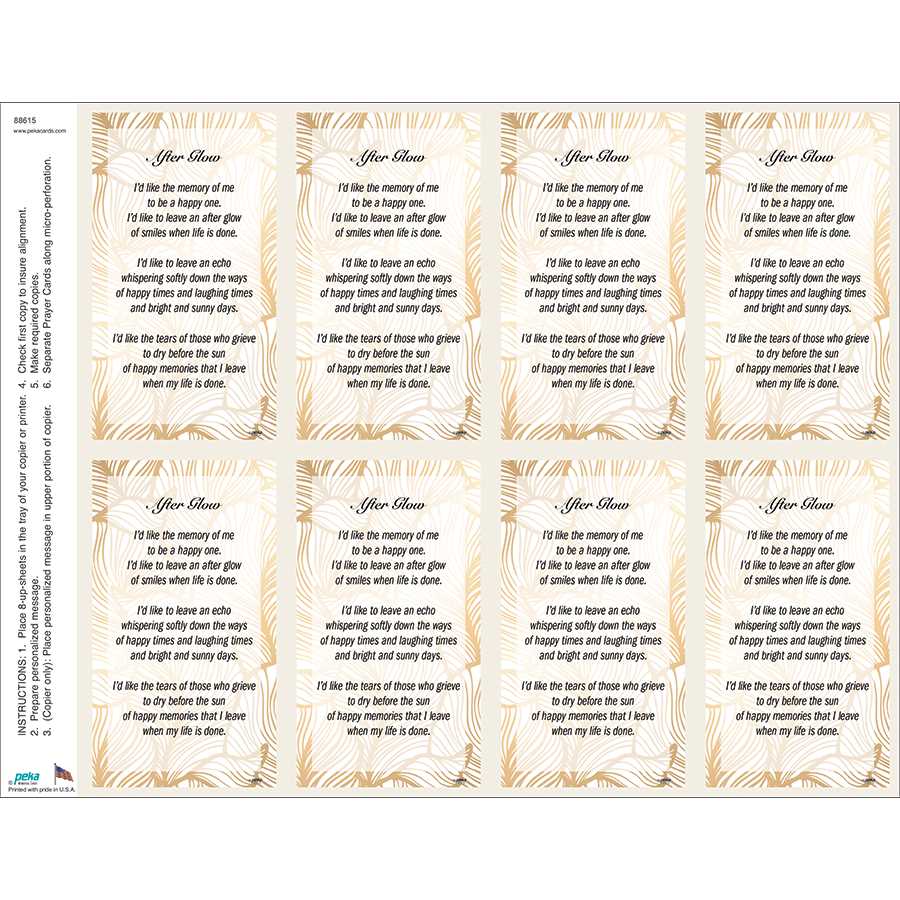
Select a text that matches the конкретное purpose of the keepsake: for funerals choose passages focused on resurrection and hope such as John 11:25–26 or Psalm 23; for First Communion include Eucharistic lines like John 6:35; for Confirmation use verses about the Holy Spirit such as Acts 1:8. The occasion determines tone, length, and theological focus more accurately than personal preference alone.
Align the chosen prayer with the life situation of the recipient. For someone facing illness, include the Prayer to St. Peregrine or Psalm 41:3; for students, select a short invocation to St. Thomas Aquinas; for travelers, a brief appeal to St. Christopher. Keep the wording under 120–150 words so the font remains readable at 8–10 pt on a 2.5 x 4.5 inch devotional print.
Choose a saint connected by patronage, nationality, or name. A baptismal memento often features the child’s namesake such as St. Michael the Archangel, St. Gianna Beretta Molla, or St. Nicholas. Wedding souvenirs frequently reference St. Joseph for family life or St. Valentine for marital fidelity. Verify official patronage lists from reliable Catholic directories before finalizing the text.
Prefer Scripture translations approved for liturgical use in your region. In the United States, the New American Bible Revised Edition (NABRE) is standard for Mass readings; in the UK, the Jerusalem Bible is common. Cite the exact reference (book, chapter, verse) beneath the excerpt in 6–7 pt type. Limit quotations to 3–5 verses to avoid overcrowding the layout.
Match prayer structure to available design space. Traditional devotions like the Memorare or the Anima Christi fit well on a single side with a small sacred image. Longer texts such as the Prayer of St. Francis require two-sided formatting. Leave at least 0.25-inch margins on all sides to prevent trimming during printing.
Adapt language level to the audience. For children under 10, use simplified biblical phrases (e.g., “The Lord is my shepherd; I have what I need” instead of older archaic wording). For memorial distributions, retain formal liturgical language to preserve reverence. Avoid mixing contemporary paraphrases with classical prayers on the same piece.
Confirm theological accuracy and spelling before production. Cross-check saint names, feast dates, and Bible citations. If including indulgenced prayers, verify current Church norms, as some formulas changed after 1967. A short line such as “Pray for us” beneath the saint’s name maintains devotional clarity without crowding the composition.
Step-by-Step Guide to Designing Printable Holy Cards (Size, Layout, and Text Placement)
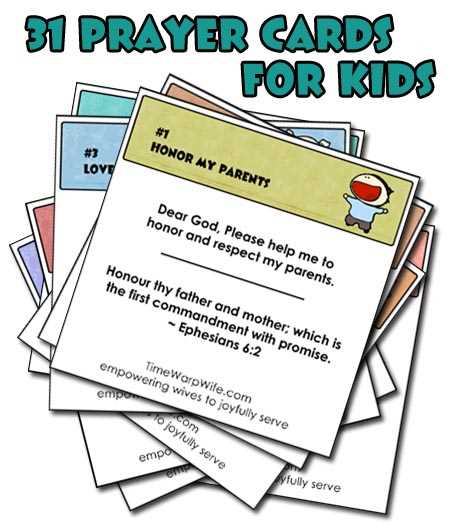
Select a standard size of 2.5 × 4.25 inches (64 × 108 mm) for a traditional prayer keepsake that fits inside a Bible or wallet; alternatively, use 3 × 5 inches (76 × 127 mm) for larger typography and detailed imagery. Set the document to 300 DPI resolution and CMYK color mode for press output. Add a 0.125-inch (3 mm) bleed on all sides and keep all text within a 0.25-inch (6 mm) safe margin to prevent trimming errors. Use a vertical orientation for portraits of saints and a horizontal format for landscape-style sacred art.
Divide the front side into a 70/30 visual-to-text ratio. Place the main religious image centered or slightly above the vertical midpoint to create natural balance. If adding a title (e.g., the saint’s name), position it either at the top margin in small caps or directly below the image in 10–12 pt serif type. Avoid decorative fonts below 8 pt, as they blur after printing. Maintain at least 0.15 inches (4 mm) spacing between image borders and text blocks to avoid visual crowding.
On the reverse side, align the prayer text using a single-column layout with left alignment for readability. Use 9–11 pt serif fonts such as Garamond or Times-style typefaces with 1.2–1.3 line spacing. Keep paragraph breaks minimal and avoid fully justified text unless hyphenation control is available. A short invocation fits comfortably within 120–150 words on a 2.5 × 4.25 inch format; longer devotions require either reduced font size (minimum 8.5 pt) or a larger 3 × 5 inch layout.
For finishing, choose 14–16 pt cardstock (250–350 gsm) with a matte or silk coating to reduce glare during reading. Rounded corners with a 0.125-inch radius prevent edge wear. If adding foil accents or spot UV on halos or borders, keep decorative elements at least 0.2 inches from trimmed edges to prevent cracking. Always print a physical proof at 100% scale to verify alignment, margins, and text clarity before final production.
Best Paper Types, Finishes, and Home Printing Settings for Durable Devotional Prayer Images
Choose 300–350 gsm coated cardstock with a satin or matte surface for long-lasting devotional prayer images handled daily. This thickness resists bending in wallets and prayer books while remaining compatible with most home printers that support up to 350 gsm through the rear manual feed. Avoid standard 80–120 gsm office sheets: they crease easily and allow ink to bleed through. For double-sided designs with text on the back, select paper labeled “duplex” or “two-side coated” to maintain equal color density and sharpness on both faces.
Paper type directly affects color accuracy, drying time, and resistance to humidity:
- Matte coated (300–350 gsm) – reduced glare, readable small serif fonts (6–8 pt), minimal fingerprint marks.
- Satin or silk coated (280–320 gsm) – deeper blacks and icon details, moderate sheen without mirror reflection.
- Glossy photo paper (260–300 gsm) – high color saturation for rich iconography; laminate to prevent surface scratches.
- Uncoated cotton (250–300 gsm) – softer, traditional texture; requires pigment ink to avoid feathering.
For inkjet printers, use pigment-based ink rather than dye-based: pigment particles sit on the surface and resist fading for 50–100 years under indoor storage, while dye inks may shift color within 5–10 years. Set print quality to “High” or “Best,” disable “draft” modes, and select the exact media type (e.g., “Heavyweight Matte Paper” or “Cardstock”) in the driver. Activate manual color management and choose sRGB IEC61966-2.1 for consistent tones across devices. Allow at least 15–30 minutes drying time before trimming to avoid edge smearing.
Laser printers require heat-resistant stock rated for 200°C fuser temperatures. Choose 250–300 gsm laser-compatible sheets to prevent curling. In print settings, select “Thick 2” or equivalent to slow the fuser speed and improve toner adhesion. Avoid glossy inkjet paper in laser devices; the coating can melt and damage rollers. After printing, stack no more than 20 sheets at a time to cool evenly and reduce warping.
Increase durability with finishing steps:
- Apply 3–5 mil thermal lamination pouches for water resistance.
- Round corners with a 3–5 mm corner punch to reduce edge wear.
- Use a guillotine cutter with a fresh blade for clean 90° edges.
- Store finished pieces at 18–22°C and 40–55% relative humidity to prevent curling.
These parameters ensure devotional keepsakes remain legible, color-stable, and structurally intact for years of regular handling.